
The Mysterious Death of Amarendra Chandra Pandey: A Plague Murder Case

A Tragic Incident in Pre-Independence India
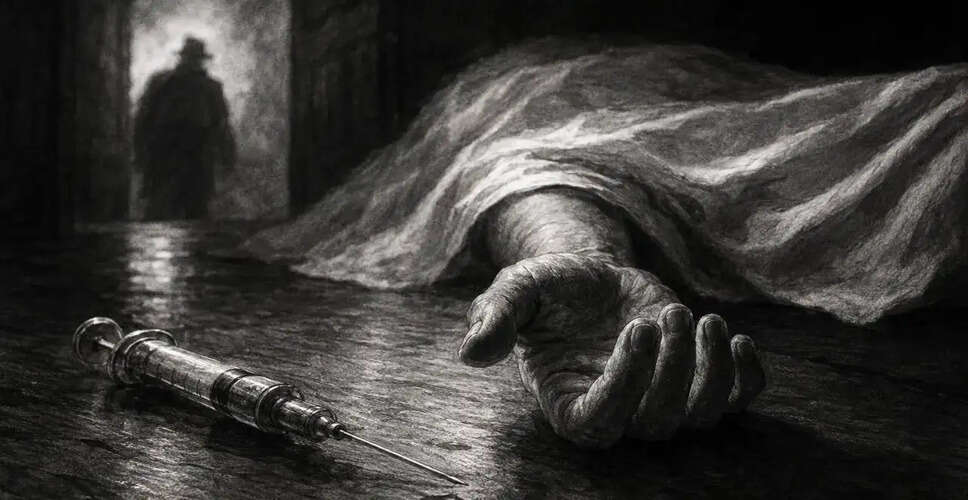
On December 4, 1933, in Calcutta (now Kolkata), a 20-year-old named Amarendra Chandra Pandey tragically passed away due to bubonic plague. He was the joint heir to the Pakur Raj Estate alongside his half-brother, Benoyendra Chandra Pandey, and their aunt, Rani Surja Bati Devi of Deoghar. Just days before his death, on November 26, Amarendra was at Howrah Station, preparing to head to their family estate in Pakur, Jharkhand. While maneuvering through the bustling station, he felt a sharp sensation in his arm after brushing against another individual, who quickly vanished into the crowd. Concerned, his relatives urged him to seek medical attention, but Benoyendra dismissed the incident, joking that their family lineage of warriors would not be fazed by such a minor injury.
Three days later, Amarendra returned to Calcutta from Pakur, suffering from a high fever. He was attended by Dr. Nalini Ranjan Sengupta, a leading physician of that era, who examined the injection mark on his arm. Although a blood test was suggested, Amarendra's health deteriorated rapidly. His arm swelled, and by December 3, he had slipped into a coma, passing away the next day. Initially, his death certificate cited septic pneumonia as the cause, and he was cremated at Kalighat Crematorium. However, subsequent blood tests revealed the presence of Yersinia pestis, the bacterium responsible for the plague. This case garnered significant attention, especially since only one death from bubonic plague had been reported in Calcutta in the previous five years. Historical records indicate that approximately 12 million individuals succumbed to the plague in India between 1898 and 1918.
Amarendra's unexpected death alarmed the medical community due to the peculiar nature of the infection. Doctors reached out to the director of the School of Tropical Medicine, raising concerns about the implications of a wealthy family's member dying from the plague. Speculations of foul play emerged, yet no one dared to approach law enforcement initially. In January 1934, a family member finally lodged a complaint with the Deputy Commissioner of Police in Calcutta, which included allegations against Benoyendra.
It was revealed that Benoyendra had orchestrated a cold-blooded murder with the assistance of Tara Nath Bhattacharya. The motive stemmed from a dispute over the Pakur Estate. The media extensively covered the story, with Time magazine labeling it a "murder with germs." Although Bhattacharya was initially described as a doctor, he was actually a research assistant at a laboratory in Calcutta. He had gained knowledge of microbiology and advised Benoyendra on using bacteria as a means to commit murder. Their first attempt to infect Amarendra with tetanus had failed.
In May 1932, Bhattacharya sought virulent plague bacilli from the Haffkine Institute in Bombay but was denied due to lack of authorization. He then approached Dr. Ukil in Calcutta, claiming he had discovered a plague cure and needed a culture for testing. With forged references, he managed to work in the lab but was prohibited from handling cultures from the Haffkine Institute. This attempt also failed. Eventually, he persuaded Dr. Ukil to introduce him to the Haffkine Institute and traveled to Bombay, where he gained access to the Arthur Road Infectious Diseases Hospital and obtained a live plague culture without conducting any tests. He returned to Calcutta five days later, where he recruited an accomplice to inject the plague culture into Amarendra's arm.
In February 1934, both men were arrested and sentenced to life transportation to the Cellular Jail in the Andaman Islands. The individual who administered the plague culture to Amarendra was never identified or captured.