
The Legacy of the FIFA World Cup Trophy and Its Creator
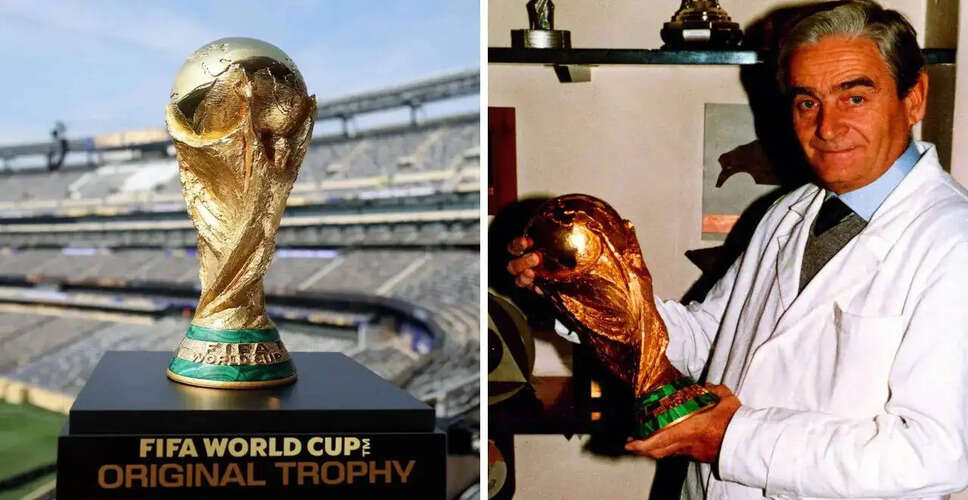

The FIFA World Cup Trophy: A Symbol of Unity
Today, Argentina and Spain will compete for the prestigious FIFA World Cup Trophy. Crafted by Italian artist Silvio Gazzaniga in 1971, this trophy has become a globally recognized emblem of sports. FIFA describes its design as depicting two human figures joyfully lifting the Earth, symbolizing the unifying essence of football. Contrary to its appearance as a solid gold piece, the trophy is actually hollow. It stands at 36 centimeters tall and weighs approximately 6.1 kilograms, made from 18-carat gold and featuring a base of malachite, a green semi-precious stone. The names of all World Cup-winning nations are engraved on the underside of the base, concealed from view when the trophy is displayed.
Silvio Gazzaniga: The Visionary Behind the Trophy
Silvio Gazzaniga and the FIFA World Cup Trophy
Born on January 23, 1921, in Milan, Gazzaniga's artistic journey spanned over eight decades. Although he is celebrated as the 'Creator' of the World Cup trophy, FIFA has committed to preserving this iconic piece until at least 2038, reflecting the deep admiration it garners from fans and the media alike. Raised in Lombardy during the height of the avant-garde movement, he honed his skills as a sculptor at a local art school. His career began during World War II, creating medals and trophies for various clients, eventually becoming the Art Director and Master Sculptor at the Bertoni company.
In 1970, Gazzaniga gained international recognition as a reserved artist after Brazil's third consecutive World Cup win in Mexico, which led to the permanent awarding of the Rimet Cup. Consequently, FIFA needed a new trophy, prompting a global competition that attracted numerous artists. Out of 53 submissions, Gazzaniga's design was chosen, and West Germany became the first nation to lift the new trophy in 1974. Gazzaniga, who passed away in 2016, also designed other notable trophies, including the UEFA Cup and the European Super Cup.