
The Legacy of Rose Attar: A Tale of Two Remarkable Mughal Women

A Mughal Emperor's Admiration for Rose Attar
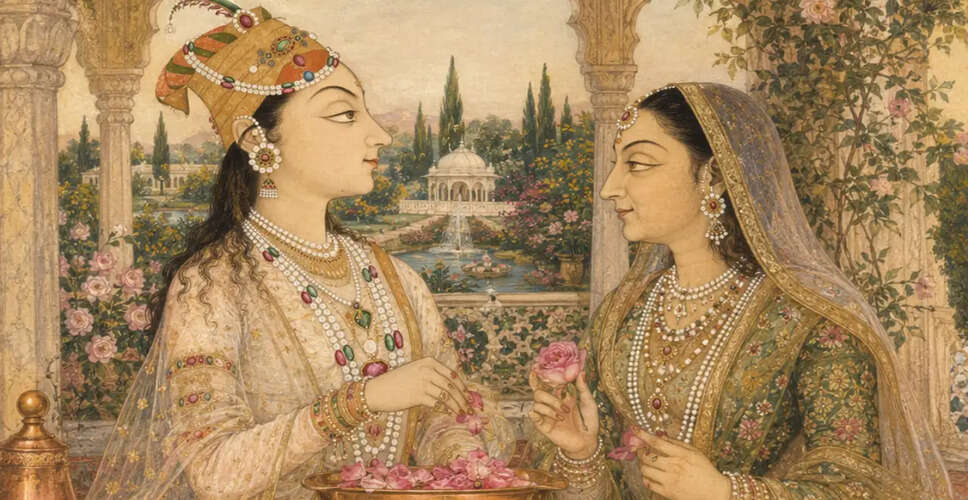
In the historical records of Mughal Emperor Jahangir, amidst his reflections on battles and climate, lies a heartfelt acknowledgment of a perfume. He regarded the rose attar named after him as the finest creation of his reign, attributing its success to his mother-in-law, Asmat Begum. This humble admission is one of the gentlest yet revolutionary entries in the Tuzuk-i-Jahangiri.
The Journey from Persia to the Mughal Empire
From Persian Exile to the Mughal Court: The Family Behind the Perfume
The narrative begins not in luxury but in hardship. Asmat Begum and her spouse, Mirza Ghiyas Beg, were Persians who had fallen from grace, seeking a new life in the east. Their daughter, born during this challenging journey, was named Mehr-un-Nissa, later known as Nur Jahan, the Light of the World. She became the most influential woman in the Mughal court, a queen whose name was inscribed on coins and edicts. However, it was her mother who transformed the empire's fragrance.
The Creation of Rose Attar: A Mother's Genius
Who Really Made Rose Attar: Asmat Begum and Itr-i-Jahangiri
The creation of rose attar is a tale of keen observation. Asmat Begum discovered an oily film forming on the surface of rose water, a result of the sun's warmth extracting the essence from the petals. Instead of discarding it, she recognized its potential. The fragrant oil was carefully collected and refined, resulting in a scent so potent that a single drop encapsulated an entire garden. Jahangir was captivated, noting in his memoirs that the perfume could heal broken hearts and rejuvenate weary souls, a rare praise from an emperor.
Historical Significance of Jahangir's Memoirs
What Jahangir's Memoirs Tell Us About the Mughal Rose Perfume
This narrative is not mere folklore; it is documented in Jahangir's own writings, preserved through time. Scholars like Ellison Banks Findly in her biography 'Nur Jahan: Empress of Mughal India' have contextualized the perfume within the lives of the women who crafted it. The attar, named itr-i-Jahangiri, serves as a deliberate piece of imperial branding.
Nur Jahan: The Visionary Behind the Perfume's Popularity
Nur Jahan and the Art of Making Rose Attar a Royal Signature
As for Nur Jahan, her talent lay not in invention but in creativity. She took her mother's delicate creation and elevated it beyond the confines of the still-room. By refining the distillation process, she made the attar a hallmark of the court, infusing it into various delights, including the sherbet that refreshed Mughal afternoons. While her mother had the insight to discover, Nur Jahan had the flair to popularize. Together, they transformed a fortunate accident into a signature fragrance of their era.
The Enduring Legacy of Asmat Begum and Nur Jahan
From Attar to the Taj: The Lasting Legacy of Two Mughal Women
It is easy to view them as mere figures framed by roses, yet their legacy carries profound significance. Asmat Begum rests in the exquisite tomb of Itimad-ud-Daula in Agra, a structure built by Nur Jahan for her father, often seen as a precursor to the Taj Mahal. Asmat Begum was also the grandmother of Mumtaz Mahal, the beloved for whom the Taj was constructed. Thus, the lineage that infused the empire with its fragrance also contributed to its most renowned symbol of love. Their story reminds us that while history often celebrates the men who commissioned grand monuments, it frequently overlooks the women who enriched the world with beauty and life. A perfume may seem trivial, yet the rose attar crafted by a refugee mother and her formidable daughter continues to resonate, found in every vial sold in bustling markets and every cup of rose sherbet. The next time you catch a hint of rose in the air, remember the hands that first captured its essence.