
The Legacy of Migrant Mother: A Portrait of Resilience

Introduction to a Defining Image
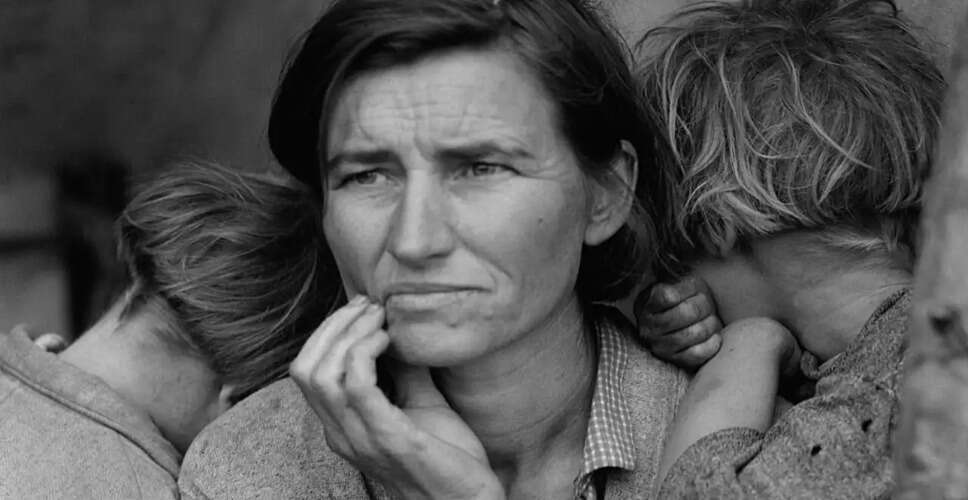
In 1936, during the depths of the Great Depression, a single photograph encapsulated the struggles of an entire generation. Captured by documentary photographer Dorothea Lange for a U.S. government relief initiative, the image, famously known as Migrant Mother, depicted a weary woman with her children, her expression reflecting both anxiety and resilience. Initially published in a San Francisco newspaper, the photograph quickly gained national attention, leading to immediate public support and federal assistance for those in need. It has since become one of the most iconic and reproduced images in American history.
The Journey to the Photograph
At that time, Lange was traversing California to document the lives of migrant laborers, tasked with illustrating the human toll of the economic downturn. On one of her trips, after weeks of travel, she encountered a sign that would lead her to a pivotal moment in her career. It was a chilly, rainy afternoon in March 1936, and Lange was exhausted, ready to return home after a month of photographing migrant farm workers for the federal government. Yet, a crude roadside sign reading 'Pea-Pickers Camp' kept drawing her attention. Almost instinctively, she made a U-turn and headed back.
Upon arriving, she was compelled to approach a desperate mother, as if pulled by an unseen force. Entering the camp, she navigated through rows of tents and quickly found the woman, who was seated with her children, her hand raised to her mouth, gazing into the distance. Lange did not inquire about her name or story; instead, she took five photographs, moving closer with each shot, and departed within ten minutes. The woman shared that she was 32 years old, surviving by having her sons catch birds, and had sold her car's tires to feed her children.
Impact of the Photograph
The photograph was published in a San Francisco newspaper shortly after, and the response was immediate and profound. It quickly became a symbol of the Great Depression, prompting the government to send 20,000 pounds of food to the pea-pickers' camp. Roy Stryker, who managed the government's photography program, deemed it the quintessential image of the era. It graced magazine covers, postage stamps, and various publications worldwide, becoming an enduring icon.
However, the woman in the photograph had already moved on, and when food trucks arrived in Nipomo, she was nowhere to be found. For decades, the most recognizable face in America remained nameless.
Unveiling the Identity of the Migrant Mother
Her name was Florence Owens, a Cherokee woman born in 1903 in what is now Oklahoma, not the white Dust Bowl refugee many assumed her to be. In a letter to the editor of the Modesto Bee, she recounted her life story, detailing her early marriage, westward migration in the 1920s, and widowhood in 1931 due to tuberculosis, which left her with six children. As a young mother, she would pick 450 to 500 pounds of cotton daily, leaving before dawn and returning after dark. "We just existed," she reflected years later. "We survived, let's put it that way."
By the time Lange encountered her in Nipomo, Florence had seven children and was merely trying to reach her next job. Her car had broken down, and she was waiting with her younger children while her boyfriend took the older boys into town for repairs when Lange's camera changed everything without her knowledge.
The Continuing Legacy of Florence's Story
After leaving Nipomo, Florence continued to move around. Following the war, she settled in Modesto, California, remarried, and appeared to lead a quiet life. Yet, the photograph continued to haunt her.
In 1978, a reporter from the Modesto Bee, acting on a tip, located Florence in her mobile home and recognized her immediately. At 74, she had much to share. An Associated Press article titled 'Woman Fighting Mad Over Famous Depression Photo' followed, where Florence and her children contested some details that had become accepted truths over the years, including the claim about selling car tires for food. Her son Troy remarked, "I don't believe Dorothea Lange was lying; I just think she had one story mixed up with another."
Conclusion
By 1983, Florence's health had deteriorated due to cancer and heart issues, and she struggled to afford medical care. Her children reached out to the media, revealing the woman behind the iconic image, which led to an overwhelming response of over 2,000 letters and more than $35,000 in donations. Florence Owens Thompson passed away in September 1983, shortly after her 80th birthday. She was buried in her favorite red dress, and her headstone, chosen by those who truly knew her, reads: 'Migrant Mother, A Legend of the Strength of American Motherhood.' The photograph took just ten minutes to capture, but it took her family a lifetime to reconcile with its legacy.