
The Legacy of Khudiram Bose: A Young Martyr of India's Freedom Struggle
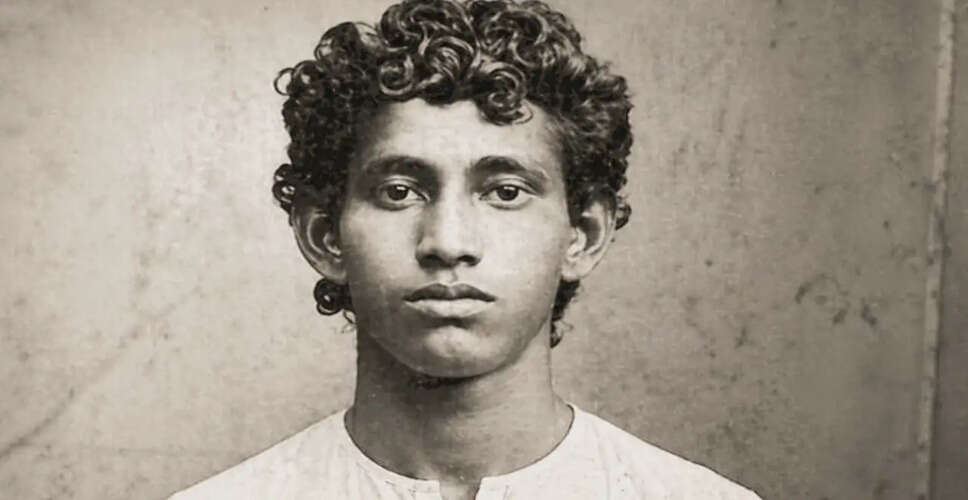

A Photograph That Captured a Nation's Heart
Many Indian schoolchildren recognize a particular photograph, even if they are unaware of the identity of the young man depicted. In the image, a teenager dressed in a buttoned coat stands with his hands at his sides, his gaze fixed on the camera with an intensity that is hard to ignore. At just eighteen years old when the photo was taken, he was executed shortly after its release, hanged at six in the morning in a Bihar jail. This young man was Khudiram Bose, whose image would become one of the most iconic representations of the Indian independence movement, marking him as one of its earliest martyrs.
The Assassination Plot Against Kingsford
The Plan to Kill Kingsford
In April 1908, the Anushilan Samiti, a revolutionary group from Bengal, dispatched two young men to Muzaffarpur, Bihar, with the intent to assassinate Douglas Kingsford, a magistrate infamous for his severe punishments of nationalist activists, including the corporal punishment of a young Bengali boy. Kingsford had been reassigned to Muzaffarpur as district judge in March 1908, and the Samiti tracked his movements. The chosen operatives were Prafulla Chaki, aged nineteen, and Khudiram Bose, who was eighteen. They assumed false identities, Dinesh Chandra Roy and Haren Sarkar, and rented a room at a charitable inn run by Kishorimohan Bandyopadhyay, where they spent three weeks observing Kingsford's routine.
The Bombing Incident
The Bombing on 30 April 1908
On the evening of April 30, the two revolutionaries concealed themselves in trees across from the European Club, where Kingsford was playing bridge with his wife and the family of a local barrister, Pringle Kennedy. At 8:30 PM, as the gathering concluded, the Kingsfords and Kennedys entered two identical horse-drawn carriages. As one carriage approached the entrance of Kingsford's residence, Khudiram hurled a bomb, which tragically struck the carriage carrying the Kennedy women. Both Mrs. Pringle Kennedy and her daughter succumbed to their injuries shortly thereafter, while Kingsford, in the other carriage, escaped unharmed. The two young men fled in separate directions.
Arrest and Trial
Capture and Trial
Khudiram traveled twenty-five kilometers through the night to reach Waini railway station. Exhausted and hungry, he drew the attention of two constables and was apprehended after a brief struggle. Prafulla Chaki, intercepted by a sub-inspector at Mokama, chose to take his own life rather than be captured. Upon Khudiram's arrival at Muzaffarpur railway station on May 1, a crowd gathered to witness him. The Statesman reported that he was "a mere boy of 18 or 19, who looked quite determined," and noted that he shouted "Vande Mataram" with the carefree spirit of a youth unburdened by anxiety. His trial commenced that month, and he was sentenced to death on June 13, 1908. His legal team appealed to the Calcutta High Court, arguing that his statements had not been recorded in his native language, but the appeal was rejected on July 13. Khudiram was executed at Muzaffarpur Jail at six in the morning on August 11, 1908, at the age of eighteen years, eight months, and eight days.
The Impact of His Martyrdom
The Smile, and the Photograph
Contemporary reports from the nationalist Bengali daily Amrita Bazar Patrika and the British publication The Empire noted that Khudiram ascended the scaffold with a smile. The Empire described him as stepping onto it "with his body erect" and noted his cheerful demeanor. The Times of London remarked that following his execution, he was celebrated as "a martyr and a hero," with students mourning his death, schools closing for several days, and his photographs selling in large quantities.
The image of Khudiram spread throughout Bengal, inspiring weavers to create dhotis featuring his name, which schoolboys proudly wore in the streets of Calcutta. Historian Partha Chatterjee has noted that Khudiram's execution played a significant role in fostering a sense of national identity among ordinary Indians. The photograph became a symbol of that burgeoning nationalism. It is challenging to confront the image of an eighteen-year-old who faced his impending death with such resolve. While the bombing resulted in the deaths of two innocent women, Khudiram's legacy is complex. Mahatma Gandhi condemned the violence, expressing sorrow for the Kennedys. Yet, Khudiram, captured at eighteen, did not shy away from his choices, his trial, or the camera. More than a century later, we owe it to him to acknowledge his story.