
The Inspiring Journey of Kristine Keren: A Tale of Resilience

A Childhood Marked by Fear
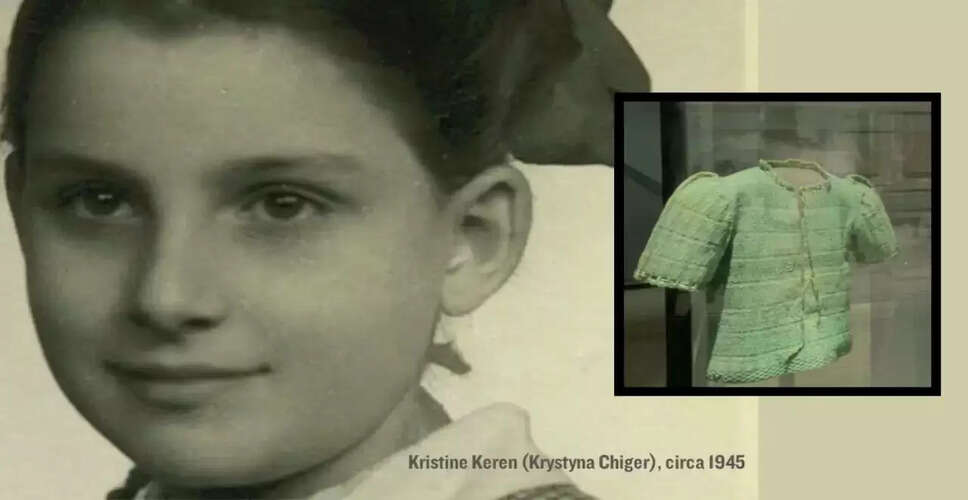
Kristine Keren's remarkable story begins not with survival, but with a simple yet cherished item: a green sweater, lovingly hand-knit by her grandmother. This sweater, a symbol of her childhood, was a constant in her life during the harrowing times of 1943 when she was just seven years old, living in a ghetto in Lvov, Poland. The city was engulfed in fear as Jewish families were forcibly relocated to ghettos, stripped of their livelihoods and normalcy. For children like Kristine, life revolved around a grim routine of silence and concealment. Known then as Krystyna Chiger, she quickly learned the importance of hiding whenever Nazis appeared, sometimes for hours on end. The green sweater, crafted by her grandmother before the German invasion, became her most treasured possession. Just two years prior, Kristine had witnessed the heartbreaking scene of her grandmother being taken away, likely to the Belzec death camp.
After this traumatic event, Kristine's life was filled with dread. While her parents labored in a nearby camp, she and her younger brother remained hidden in their cramped apartment, fearing deportation. At times, she would even conceal her brother in a suitcase to keep him safe.
The situation worsened when the Nazis initiated the liquidation of the ghetto. To escape deportation, Kristine and her family took refuge underground. They managed to bribe a sewer worker, who guided them and a small group of Jews into a narrow tunnel within the city's sewer system. In a 2007 oral history, Kristine described the experience as horrific, stating, "It was terrible. It was like going to hell." They endured this underground existence for 14 long months.
The conditions in the tunnels were unbearable. They were cramped, damp, and filled with waste. Rain posed a constant threat, as rising water levels could drown them. Food was scarce, often consumed by rats, and diseases were rampant. With no access to daylight, they could only hear the distant sounds of life above them, a world they could not return to. When Kristine finally emerged from the sewer, she was severely malnourished and ill, struggling to adjust to the light. Yet, amidst the darkness, she found solace in the fact that her beloved sweater had survived. "The sweater was saved, together with me," she fondly recalled. "I cherish this sweater."
After the war, Kristine relocated to Israel, where she married and pursued a career in dentistry before eventually moving to the United States, adopting the surname Keren. She kept her sweater as a daily reminder of her past. In 2004, she made the poignant decision to donate it to a museum. Although it is not currently on display, it remains a significant artifact that can be viewed upon request. Kristine's experiences inspired her memoir, "The Girl in the Green Sweater," co-authored with Daniel Paisner. While the title highlights the sweater, the narrative delves deeper into the complexities of a child's experience of confinement and the way memory clings to fragments of the past.