
The Iconic Spaghetti Tree Hoax: A Look Back at April Fool's Day 1957
A Nostalgic Prank from the Past
Pranking has evolved significantly over the years, and April Fool's Day serves as a perfect occasion to reflect on this transformation. In a world where skepticism is often our only defense against misinformation, it's refreshing to revisit simpler times. Today, we take a nostalgic trip back to 1957, focusing on the famous spaghetti tree hoax that captivated audiences in the UK.
Understanding the Spaghetti Tree Hoax
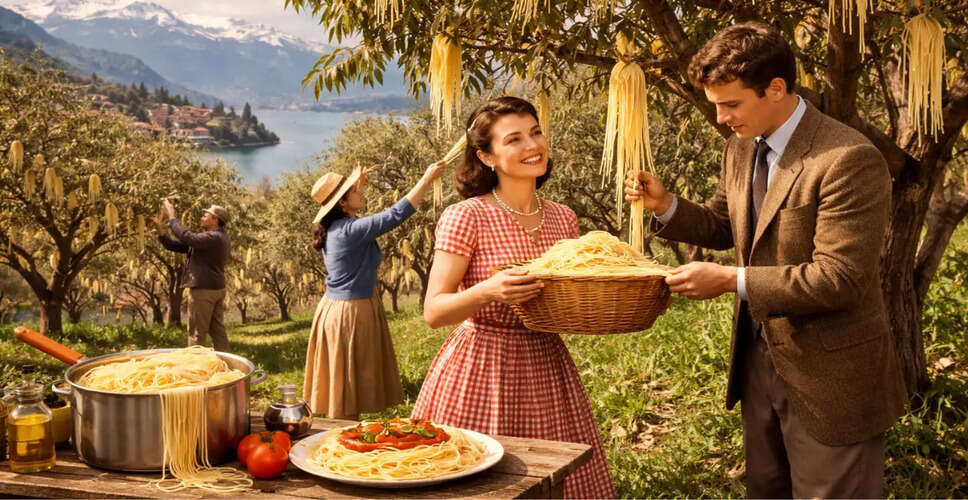
On April 1, 1957, the BBC aired a meticulously crafted three-minute segment on its current affairs show, Panorama, featuring the absurd concept of spaghetti trees. The segment showcased a family in the Ticino region of Southern Switzerland, supposedly harvesting spaghetti from a tree, humorously dubbed the 'spaghetti tree.' The narrative was cleverly constructed, including mentions of the 'near extinction of the spaghetti weevil' and serious discussions about breeding techniques to cultivate the ideal spaghetti length.
The Brain Behind the Hoax
The mastermind of this prank was Charles de Jaeger, a cameraman for Panorama, who drew inspiration from his school days. His teachers had teased him and his classmates, suggesting they would believe anything, even that spaghetti grew on trees. With the approval of Panorama's editor, Michael Peacock, Jaeger was given a modest budget of 100 pounds to bring his idea to life. The segment's credibility was further enhanced by the authoritative voice of broadcaster Richard Dimbleby, who narrated the piece with great enthusiasm.
How to Cultivate Your Own Spaghetti Tree
Approximately 8 million viewers tuned in to the BBC on that fateful April Fool's Day, falling for this elaborate yet harmless prank. At that time, spaghetti was not the global culinary staple it is today, leading to a flurry of inquiries at the BBC headquarters from viewers eager to learn how to grow their own spaghetti trees. In today's context, executing a similar prank would be nearly impossible, even for a well-established media outlet. The reasons are manifold, including the current global climate, a more discerning audience, and the shift of attention from traditional news to social media. Despite these changes, the light-heartedness of the spaghetti tree hoax remains a delightful memory for many. So, how can one recapture that sense of childlike wonder? The BBC's humorous advice from 1957 still resonates: 'Place a sprig of spaghetti in a tin of tomato sauce and hope for the best.'