
The Historical Significance of the Delhi Durbars During British Rule

Overview of the Delhi Durbars
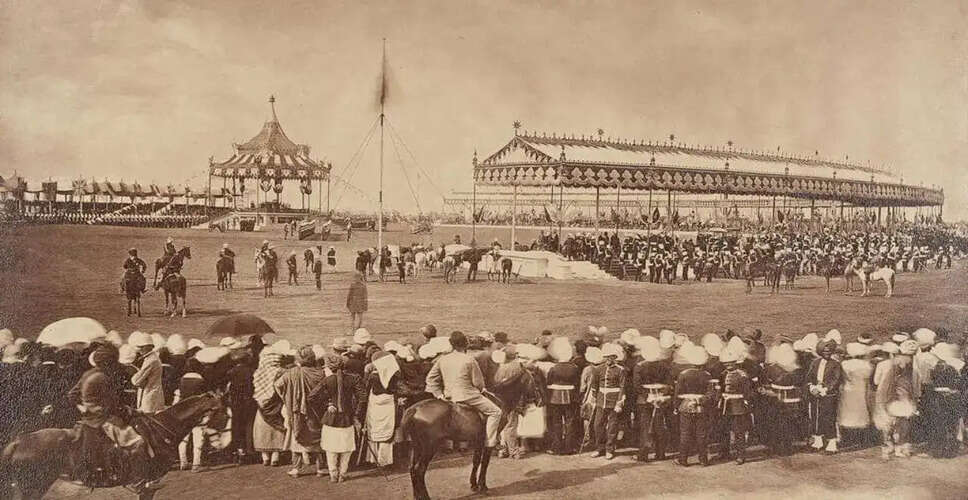
During the period of British colonialism, three significant Delhi Durbars were organized in India in the years 1877, 1903, and 1911. The inaugural Durbar took place on January 1, 1877, at Coronation Park in Delhi. On this occasion, Queen Victoria, who reigned from May 24, 1819, to January 22, 1901, adopted the title Qaisar-i-Hind, meaning Empress of India. These Durbars were ceremonial events that celebrated the coronation of the British monarch in India. The British strategically chose to hold these gatherings in India, reminiscent of the Mughal courts where emperors would meet their subjects, don elaborate attire, listen to grievances, and exchange gifts.
As noted by The Heritage Lab, the Mughal Empire, particularly under Aurangzeb, had reached its peak, showcasing immense wealth that captivated European monarchs. While the Mughals expanded their territory through alliances and conquests, the British sought to establish their influence primarily through trade. As their power grew in the Indian subcontinent, they began to adopt various Mughal cultural practices, viewing themselves as the rightful successors to the Mughal legacy.
Delhi as the Chosen Venue
Despite Calcutta (now Kolkata) being the capital, Delhi was consistently selected as the venue for these Durbars due to its association with prosperity, particularly Shahjahanabad, the Mughal capital. The 1877 Durbar was marked by grandeur, showcasing the military strength of the colonial regime. It attracted an audience of 68,000, including 15,000 British and Indian soldiers.
Notable attendees included Robert Bulwer-Lytton, the Crown's Viceroy of India, along with British governors and 63 Indian maharajas and nawabs. This event was historic as it marked the first instance where Indian royalty united to pay tribute to the British Crown, as highlighted by Nuzhat Khatoon, a South Asian Reference Specialist.
The Opulence of the Durbars
Maharajas from various princely states were honored with gun salutes and showcased their wealth through extravagant attire and jewelry. Reports indicate that around 400 rulers and 63 princes participated in the 14-day festivities. For instance, the Nizam adorned a simple black outfit complemented by a yellow turban featuring a large diamond. His grand entrance was made on an elephant, seated in a howdah embroidered with gold thread. Each ruler received a gold commemorative banner and medal, symbolizing both honor and their subjugation to the British Empire, as noted by Khatoon.
Queen Victoria did not attend this Durbar; the only monarch to be present at a Durbar was King George V during the 1911 event. In 1877, the Empress was represented by the Viceroy, the 1st Earl of Lytton. Mark Cartwright, in an article for World History Encyclopedia, described the viceroy's platform adorned with symbols of Great Britain, including the Union Jack and a portrait of Queen Victoria.
The Proclamation and Its Promises
The proclamation by Queen Victoria was delivered in both Urdu and English, outlining promises of liberty, justice, and equality for Indians under her rule. She assured religious freedom, educational opportunities, and access to civil service jobs. However, most of these commitments were never fulfilled, and the British continued to exert strict control over the Indian populace.