
The Fine Line Between Fashion and Cultural Appropriation in Celebrity Jewelry Choices

Dimple Kapadia's Unique Style at The Odyssey Premiere
During the recent premiere of Christopher Nolan's film The Odyssey in Mumbai, renowned actress Dimple Kapadia showcased a striking oversized pendant resembling Lord Shiva's third eye, complemented by amulet-style hoop earrings and matching bangles. Her ensemble received widespread acclaim, with many highlighting its roots in Indian artistry rather than mere symbolism.
Controversies Surrounding Celebrity Accessories
However, not all celebrities enjoy such positive feedback. For some global stars, the choice to adorn themselves with Hindu deities or sacred symbols has sparked police complaints, public outcry, and ongoing criticism. Here are three notable instances that illustrate this trend.
Rihanna's Ganesh Pendant Incident, 2021
In February 2021, Rihanna shared a photo of herself wearing Savage X Fenty boxers along with a diamond-studded Ganesh pendant. The image quickly went viral, leading to accusations that she was trivializing a sacred figure for a lingerie promotion. The backlash extended beyond social media, resulting in public condemnation in India and an official statement denouncing what was perceived as sensationalist celebrity behavior.
Kim Kardashian's Om Earrings Controversy, 2021
Kim Kardashian faced backlash in 2021 when she donned large hoop earrings featuring the Om symbol, a significant spiritual emblem in Hinduism typically chanted in prayers rather than worn as jewelry. The images sparked intense criticism from users who felt that a sacred sound was being misappropriated as a fashion statement. Nonetheless, some Hindu commenters defended her, arguing that she was raising awareness of the symbol rather than showing disrespect.
Taapsee Pannu's Lakshmi Necklace Backlash, 2023
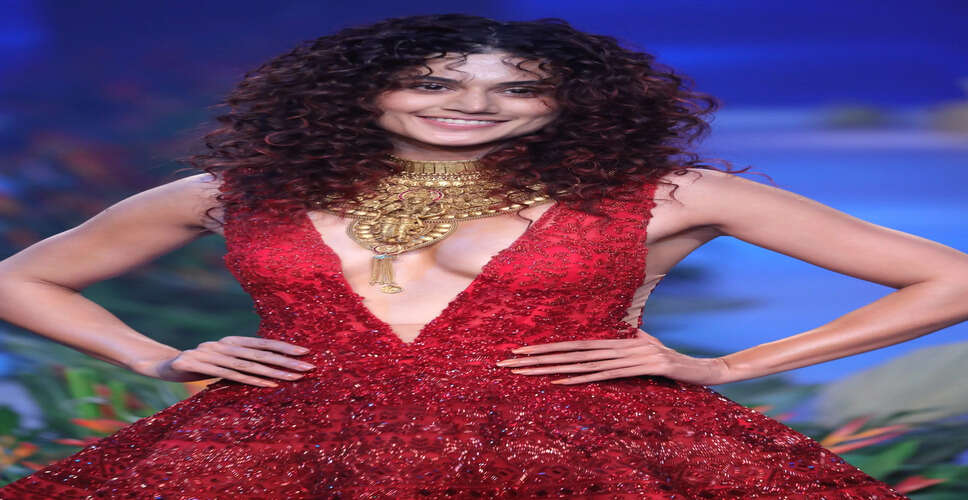
Actress Taapsee Pannu encountered a police complaint for her choice of jewelry as well. At Lakme Fashion Week, she appeared as a showstopper in a plunging gown adorned with a gold necklace featuring a carved Lakshmi pendant. A religious organization filed a complaint, claiming her attire hurt religious sentiments and misrepresented Sanatan Dharma, leading to police confirmation of the case.
Cultural Sensitivity Beyond Jewelry
The criticism surrounding celebrity fashion choices extends beyond jewelry. Selena Gomez faced backlash for wearing a bindi, a traditional forehead mark in Hindu culture, during her performances at the MTV Movie Awards in 2013 and 2017. Hindu leaders expressed that the bindi holds religious significance and should not be treated as a mere fashion accessory. Similarly, Katy Perry received criticism for an Instagram post featuring an image associated with the goddess Kali, which critics argued trivialized a revered figure.
Navigating Cultural Appropriation in Fashion
The objections to these fashion choices have remained consistent: sacred imagery loses its significance when treated as mere decoration. Dimple Kapadia's warm reception this week illustrates that the perception of cultural appropriation is not fixed. The distinction between reverence and appropriation often hinges on the wearer, their intentions, and whether the narrative behind the piece is conveyed with the same respect as the craftsmanship itself. In an industry driven by spectacle, this distinction is a crucial aspect that cannot be overlooked.