
The Fascinating History and Design of the Safety Pin
The Ubiquitous Safety Pin
From securing the pleats of a sari to serving as a makeshift first aid tool or even powering a windmill for a school project, the safety pin is a versatile item found in many aspects of daily life.
Its frequent use often leads us to overlook its origins and the ingenuity behind this seemingly simple tool. Let's delve into the intriguing history of the safety pin and explore its innovative design.
Understanding the Safety Pin's Design
The Design of a Safety Pin
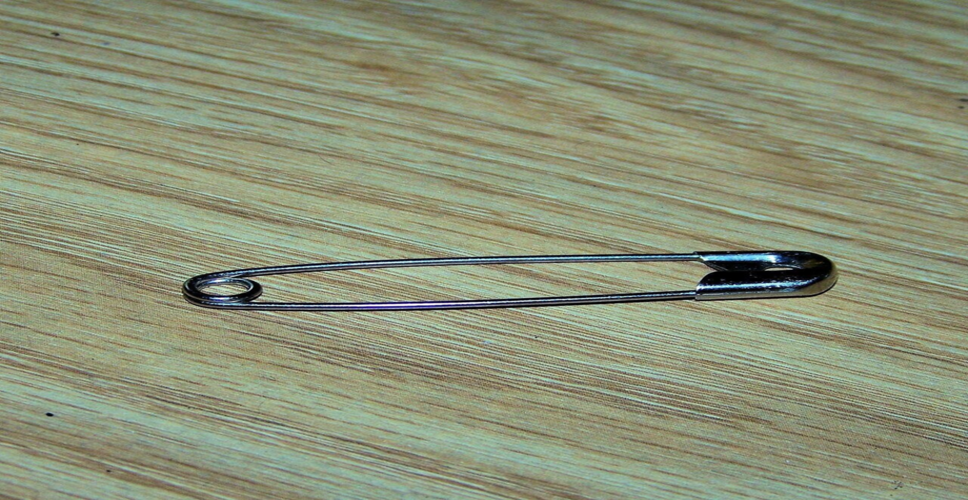
If you examine a safety pin closely, you'll notice its unique design and functionality. While many are familiar with the small hole at the back, few understand its purpose. The safety pin's construction is quite scientific, comprising two essential components:
The Spring: The wire at the pin's base is shaped into a coil. This isn't merely decorative; it acts as a spring. The tension created by this spring keeps the pointed end securely in place until sufficient force is applied to release it. Without this tension, the pin could easily open, posing a risk of injury.
The Head/Guard: This section protects the pointed end of the pin, ensuring it remains closed and minimizing the risk of accidental pricks.
The Invention of the Safety Pin
The Story of the Safety Pin
Have you ever wondered about the origins of the safety pin you use today? It was invented by Walter Hunt in 1849, who ingeniously bent a piece of wire to create this spring mechanism. Interestingly, Hunt did not realize the significance of his invention and sold the patent for a mere $400, while later companies profited immensely from it.
Tracing the Safety Pin's History
History of the Safety Pin
The safety pin's history dates back to ancient times. Known as "Fibulae" in Latin, it emerged in Europe during the Bronze Age. Two primary designs were prevalent during this era:
Northern European Method (Two-Pin): This design featured two distinct parts without a spring. One pin had a hole, while the other pin passed through it and hooked onto a clasp, making it a more intricate design.
Central European, Greek, and Italian Method (Single-Pin): These pins closely resemble modern safety pins. Crafted from a single wire, they included a spring for flexibility. One end was pointed, while the other was bent to allow insertion. The key distinction between historical pins and contemporary ones is the addition of a protective 'cap' or guard on modern pins, which was absent in earlier designs.