
The Evolution of Indian Singing Reality Shows: A Shift from Talent to Market Trends
Changing Landscape of Singing Competitions
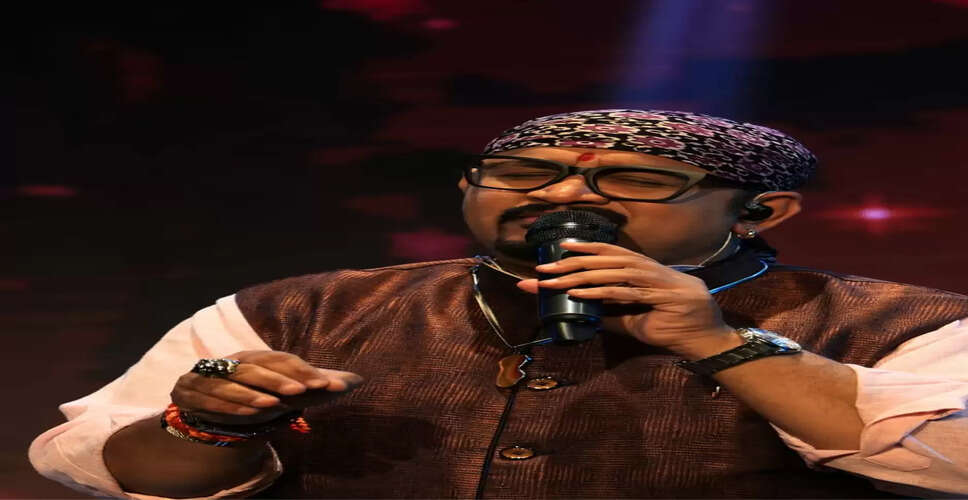
Once, Indian singing reality shows were fierce battlegrounds where only musical talent mattered for survival. However, Bollywood playback singer Abhijeet Ghoshal argues that these platforms have shifted focus towards market trends, emotional storytelling, and popularity metrics, overshadowing pure skill. Ghoshal, who has triumphed in 11 seasons of the renowned show Sa Re Ga Ma Pa, recently shared his thoughts on how the essence of these competitions has evolved over time.
A Grueling Musical Journey
Reflecting on his experiences in Sa Re Ga Ma Pa, Ghoshal described a demanding environment that prioritized music above all else. "We often filmed three episodes in a single day, which meant performing around 12 songs, with only a few being our personal choices," he recalled. "The rest were determined by the next contestant and the judges."
Contestants frequently had to perform the antara of songs selected by others, with very little preparation time. "We were given just 20 to 25 minutes to learn three entirely new songs before recording everything on the same day," he added.
High Standards from Esteemed Judges
Ghoshal emphasized that the competition's uniqueness stemmed from the high standards set by its judges. "Naushad Saheb, Khayyam Saheb, Pt Shivkumar Sharma, Rashid Khan, Gopi Nayyar, and even Vishal Bhardwaj had such high expectations that you had to perform at your best," he noted. "That was the true measure of a singer's ability."
Advancement in the competition was strictly based on merit, with no room for mediocrity.
From Musical Mastery to Marketability
Ghoshal pointed out that the current format of singing reality shows indicates a significant shift in focus. "Today, while exceptional talent still appears, contestants typically perform just one song each week," he explained. "The emphasis on publicity and popularity has grown immensely."
He highlighted the increasing focus on emotional narratives, stating, "In nearly every episode, you hear contestants sharing stories like, ‘My mother is a maid,’ or ‘My father drives a rickshaw.’ These narratives feel repetitive, and audiences can sense something is amiss."
Shifting Focus from Music to Emotion
Ghoshal believes that the balance has shifted away from musical excellence. "Previously, music shows revolved around music itself. A talented singer would progress based on their skills," he remarked. "Now, it seems to be more about personal tragedies and emotional appeals."
He summarized this transformation by stating, "What was once music-driven has now become market-driven."
Psychological Risks for Young Contestants
Beyond the changes in format, Ghoshal cautioned about the psychological dangers faced by young participants. "A troubling trend is when people casually say, ‘In my opinion, he sang really well,’" he noted. "A young contestant from a small town might hear this and mistakenly believe they are better than established singers."
He described this kind of unrestrained praise as "extremely dangerous" and potentially harmful to a young artist's mental development.
Continuing to Evolve
Despite his critiques, Ghoshal remains an active figure in the music industry, performing nationwide and merging devotional music with Bollywood tunes. He recently received the Clef Music Award for his work on Damroo Bajaye, and his self-composed Khatu Shyam bhajans are set to debut soon on T-Series. For Ghoshal, the message is clear: while new talent continues to emerge, the true measure of a singer lies not in their screen presence or emotional appeal, but in their musical integrity.