
The Enigmatic Life of Princess Fawzia: From Royalty to Solitude
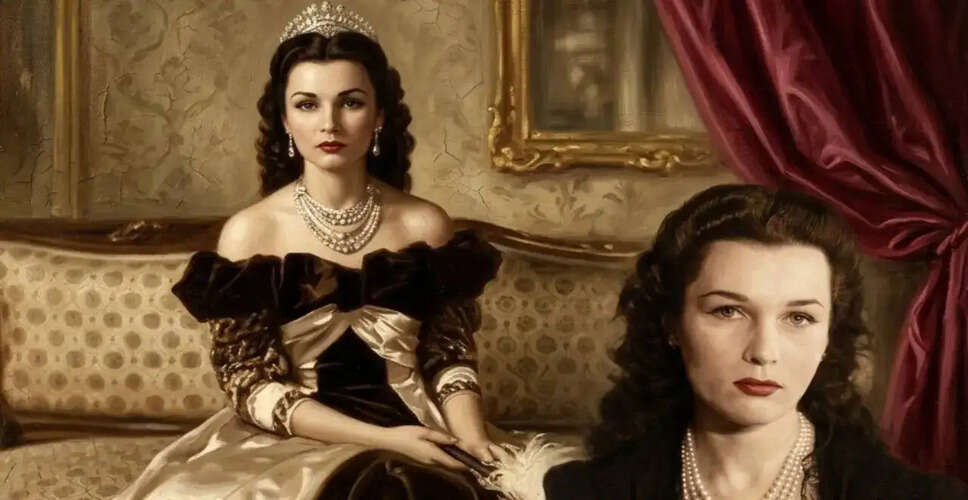
A Royal Beauty with a Troubled Fate
Renowned British fashion photographer Cecil Beaton famously referred to her as the "Asian Venus" when he captured her image for Life magazine. This was Princess Fawzia of Egypt, whom Beaton described as possessing a "perfect heart-shaped face and strikingly pale yet intense blue eyes." Her life seemed like a fairytale, marked by her beauty and her marriage to Crown Prince Mohammad Reza Pahlavi of Iran. However, her existence in Tehran was far from idyllic, leading to the dissolution of her marriage and the decline of her family's wealth.
Born on November 5, 1921, in Ras el-Tin Palace, Alexandria, Egypt, Princess Fawzia was the firstborn of Sultan Fuad I and his second wife, Nazli Sabri. She inherited a blend of Egyptian, Turkish, French, and Greek heritage, showcasing the best of her parents' lineage. Her education in Switzerland made her fluent in English, Arabic, and French.
The union with the Crown Prince was politically motivated, initially facing opposition from Fawzia's brother, who eventually relented. This alliance was intended to bolster Egypt's influence in the region. At the time of their wedding, Fawzia was just 17, while the Crown Prince was 20. As noted by Suzy Hansen, the marriage in 1939 united two significant Muslim nations, with both political and personal interests at play. For King Farouk of Egypt, it reinforced the power of a constitutional monarchy in a British-dominated region, while for the Shah of Iran, it lent aristocratic legitimacy to his rule.
The marriage was unconventional, uniting a Shia Muslim prince with a Sunni Muslim princess. Their wedding was a grand affair, featuring a lavish 20-course meal and extravagant celebrations, including a stadium visit and acrobatic performances. However, Fawzia, accustomed to a life of luxury, struggled to adapt to her new surroundings. The Marble Palace, her new home, did not meet her expectations, and she found the local cuisine unappealing. Additionally, the couple faced a language barrier, as Fawzia spoke Arabic while the Crown Prince communicated in Persian.
In 1941, the Crown Prince ascended to the throne, and Fawzia became the Empress of Iran, giving birth to a daughter named Shahnaz. However, their marriage was fraught with difficulties, as the Crown Prince was unfaithful and often seen with other women. Fawzia's relationship with her in-laws was strained, leading to instances of abuse, including an incident where a sister-in-law broke a vase over her head. After the birth of Shahnaz, Fawzia withdrew from royal duties, refusing to communicate in any language other than French, and grew increasingly disillusioned with Iranian life. She sought help from an American psychiatrist, who diagnosed her with depression.
Eventually, news of her deteriorating condition reached Egypt, prompting the Egyptian court to send representatives to check on her. According to reports, she was found in a neglected state, prompting King Farouk to demand a divorce. Fawzia returned to Egypt, marrying a royalist officer named Ismail Chirine, while her daughter remained in Iran. Following the military coup in 1952, which forced many members of Egypt's royal family into exile, Fawzia led a quiet life in Alexandria until her passing on July 2, 2013, where she was laid to rest in Cairo.