
The Disturbing History of Ota Benga and Human Exhibitions in America
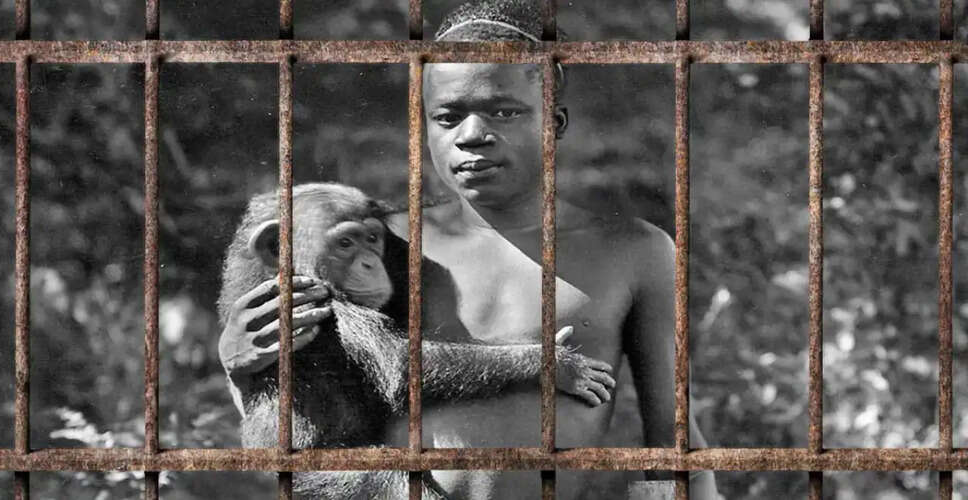
A Shocking Attraction at the Bronx Zoo
In September 1906, the Bronx Zoo in New York City unveiled a controversial exhibit that drew large crowds. Visitors flocked to see Ota Benga, a young Congolese man, who was displayed alongside an orangutan named Dohong. Standing at just four feet eleven inches and weighing 103 pounds, Benga was treated like an animal, with a sign detailing his height, weight, and origin. The cage was littered with bones, implying he was a cannibal. On the first day alone, thousands of people came to gawk, laugh, and throw food at him. Within weeks, the exhibit attracted nearly 250,000 visitors, highlighting a troubling aspect of American society just 40 years after slavery was abolished.
Government Support for Inhumane Exhibitions
The Practice Was Government-Backed and Scientifically Endorsed
The Bronx Zoo's actions were not isolated; they were part of a broader initiative supported by the U.S. government. In 1904, over 1,100 Filipinos were transported to the St. Louis World's Fair, which cost the government $1.5 million. While the fair is remembered for introducing innovations like the ice cream cone, its largest attraction was a 47-acre 'Philippine Reservation' where indigenous people were forced to live in replicas of their homes and perform for white audiences. This exhibit was orchestrated by the U.S. War Department, with the aim of showcasing the supposed 'uncivilized' nature of the newly colonized Philippines. Other groups, including Pygmies from the Congo and Native Americans, were also displayed in similar degrading manners.
The Tragic Life of Ota Benga
The Story of Ota Benga
Ota Benga, a member of the Mbuti tribe from present-day Democratic Republic of Congo, was captured and sold to Samuel Phillips Verner, an American businessman seeking to showcase indigenous Africans. Benga's family had been killed during the violent rubber trade led by King Leopold II. After the fair, he briefly returned to Africa with Verner, only to find his community devastated. He returned to the U.S., where Verner, now financially ruined, left him at the Bronx Zoo. There, Benga was caged with an orangutan, and the exhibit was marketed as a demonstration of human evolution, suggesting he was a 'missing link' between apes and white humans.
Public Outcry and Aftermath
Public backlash against Benga's treatment was spearheaded by African-American clergy, including Reverend James H. Gordon, who organized a petition for his release. Despite the outrage, the New York Times defended the zoo's actions. After 20 days, the exhibit was closed, and Benga was released into Gordon's care. He later moved to Lynchburg, Virginia, where he adapted to American life but remained unable to return to Africa due to World War I. Tragically, Benga took his own life on March 20, 1916, at the age of 32.
Continued Exploitation and Apologies
The Igorrotes and the Coney Island Spectacle
The exploitation of indigenous people continued beyond the St. Louis fair. In 1905, Dr. Truman Hunt brought Igorrote tribespeople to Coney Island, paying them meager wages to perform mock ceremonies and eat dog meat for entertainment. Hunt fabricated stories to portray them as savages and pocketed most of their earnings. He was eventually arrested for embezzling funds from the performers.
In 2020, the Wildlife Conservation Society, which manages the Bronx Zoo, issued a formal apology for its treatment of Ota Benga and condemned the racist ideologies of its founders. Benga left no personal accounts of his life, and much of what is known comes from the records of those who exploited him. The stories of the Igorrote performers are similarly obscured, with many returning to the Philippines after their ordeal. The historical accounts of these events serve as a reminder of the cruelty that occurred in plain sight, in one of the world's most modern cities.