
The Bold Act of Bina Das: A Revolutionary's Stand at Her Graduation

A Historic Day at the University of Calcutta
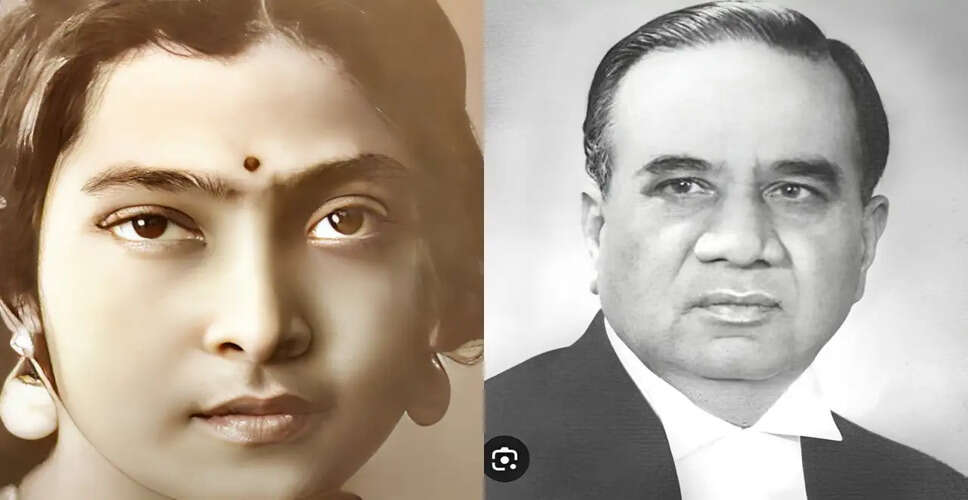
On February 6, 1932, the Senate Hall of the University of Calcutta buzzed with excitement as graduates donned their gowns, eagerly awaiting their degrees. Among them was a 21-year-old woman named Bina Das, who was there to receive her Bachelor of Arts in English. Hidden beneath her gown was a loaded revolver, and in a matter of moments, she would fire five shots at the Governor of Bengal, Sir Stanley Jackson, forever linking her name to that of the Vice-Chancellor, Hassan Suhrawardy, who was seated nearby.
Who Was Bina Das?
Bina Das, born in 1911, was the daughter of Beni Madhab Das, a prominent Brahmo educator who had once taught Subhas Chandra Bose. Growing up in a household influenced by the freedom movement, Bina was inspired by her elder sister Kalyani, a dedicated revolutionary. By the time she attended university in Calcutta, Bina had joined the Chhatri Sangha, a semi-revolutionary group for women students. Despite lacking training in combat, she acquired a revolver from fellow revolutionary Kamala Dasgupta for 280 rupees, driven by her desire to challenge colonial rule.
The Convocation Incident
As Jackson, a former cricket captain, began his speech, Bina Das stood up, drew her revolver, and fired. Jackson managed to duck, and the shots missed their target. Hassan Suhrawardy, the first Muslim Vice-Chancellor of Calcutta University, quickly intervened, grappling with Bina to disarm her. Despite his efforts, she fired all five rounds, injuring a senior professor, Dr. Dineshchandra Sen, in the process. Bina was soon overpowered and taken into custody.
The Motivation Behind Her Actions
Bina Das openly acknowledged her actions, stating in court that she aimed at the Governor to protest against a government that oppressed her country. Her act was a bold statement against colonial repression, performed in the most public venue possible—her graduation ceremony. A search of her hostel room revealed additional ammunition, and her trial concluded in just one day, resulting in a nine-year sentence of rigorous imprisonment.
The Aftermath for Suhrawardy
Suhrawardy's quick response during the incident elevated him to hero status within the colonial administration. He was knighted by King George V, an honor that highlighted the contrasting fates of Bina Das and himself—one facing imprisonment and obscurity, while the other was celebrated and honored. The document confirming his knighthood remains a testament to that fateful day.
Bina Das's Later Life
Released in early 1939, Bina Das continued her fight against colonial rule by joining the Congress and participating in the Quit India Movement of 1942, which led to her imprisonment once more. After India gained independence, she married fellow freedom fighter Jyotish Bhowmick and taught history and civics in schools across Bengal. In her later years, she declined the pension offered to freedom fighters. Tragically, she passed away in 1986, her body found by the roadside and unrecognized for nearly a month. Bina Das, once celebrated as Agnikanya, the daughter of fire, ended her life in obscurity, a poignant reminder of the duality of history where heroes and officials often occupy separate narratives.