
The Astronomical Legacy of Maharaja Sawai Jai Singh II
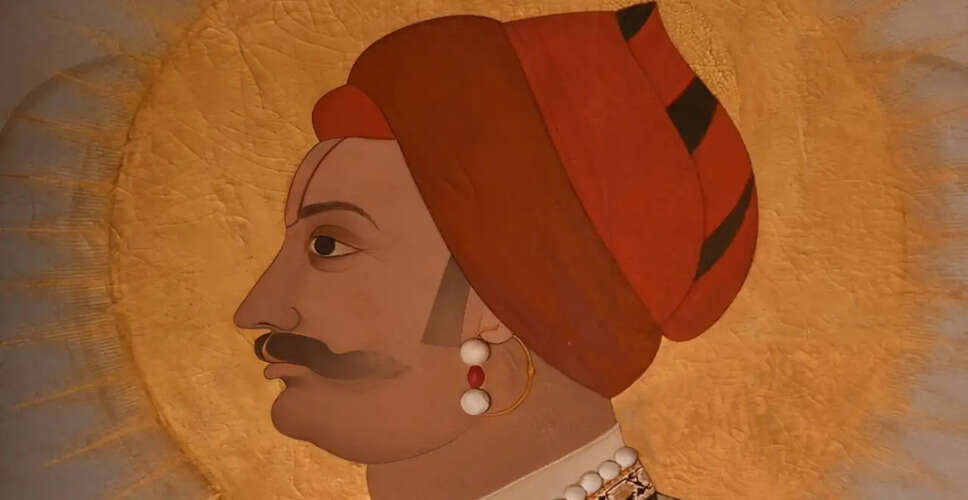

A King with a Vision for the Stars
Rather than engaging in warfare like many of his predecessors, Maharaja Sawai Jai Singh II dedicated his reign to the pursuit of knowledge about the cosmos. Faced with the limitations of contemporary astronomical instruments, he embarked on an unprecedented endeavor: constructing monumental tools from stone. Today, three centuries later, his creations still stand in Jaipur, with one instrument capable of providing time with remarkable precision, accurate to within two seconds.
The Astronomer King
Why a King Turned Astronomer
Born in 1688, Jai Singh II was not only a Rajput monarch but also a Mughal noble and a passionate mathematician. Legend has it that in 1719, when the Mughal emperor Muhammad Shah sought an auspicious date, the court's astronomers were unable to assist due to their outdated brass instruments. Jai Singh believed the issue lay not in the stars but in the inadequacy of the tools. Determined to find a solution, he decided to create instruments so large that they would not fail in accuracy.
The Stone Observatory
The Observatory He Built From Stone
Between 1728 and 1734, Jai Singh constructed the Jantar Mantar in the city of Jaipur, which he had established. This expansive complex features nineteen astronomical instruments crafted from local stone and marble. The term 'Jantar Mantar' translates to 'instruments of calculation' in Sanskrit. Spanning approximately eighteen thousand square meters, the structures resemble abstract sculptures rather than mere scientific tools, featuring vast triangular ramps, hemispherical bowls, and curved walls. Each instrument was designed for direct observation, enabling the tracking of the sun, the positioning of stars, and the prediction of eclipses. This observatory is the largest and most impressive of five he commissioned, with others located in Delhi, Ujjain, Mathura, and Varanasi.
The Samrat Yantra: A Timeless Sundial
Samrat Yantra: The Sundial That Still Tells the Time
The crowning achievement of this complex is the Samrat Yantra, the largest stone sundial globally. This monumental triangular structure rises about twenty-seven meters into the sky, with its sloping edge aligned to the Earth's axis, casting a shadow across two curved quadrants below. The effect is captivating, as the shadow shifts visibly, moving approximately a millimeter every second across the marble scale as the Earth rotates. Remarkably, even after three centuries, it still accurately measures local time to within two seconds, outperforming modern wristwatches.
A Scholar of Three Civilizations
A Scholar Who Gathered the Sky From Three Civilisations
For those who appreciate intellectual pursuits, this aspect of Jai Singh's story is particularly enriching. He did not confine himself to a single tradition of knowledge; instead, he integrated insights from Hindu siddhantas, Islamic astronomy, and contemporary European science, incorporating elements from the works of French astronomer Philippe de la Hire. In 1728, he dispatched emissaries to gather the most precise astronomical data available. From this wealth of information, he compiled the Zij-i-Muhammad Shahi, a comprehensive set of astronomical tables dedicated to the emperor. Thus, he created not just an observatory but a confluence of knowledge from three civilizations, etched in stone rather than ink.
The Enduring Legacy of Jai Singh II
What Jai Singh Left in Stone
Jai Singh II passed away in 1743, and the empires he served have faded into history. The brass instruments of his contemporaries have corroded and disappeared. Yet, his monumental creations endure in Jaipur, now recognized as a UNESCO World Heritage Site, continuing to cast shadows and keep time. He understood a profound truth that many rulers overlook: while monuments of power may decay, those built from curiosity and knowledge endure. The next time you check the time, remember the Rajput king who believed the sky could be measured and constructed a stone machine to demonstrate it, one that has only lost a few seconds over three centuries.