
Significant Financial Changes Coming to India on May 1, 2026
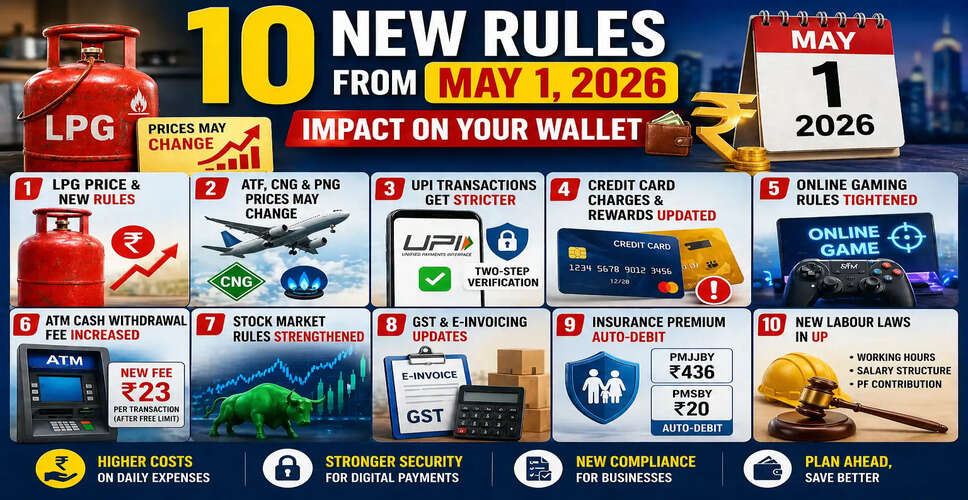

Overview of Upcoming Financial Changes
Starting May 1, 2026, India will witness a series of substantial financial and regulatory modifications. These alterations will influence various sectors, including LPG cylinder pricing, UPI transactions, ATM withdrawal fees, and credit card policies. Being unaware of these changes could significantly impact your monthly expenses.
Below is a detailed overview of the 10 major rule changes and their implications for your finances.
1. Changes in LPG Pricing and Regulations
Major oil companies such as Indian Oil Corporation, HPCL, and BPCL are anticipated to adjust LPG prices.
- Potential price increases due to fluctuations in global crude oil prices.
- Mandatory OTP-based delivery may be introduced.
- eKYC will be required for those receiving subsidies.
This could lead to higher expenses in your kitchen.
2. Adjustments in ATF, CNG, and PNG Prices
Revisions in Air Turbine Fuel (ATF) rates could influence flight ticket costs.
- Prices for CNG and PNG may also see adjustments.
- Increased costs for transportation and household fuel are likely.
3. Stricter UPI Transaction Regulations
The Unified Payments Interface (UPI) is expected to implement enhanced security measures.
- Two-step verification may become a requirement.
- Additional authentication beyond the PIN may be necessary.
- Improved fraud protection measures will be introduced.
4. Updates to Credit Card Charges and Rewards
Credit card holders may experience several modifications:
- Reduction in reward points.
- Increased late payment fees.
- New spending thresholds for waiving fees.
For instance, SBI Cards might raise late fees and adjust annual fee waiver limits.
5. Stricter Online Gaming Regulations
New rules will categorize online gaming into:
- Real-money games.
- Social games.
- E-sports.
Platforms offering real-money gaming may need to register and comply with stricter regulations.
6. Increased ATM Withdrawal Fees
According to the Reserve Bank of India:
- The fee for ATM withdrawals will rise to ₹23 per transaction after the free limit is reached.
- Free withdrawal limits will remain as follows:
- 5 transactions at own bank ATMs.
- 3 transactions at other bank ATMs in metro areas, and 5 in non-metro areas.
7. Enhanced Stock Market Regulations
Under the Securities and Exchange Board of India:
- Stricter two-factor authentication for trading will be enforced.
- Settlement systems will be improved.
- Measures for better investor protection will be implemented.
8. Updates to GST and E-Invoicing
Businesses will face new GST compliance requirements:
- Introduction of new e-invoicing rules.
- Enhanced digital reporting.
- Increased transparency in transactions.
These changes may gradually affect product pricing.
9. Auto-Debit for Insurance Premiums
Government schemes such as:
- PM Jeevan Jyoti Bima Yojana.
- PM Suraksha Bima Yojana.
will now feature auto-debit premiums:
- ₹436 for life insurance.
- ₹20 for accident insurance.
10. New Labour Regulations in Uttar Pradesh
Uttar Pradesh may implement new labour laws:
- Revisions in working hours.
- Updated salary structures.
- Effects on PF contributions and take-home salaries.
These changes could eventually extend to other states.
Implications for Your Finances
The cumulative impact of these changes may result in:
- Increased daily expenses.
- Higher service charges.
- Stricter financial compliance requirements.
- Enhanced security for digital transactions.
Conclusion
The date of May 1, 2026, marks a significant shift in financial regulations. From adjustments in LPG and ATM fees to enhanced UPI security and credit card policies, nearly every aspect of your financial dealings will be affected.
Staying updated and modifying your spending habits can assist you in navigating these changes effectively and minimizing financial strain.