
Significance of Sawan Somwar and Som Pradosh Vrat on August 10, 2026

Sawan Somwar 2026 Overview
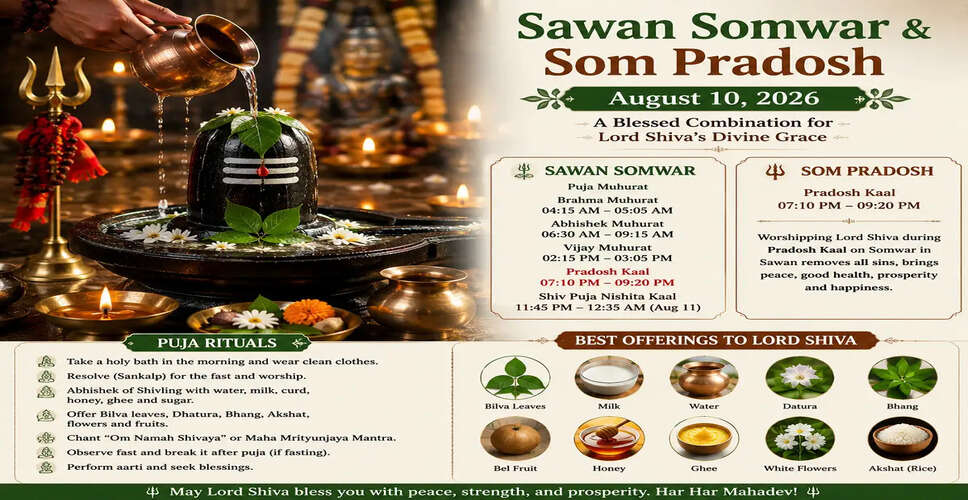
Sawan Somwar 2026: On August 10, 2026, devotees of Lord Shiva will celebrate a significant day as it marks the second Monday of Sawan in various regions of North India, coinciding with Som Pradosh Vrat. This unique alignment offers worshippers two key opportunities for Shiva Puja—morning Jalabhishek and evening Pradosh worship.
Traditionally, Sawan Mondays are deemed auspicious for prayers to Lord Shiva, and the Pradosh Vrat is also dedicated to him. When Pradosh occurs on a Monday, it is referred to as Som Pradosh.
According to religious beliefs, worship conducted on this day is thought to bring peace, harmony in relationships, health, marriage blessings, and the removal of obstacles. However, these are faith-based practices and should not be seen as guarantees of specific results.
Below is a comprehensive guide to the puja timings, rituals, and offerings for August 10.
Trayodashi Timing on August 10
When Does Trayodashi Begin on August 10?
As per the Panchang for New Delhi, Krishna Paksha Dwadashi in the month of Sawan will last until approximately 8:00 AM on August 10.
Following this, Trayodashi Tithi will commence and continue until around 4:54 AM on August 11.
Pradosh Vrat is typically observed on the day when Trayodashi is present during the Pradosh period after sunset. Since this condition is fulfilled on August 10, Som Pradosh Vrat will be celebrated on this day.
For New Delhi and surrounding areas, the Pradosh Puja period is expected to be:
7:05 PM to 9:14 PM
Timings may vary slightly from one city to another due to differences in sunset. Therefore, devotees should consult a local Panchang for precise timings.
Morning Jalabhishek Timing
Best Time for Morning Jalabhishek
Those wishing to start their day with Shiva worship can perform Jalabhishek after bathing and donning clean attire.
In New Delhi, Brahma Muhurta is noted to be approximately:
4:22 AM to 5:05 AM
Sunrise is anticipated around:
5:47 AM
Devotees may visit a temple during Brahma Muhurta or after sunrise, depending on convenience and local temple hours.
The focus during morning worship should be on simplicity—using clean water, belpatra, flowers, and chanting mantras.
Performing Morning Shiva Puja
How to Perform Morning Shiva Puja
Before approaching the Shivling, devotees may first offer prayers to Lord Ganesha, Goddess Parvati, and Nandi.
Clean water can then be gently poured over the Shivling.
For those wishing to offer milk, only a small amount should be used where permitted. Clean water can be offered again afterward.
Traditional offerings may include:
- Clean water
- Belpatra
- White flowers
- Chandan
- Akshat
- A small quantity of milk, where allowed
Bel leaves should ideally be fresh and clean. A three-leaf belpatra is often considered auspicious in many Shiva traditions.
While offering water, devotees can chant “Om Namah Shivaya”. The Mahamrityunjaya Mantra may also be recited.
There is no need for elaborate or costly offerings. Simple worship performed with focus and discipline is valued in many traditions.
Alternative Timing for Worship
Missed the Morning Puja? Check the Abhijit Muhurta
Individuals unable to visit a temple early in the morning can still perform Shiva worship later in the day.
For New Delhi, the Abhijit Muhurta on August 10 is noted to be approximately:
12:00 PM to 12:53 PM
During this time, devotees can light a lamp before a Shivling or image of Lord Shiva at home.
They may recite Shiva Chalisa, chant “Om Namah Shivaya” 108 times, or simply sit in quiet meditation.
Those without a Shivling at home can worship through an image or mental remembrance of Lord Shiva.
Rahu Kaal on August 10
Rahu Kaal Timing on August 10
On Monday, Rahu Kaal is stated to occur between:
7:27 AM and 9:07 AM
Regular prayers, mantra chanting, and daily worship are generally not considered prohibited during this time.
However, devotees starting a special religious vow or new ceremonial observance may prefer to select a different time based on their family or temple tradition.
Importance of Evening Som Pradosh Puja
Why Evening Som Pradosh Puja Is Important
The second significant worship period begins after sunset.
Pradosh refers to the transitional phase between day and night and is traditionally viewed as an auspicious time for Shiva worship.
Since August 10 falls on a Monday, the observance is termed Som Pradosh.
For New Delhi, the main Pradosh worship window is approximately:
7:05 PM to 9:14 PM
During this time, devotees can engage in a more elaborate form of worship dedicated to Lord Shiva and Goddess Parvati.
Conducting Som Pradosh Puja in the Evening
How to Perform Som Pradosh Puja in the Evening
Start by cleaning the puja area and arranging the necessary items.
Offer clean water to the Shivling, followed by belpatra, white flowers, sandalwood, and akshat.
A ghee lamp can then be lit before Lord Shiva and Goddess Parvati.
Those following family traditions may also include appropriate items associated with Goddess Parvati.
After this, devotees may recite the Pradosh Vrat Katha, Shiva Chalisa, or other Shiva prayers.
Aarti can be performed at the conclusion, followed by personal prayers.
The evening puja need not be limited to Jalabhishek; lamp lighting, mantra chanting, prayer, and meditation are also vital components of the observance.
Differences Between Morning and Evening Puja
Morning and Evening Puja Serve Different Purposes
The two worship periods can be approached in distinct ways.
Morning worship may focus more on:
- Jalabhishek
- Belpatra
- Mantra chanting
- Starting the day with tranquility and devotion
Evening Som Pradosh worship may emphasize:
- Joint worship of Shiva and Parvati
- Lighting a lamp
- Aarti
- Pradosh Vrat Katha
- Personal prayers and reflection
Devotees praying for harmony in marriage or relationships may opt to worship Shiva and Parvati together in the evening.
Those seeking mental peace or strength during challenging times may chant the Mahamrityunjaya Mantra.
These practices remain matters of faith and should not be interpreted as guaranteed solutions.
Dietary Guidelines for Som Pradosh Vrat
What Can Devotees Eat During Som Pradosh Vrat?
Individuals observing a fast can choose a fasting method that aligns with their health and family customs.
Common fasting foods may include:
- Fruits
- Milk
- Makhana
- Sabudana
- Other permitted vrat foods
A strict fast is not essential for everyone.
People with health issues, pregnant women, elderly devotees, and those on regular medication should avoid fasting in a manner that could jeopardize their health.
The spiritual concept of a vrat is also linked to self-control. Devotees may therefore strive to avoid anger, harsh speech, and dishonesty throughout the day.
Helping those in need with food, clothing, or other essentials can also lend a broader social significance to the observance.
Offerings for Shivling on August 10
What Should You Offer on Shivling on August 10?
There is no necessity to use a large quantity of puja materials.
Clean water remains one of the simplest and most commonly used offerings.
Belpatra, white flowers, chandan, and akshat may also be offered according to tradition and temple guidelines.
If milk is offered, devotees should avoid waste and adhere to temple instructions.
The quantity of the offering is less significant than cleanliness, discipline, and sincere participation.
Two Worship Opportunities on August 10
Two Opportunities for Shiva Worship on August 10
August 10 provides devotees with two distinct periods for worship.
The morning can commence with Jalabhishek and mantra chanting, while the evening can be dedicated to Som Pradosh Puja after sunset.
For those in New Delhi, Brahma Muhurta is noted to be from around 4:22 AM to 5:05 AM, while the main Pradosh Puja period is approximately 7:05 PM to 9:14 PM.
As timings vary by location, devotees should confirm local sunrise, sunset, and Panchang details.
The essence of the day lies not in gathering elaborate puja items but in merging devotion with discipline, tranquility, and respect for others.
Whether worship is conducted at home or in a temple, simple offerings, mantra chanting, and heartfelt prayer can form the core of the observance.