
Significance and Procedure of Ghatasthapana During Chaitra Navratri 2026
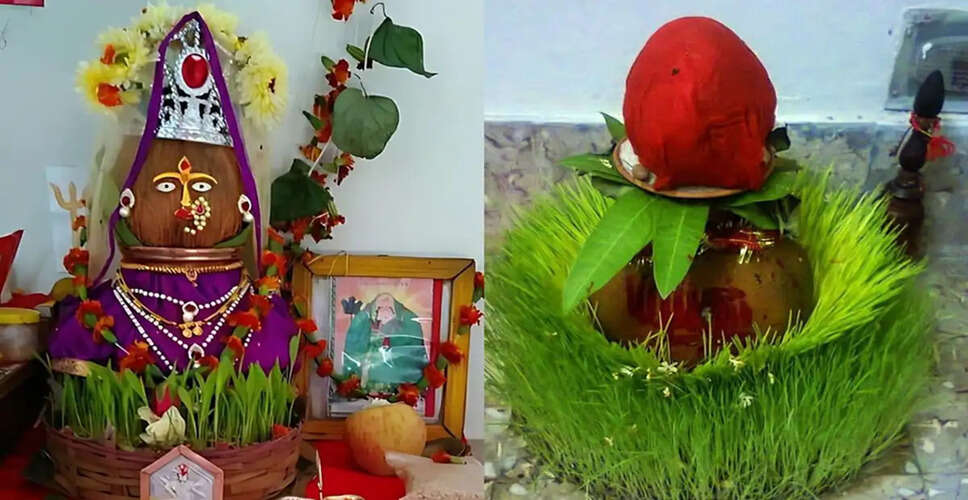
Understanding Ghatasthapana on Chaitra Navratri
The first day of Chaitra Navratri in 2026 marks the important ritual of *Ghatasthapana*, also known as *Kalash Sthapana*. This ceremony is crucial as it invites Goddess Durga into your home. Following the correct procedures and guidelines during this ritual can enhance the spiritual benefits of your Navratri observance. Let's delve into the appropriate steps for performing this sacred ritual.
Steps to Perform Ghatasthapana
On the inaugural day of Navratri, rise early, complete your morning rituals, and meditate on the Divine Mother.
Begin by cleaning the area designated for *Ghatasthapana*, followed by purifying it with *Gangajal* (holy water from the Ganges).
According to *Vastu* guidelines, the North or North-East direction is preferred for this ritual. Next, create an *Ashtadal* (an eight-petaled lotus design) using turmeric powder at the chosen location.
Take a copper or earthen *Kalash* (pot), fill it with pure water and a little *Gangajal*. Inside the pot, place a coin, a betel nut (*Supari*), a whole turmeric root, *Durva* grass, and *Akshat* (unbroken rice grains).
Ensure that the *Kalash* is not placed directly on the ground; instead, use a wooden stool (*Chowki* or *Pata*) as a base. Cover the stool with a new cloth, preferably in red or yellow.
On the outside of the *Kalash*, draw a *Swastika* symbol using *Roli* (sacred red powder) and wrap a sacred red thread (*Mauli*) around it.
Surround the rim of the *Kalash* with 5 or 7 mangoes or Ashoka leaves.
Next, wrap a coconut in red cloth and place it on top of the *Kalash*. Fill a wide earthen pot with clean soil and sow barley seeds (*Jau*) in it. Begin your worship by first offering prayers to Lord Ganesha, followed by prayers to the Divine Mother (*Mata Rani*). Lighting an *Akhand Jyot* (continuous lamp) on this day is highly recommended.
Important Considerations
During the *Kalash Sthapana* ritual, it is essential to maintain both physical and mental purity. Avoid harboring any negative thoughts. Once the *Kalash* is established, it should remain undisturbed in its place for the entire nine days of Navratri. Ensure that an Akhand Jyot is lit during the ceremony. If you have an Akhand Jyot in your home, do not leave the house unattended during this period. Throughout Navratri, it is crucial to refrain from anger, abusive language, or insults.
PC Social Media