
Sabrina Gonzalez Pasterski: The Rising Star of Theoretical Physics
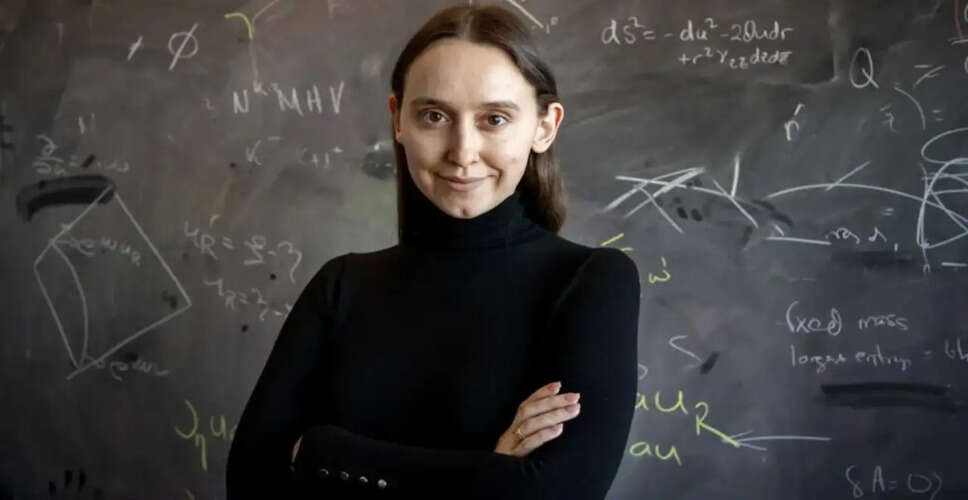

A Unique Perspective on Passion and Success
In the contemporary landscape, many individuals aspire to excel in their passions with the ultimate goal of financial gain, even if that wasn't their initial motivation. However, Sabrina Gonzalez Pasterski, an American theoretical physicist, stands out in this regard. Her profound dedication to academia and research is exemplified by her decision to decline a staggering $1.1 million academic offer, alongside recruitment overtures from NASA and Jeff Bezos' Blue Origin.
Her Passion for Aviation
Born in 1993 in Chicago to a Cuban-American mother and a Polish-American father, Pasterski is often compared to Einstein due to her remarkable intellect. Her primary focus is on unraveling the complexities of gravity at the quantum level, a pursuit that MIT describes as the 'source code of the universe.' This passion traces back to her childhood fascination with aviation. At the tender age of 12, she embarked on a project to build a Zenith CH 601 XL aircraft from a kit. After two years of hard work, she successfully completed the aircraft, ready for flight. Following this achievement, she aimed to compete in the US International Physics Olympiad and secured internships at NASA's Kennedy Space Center and Blue Origin, both of which she ultimately declined for full-time positions.
Pasterski has been exploring some of the most critical questions in her field, striving to connect the theoretical divides between general relativity and quantum mechanics. For those unfamiliar, a significant breakthrough in her research could revolutionize how scientists understand the fundamental concepts of space and time, marking a pivotal moment in the field.