
Reviving Rajni: A Modern Take on an Iconic Character
The Return of Rajni
In the 1980s, Basu Chatterjee introduced a compelling female character that resonated deeply with audiences, becoming a voice for many. Today, Rajni, one of the most memorable figures in Indian television, is being reimagined in a fresh format.
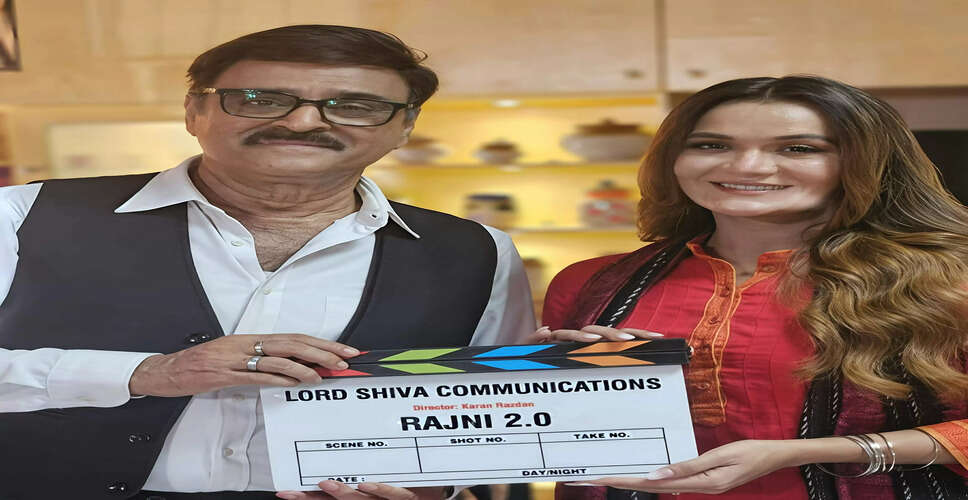
Karan Razdan, who penned the original series and directs its new iteration, Rajni 2.0, explains his motivation for bringing this beloved character back to life. Despite the passage of four decades, Rajni remains vivid in his memory, and the lackluster attempts to replicate her inspired him to create a new narrative through her daughter, Guddu. Anupam Kher has praised this creative decision as a ‘masterstroke.’ The series is currently available on Doordarshan and its streaming service, Waves.
Razdan reflects on the evolution of television since 1985, noting that back then, Doordarshan was the sole channel. Today, the landscape is crowded with numerous platforms, making it challenging to capture audience attention amidst the competition.
With crime dramas dominating the scene, Razdan chose to focus on a series that emphasizes social issues. He clarifies, “Our primary role as creators is to entertain, but we also aim to inform and educate.”
Creating this series has been enlightening for Razdan, who has gained insights into legal concepts such as ‘natural witness’ through the process. The lead actress, Aradhana Sharma, has also learned about significant laws like the Real Estate (Regulation and Development) Act and the Prevention of Sexual Harassment Act.
“Rajni represents an emotional legacy and a significant responsibility. Upholding the character’s legacy, originally brought to life by the unforgettable Priya Tendulkar, is a challenge I embrace,” Aradhana shares.
Aradhana connects with the resilient spirit of Rajni 2.0, growing stronger with each episode. She aims for the show to address topics such as marriage.
“Marriage is often viewed as the ultimate goal for women. I want to challenge this perception. Parents should not pressure their daughters into marriage for the sake of tradition,” she asserts.
Razdan has also addressed the issue of dowry in the series. He acknowledges the significant societal changes over the past forty years and is exploring contemporary issues like digital fraud, VIP racism, and property disputes.
He believes that comparing this new series to Chatterjee’s original is unfair, stating, “It was much harder to criticize government bodies back then. We were limited to 48 episodes.” When asked about the potential length of the new series, he responds, “I can continue as long as relevant issues arise.”
For today’s viewers, he offers this advice: “You will find the show relatable as it addresses common concerns.” He encourages women, the primary audience, to “be the change you wish to see.” Aradhana adds, “Silence is not an option; one must speak out against oppression.”