
Raúl Castro Faces Charges in US for 1996 Plane Shootdown

US Charges Raúl Castro
The United States has formally charged former Cuban President Raúl Castro with conspiracy to murder US citizens in connection with the downing of two aircraft in 1996. A statement from the US Department of Justice's Office of Public Affairs revealed that Castro, along with several others, is accused of involvement in the February 24, 1996 incident where two unarmed civilian planes operated by Brothers to the Rescue (BTTR) were shot down over international waters.
BTTR, based in Miami, was known for its humanitarian flights aimed at assisting Cuban migrants in peril. The press release indicated that Cuban intelligence agents had infiltrated the organization since the early 1990s, providing the Cuban government with critical information about its operations, which was allegedly utilized in planning the 1996 attack. The charges also include two counts of aircraft destruction and four counts of murder.
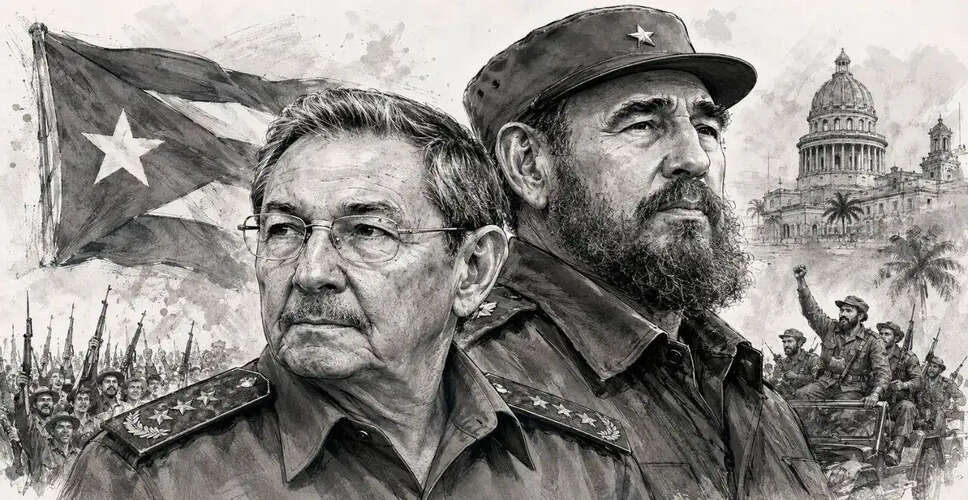
At 94 years old and no longer in power, Raúl Castro remains a significant figure in Cuba, often regarded as a key leader of the Cuban Revolution. He played a pivotal role alongside his brother Fidel Castro in overthrowing a US-supported dictator and served as Cuba's defense minister for nearly fifty years before succeeding Fidel as president in February 2008.
Raúl Castro's Early Life and Revolutionary Role
The Life of Raúl Castro
Raúl Castro was born on June 3, 1931, in Holguín, Cuba, as the youngest of six siblings. His sister, Juanita Castro, recounted in her book, Fidel and Raúl, My Brothers: The Secret Story, how Raúl would listen intently to Fidel's political discussions. Known for his fondness for vodka and rum, he was also influenced by Soviet ideals.
Raúl became a crucial player in the Cuban Revolution, joining Fidel's efforts in 1952 to overthrow the US-backed dictator Fulgencio Batista. The brothers participated in the failed Moncada Barracks attack on July 26, 1953, which marked the beginning of their revolutionary journey. Although they were imprisoned, international pressure led to their release in 1955, allowing them to eventually seize control of Cuba.
After the revolution, Raúl was instrumental in establishing the Revolutionary Armed Forces, which successfully repelled the CIA-backed Bay of Pigs invasion in 1961. He also played a significant role in organizing the Cuban Communist Party when Fidel declared Cuba a communist state.
While Fidel was the public face of the revolution, Raúl was its backbone, overseeing military and economic reforms. His leadership contributed to a thaw in US-Cuba relations, particularly during Barack Obama's presidency, which saw efforts to normalize ties. Raúl Castro stepped down as party leader in 2021, but the recent charges have reignited international interest in his legacy.