
Otto Wagner: The Visionary Architect Who Redefined Urban Design
A Legacy of Modern Architecture
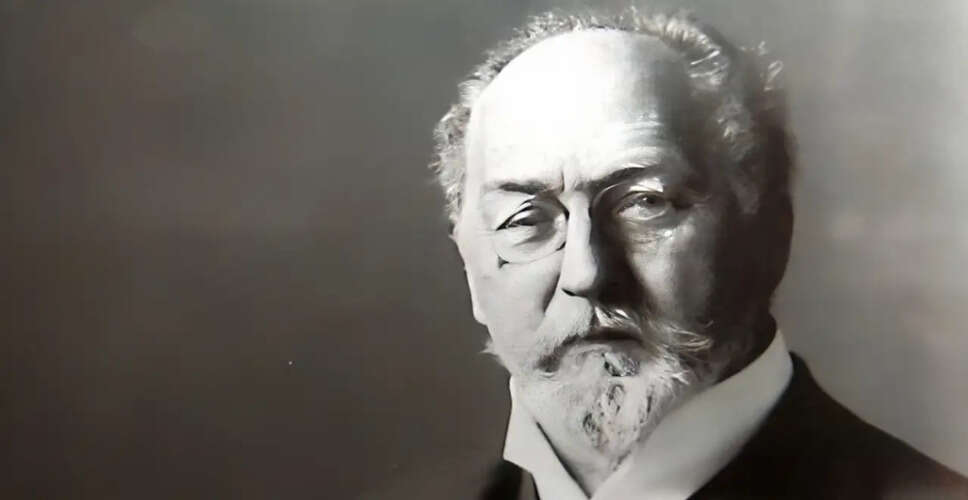
Whenever you step into a train station that is not only clean and functional but also aesthetically pleasing, you are experiencing the vision of an architect from Vienna, Otto Wagner, whose name may not be widely recognized. Born in 1841, Wagner initially adhered to the classical architectural styles of the 19th century, but he eventually shifted his perspective, revolutionizing urban design.
Breaking Away from Tradition
Wagner was immersed in the architectural styles of the Austro-Hungarian Empire. He began his studies at the Vienna Polytechnic Institute at the age of sixteen and later trained in Berlin under a protégé of Karl Friedrich Schinkel. Upon returning to Vienna, he contributed to the Ringstrasse, a grand avenue symbolizing Hapsburg authority. His early designs were characterized by neo-Renaissance and neo-Gothic styles, focusing more on ornamentation than functionality.
However, Vienna was evolving. By the 1890s, the population had exceeded 1.5 million, leading to urban sprawl that necessitated a new approach to architecture—one that prioritized utility over mere appearance. In 1894, Wagner became a professor at the Academy of Fine Arts in Vienna, where he proclaimed that art must reflect the realities of contemporary life. His 1896 publication, Modern Architecture, emphasized that buildings should be designed based on their purpose, materials, and user needs, rather than outdated styles.
Transforming Urban Infrastructure
Wagner's most significant contribution was the Stadtbahn, Vienna's urban railway system. Appointed as the artistic director in 1894, he oversaw the design of the entire network, including stations, bridges, and signage. He collaborated with numerous artists, including future architectural luminaries Joseph Maria Olbrich and Josef Hoffmann.
The Karlsplatz station, completed in 1898, is celebrated as one of Europe's most stunning transit hubs, featuring a sunflower motif roof and elegant wrought-iron doors. This station exemplified how a structure could cater to the needs of commuters while also being a work of art.
Wagner's Austrian Postal Savings Bank, built between 1904 and 1912, further showcased his innovative approach. Its facade, adorned with thin marble panels and aluminum bolts, resembled a secure vault, while the interior was flooded with natural light, thanks to extensive use of glass and steel. Wagner meticulously designed every piece of furniture to complement the architecture, marking it as one of Europe's first modernist buildings.
Inspiring Future Generations
Wagner's teachings influenced architects worldwide. Rudolph Schindler noted that modern architecture began with figures like Wagner, alongside Mackintosh and Sullivan. Renowned architects such as Frank Lloyd Wright and Le Corbusier acknowledged Wagner's impact on their work. Le Corbusier, in particular, applied Wagner's functionalist principles in designing Chandigarh, one of India's most modern cities, where the philosophy of form following function is evident in every aspect of urban planning.
Wagner's 1911 book, The Great City, outlined urban expansion principles that anticipated future challenges faced by cities. He passed away on April 11, 1918, just before the end of World War I and the disintegration of the empire he had helped shape. Buried in Vienna's Hietzinger cemetery, near Gustav Klimt, Wagner left behind a legacy that transcended mere buildings. He championed the idea that architecture should enhance the livability of the present rather than merely commemorate the past. Today, every functional train station, glass-walled office, and city designed for its inhabitants reflects Wagner's enduring influence.