
Kalahandi Cotton Farmers Face New Registration Rules: What You Need to Know
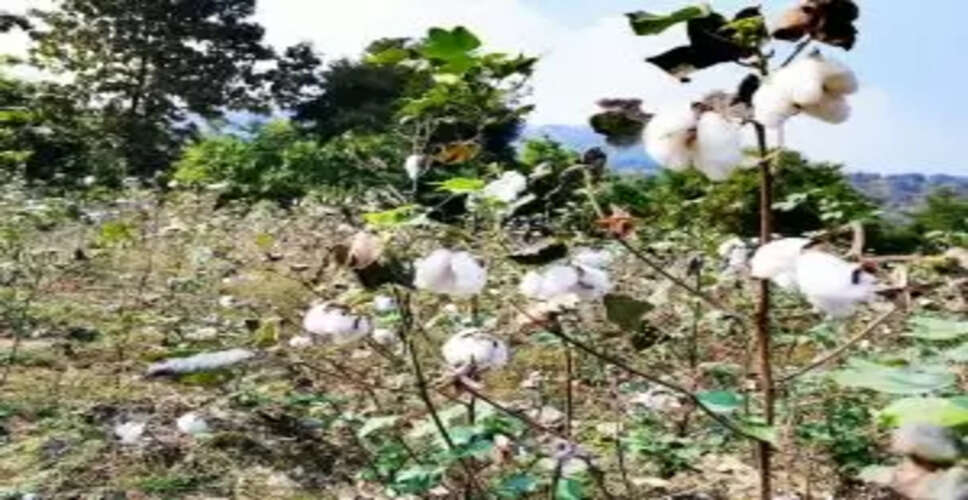
New Regulations for Cotton Farmers in Kalahandi
Bhawanipatna: In a significant move, cotton farmers in the Kalahandi district are now required to register before selling their crops in local markets, as mandated by the Cotton Corporation of India Ltd. This initiative aims to improve transparency and streamline the marketing process.
Previously, cotton farmers could sell their produce directly in mandis without any formal registration, unlike paddy farmers who must register through agricultural cooperatives or women's self-help groups.
Farmers can begin registering through the 'Kapas Kisan' mobile app starting September 1, with the registration period extending until September 30, as per a notification from the Regulated Market Committee (RMC).
Kalahandi is recognized as the leading cotton-producing district in Odisha, with its cotton regarded as some of the finest in Asia.
The district's annual cotton production is valued at over Rs 500 crore, with last year's cultivation covering 71,700 hectares and yielding 150,426 metric tonnes.
This year, the area under cultivation has increased to 72,010 hectares. However, the lack of essential infrastructure, such as spinning and weaving mills, poses challenges for the growth of related industries, raising concerns among farmers.
The district has four RMC mandis: Kerlapada and Tuting under Bhawanipatna RMC, Uchhala under Junagarh RMC, and Utkela under Kesinga RMC.
The government has set a minimum support price (MSP) for cotton at Rs 7,121 per quintal, although traders often offer higher prices for resale.
Kalahandi's cotton is distributed to various states, including Maharashtra, Gujarat, Chhattisgarh, Andhra Pradesh, and Tamil Nadu, where it is processed by companies and brokers for both domestic and international markets, yielding substantial profits.
Despite the rich availability of raw materials, Kalahandi's lack of local spinning or weaving mills has hindered its industrial growth. Cotton cultivation in the district began with the establishment of the Konark Spinning Mill in Kesinga, which helped Kalahandi emerge as the top cotton-producing region in the state.
Unfortunately, that mill has since closed. Bhawanipatna is home to Odisha's only cotton research facility, the All India Cotton Research Programme, which supports various cotton varieties such as Rash 569, Tulasi Takat, Kanak, Bandi, and Raja.
While the state government has yet to approve BT cotton, farmers remain optimistic about its potential.
Cotton cultivation presents a more profitable alternative to paddy, but the absence of government-owned mills means that much of the produce is transported out of state by brokers.
Reviving the Konark Spinning Mill could significantly benefit local farmers and enhance the district's economy.