
Kadambini Ganguly: A Trailblazer in Medicine and Women's Rights
Breaking Barriers in a Male-Dominated Field
Envision being the sole female in a classroom filled with men, where many believe you have no right to be there. This was the reality for Kadambini Ganguly. Long before the phrases 'breaking barriers' and 'women in STEM' became popular, she was simply a girl with a desire to learn—a desire that was considered radical at the time. Today, the sight of women in medical coats seems commonplace, but this normalcy is rooted in the courage of pioneers like Kadambini, who faced significant challenges for the sake of future generations. Her story is not merely one of achievement; it reflects the struggles of a woman who experienced fear, doubt, and exhaustion yet chose to persevere.
A Revolutionary Upbringing
A Childhood Where Possibility Was Planted
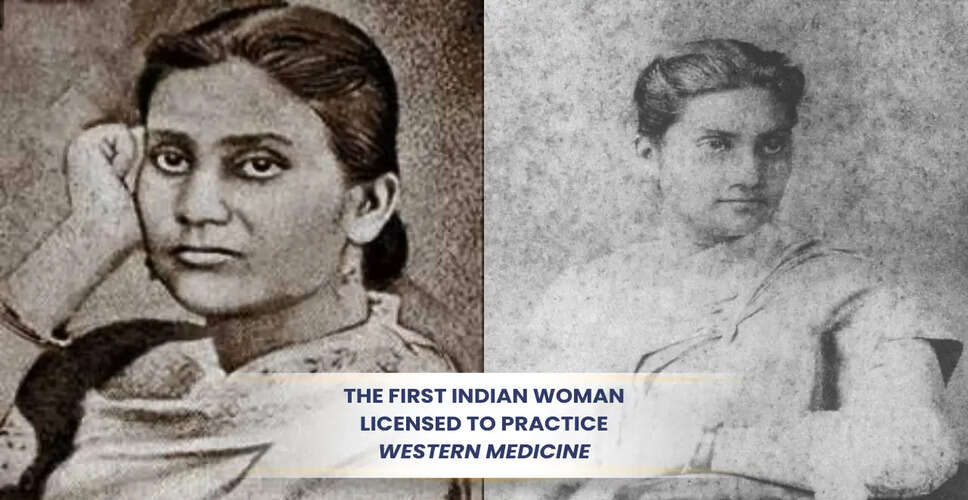
Kadambini was born in 1861 in Bhagalpur, a time when most girls were married off young and denied education. However, her father, inspired by the reformist ideals of the Brahmo Samaj, believed in her right to learn. This belief, though seemingly small today, was revolutionary back then. She attended Bethune School in Calcutta, one of the few institutions that offered formal education to girls. You can almost visualize her there—a young girl with neatly braided hair, clutching her books, quietly absorbing lessons in a world that did not expect her to aspire high. In 1883, she became one of the first female graduates of the University of Calcutta. While this achievement could have been enough for many, Kadambini had her sights set on becoming a doctor.
Facing Adversity in Medical School
Walking Into a Hostile Room
When she applied to Calcutta Medical College, there was much debate about whether women were even capable of studying medicine. Critics questioned their 'mental stamina' and raised concerns about their 'morality.' It must have been exhausting to hear society dissect her capabilities before she even began her studies. Nevertheless, she enrolled in 1886. Imagine her entering anatomy lectures, surrounded by rows of male students and professors unsure of how to react to her presence. Whispers and perhaps laughter accompanied her every step. Yet, she persevered and succeeded. She later practiced medicine and even traveled to Britain for further training, earning additional qualifications. This journey, particularly for an Indian woman in the 19th century, required immense determination. Beyond her accolades, what truly mattered was her commitment to treating patients and making healthcare accessible to those often overlooked.
Personal Struggles and Triumphs
The Personal Battles
Kadambini married Dwarkanath Ganguly, a social reformer who championed women's rights. Their partnership was progressive for its time—intellectual, political, and equal. However, support at home did not shield her from societal hostility. At one point, a newspaper publicly attacked her character, suggesting that a working woman could not be respectable. This cruel attack was deeply personal, yet she did not back down. She sued for defamation and won, showcasing incredible strength. Imagine standing in court, not just as a doctor but as a woman defending her dignity—all while raising eight children. Balancing long hospital hours, social criticism, political involvement, and motherhood, she navigated life without the concept of 'work-life balance.' She simply endured and adapted.
A Quiet Revolution
More Than Medicine
Kadambini was also among the first women to speak at an Indian National Congress session in 1890. At a time when politics was dominated by men, her presence marked a significant shift. Yet, she was never one to boast about her achievements. There are no grand speeches recorded in popular culture, nor statues commemorating her. Her revolution was subtle, occurring in classrooms, clinics, and courtrooms. She broke glass ceilings in every field she entered.
It is said that on the day she passed away in 1923, she had performed surgery earlier that day. She worked almost until her last breath, embodying a deep commitment to her purpose.
The Legacy of Kadambini Ganguly
Why She Feels Forgotten
While we remember national leaders and freedom fighters, pioneers like Kadambini often fade into obscurity. Perhaps this is because their battles were fought within institutions rather than on battlefields. The next time you see a woman doctor confidently writing a prescription, remember that this image was once controversial. Kadambini Ganguly did not merely become a doctor; she paved the way for future generations of women in medicine. She faced fear, self-doubt, and exhaustion yet chose to remain steadfast. That is her enduring legacy—not just as the first woman doctor, but as a woman who refused to leave any room that made her feel unwelcome.