
Jagannath Rath Yatra 2026: A Guide to the Sacred Festival
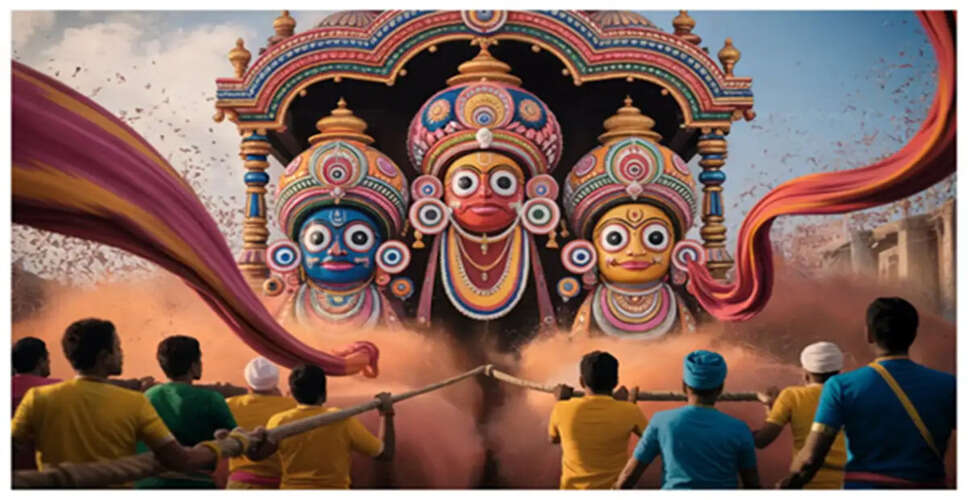

Overview of Jagannath Rath Yatra 2026
Jagannath Rath Yatra 2026: Scheduled for July 16, 2026, the Jagannath Rath Yatra is preceded by numerous rituals and preparations. For those intending to partake in this grand event, understanding the associated rituals is beneficial. This guide provides detailed insights into various aspects, including the construction of the chariots, the *Osar Ghar* (seclusion) phase, *Chhera Pahanra*, *Gundicha Marjan*, the Yatra's initiation, the arrival at Gundicha Temple, *Hera Panchami*, the *Bahuda Yatra* (return journey), and the final return to the main temple.
Key Rituals and Events
1. Chariot Construction: The chariots are crafted from Neem wood, without any nails or metal. The first chariot is Lord Balaram's 'Taladhvaja' (red and green), followed by Goddess Subhadra's 'Darpadalan' (black/blue and red), and lastly, Lord Jagannath's 'Nandighosha' (red and yellow).
2. Illness of the Lord: Fifteen days prior to the Yatra, after a ceremonial bath with 108 pitchers of water, the Lord is believed to fall ill and rests in the '*Osar Ghar*' (a secluded chamber). Once He recovers, He appears for *darshan* (holy viewing) during the '*Nava Yauvana Netra Utsav*' (festival celebrating His youthful appearance).
3. *Chhera Pahanra* Ritual: Before the Yatra commences, the Gajapati King of Puri sweeps the chariot platform and the procession path with a golden broom.
4. *Gundicha Marjan*: A day before the Yatra, devotees purify the Gundicha Temple using holy water.
5. Beginning of Rath Yatra: The procession kicks off on *Ashadha Shukla Dwitiya*, accompanied by the sounds of drums and cymbals. The chariots are pulled in the order of Lord Balaram's, Goddess Subhadra's, and finally, Lord Jagannath's. Those who pull the chariots are deemed extremely fortunate.
6. Arrival at Gundicha Temple: The journey spans two kilometers from the main temple to the aunt's temple, 'Gundicha Maa,' where the Lord stays for seven days. Viewing the deity here is referred to as '*Adap-Darshan*'.
7. Hera Panchami: On the fifth day of the festival, Goddess Lakshmi visits the Gundicha Temple in search of Lord Jagannath.
8. Bahuda Yatra (Return Journey): On *Ashadha Dashami* (the ninth day), the chariots make their way back to the main temple, an event known as 'Bahuda Yatra'.
9. Temple Entry: After returning on the ninth day, the deities remain on the chariots. The following day, *Ekadashi*, they are ceremoniously bathed and worshipped before being reinstated in the main temple.
Significance of Chariot Pulling
Importance of Pulling the Jagannath Chariot: Anyone, whether a devotee or a layperson, can participate in pulling the chariots. It is believed that those who engage in this sacred *Ratha Yatra* earn spiritual merit equivalent to performing 100 *Yagyas* (sacrificial rituals). Devotees pull the ropes of the three chariots with deep reverence and in a specific sequence. There is a strong belief that any devotee who pulls Lord Jagannath's chariot with a sincere heart is liberated from the cycle of birth and death (*Samsara*).
Details of the Three Jagannath Chariots:
Nandighosha (Garudadhwaja): Approximately 45 feet tall; 16 wheels; sacred rope named *Shankhachuda Nadi*.
Taladhwaja: Approximately 43 feet tall; 14 wheels; sacred rope named *Vasuki*.
Darpadalan (Padma Rath): Approximately 42 feet tall; 14 wheels; sacred rope named *Swarnachuda Nadi*.
The journey of the three chariots spans 3 kilometers to the 'Gundicha Temple', where the Lord rests for 10 days. On the 11th day of the festival, He returns to the main Jagannath Temple.
PC Social Media