
Understanding the Risks of Hantavirus and Norovirus on Cruise Ships

The Dangers of Viral Outbreaks at Sea
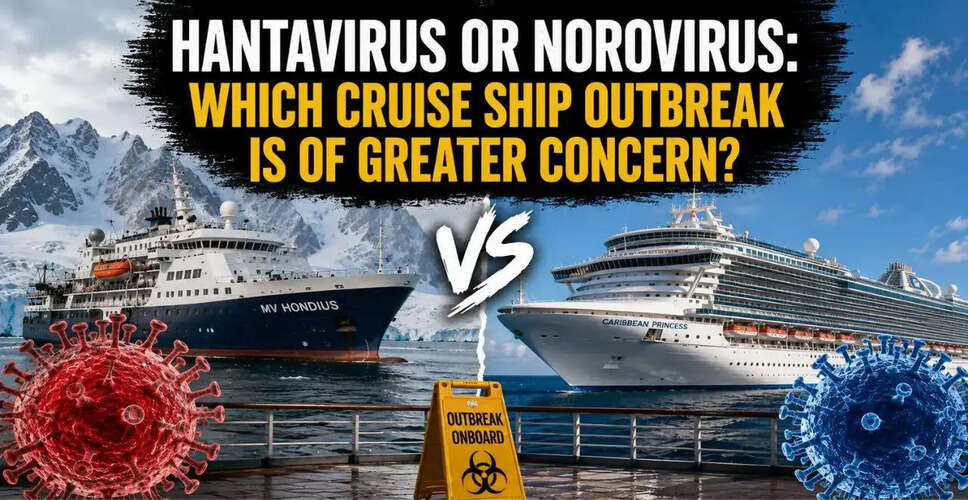
Following the tragic deaths of two individuals due to a hantavirus outbreak associated with the MV Hondius cruise ship, Dr. Rajeev Jayadevan, Co-Chairman of the National IMA COVID Task Force, discussed the reasons why cruise ships are conducive to viral transmission. Shortly thereafter, the Caribbean Princess cruise ship reported a norovirus outbreak affecting over 100 passengers. While the numbers might suggest that norovirus poses a greater threat, Dr. Jayadevan emphasizes that the situation is more nuanced.
He explains that viruses can be categorized into two groups: those with a lipid envelope and those without. Hantavirus falls into the first category, while norovirus is classified as a non-enveloped virus. Dr. Jayadevan elaborates, stating, 'Hantavirus can be washed away with soap and water, but norovirus is much harder to eliminate.' This distinction is crucial in understanding how these viruses behave.
Norovirus tends to adhere to surfaces, making it difficult to remove. Standard cleaning methods may not suffice, necessitating more rigorous sanitation efforts. The rapid spread of norovirus is also a concern. As a gastrointestinal virus, it leads to symptoms like vomiting and diarrhea, and its transmission is facilitated by infected individuals touching shared surfaces such as bathroom fixtures and dining areas. Dr. Jayadevan notes that cruise ships, with their confined spaces and diverse populations, create an ideal environment for norovirus outbreaks.
Despite its swift transmission, norovirus is generally not life-threatening. Dr. Jayadevan points out that while it can incapacitate many people quickly, fatalities are rare unless individuals are already in poor health. In contrast, hantavirus poses a more severe risk, particularly strains found in the Americas that can lead to pulmonary complications.
He clarifies the often-cited 40% mortality rate associated with hantavirus, stating that this figure applies specifically to cases involving lung complications, not to all hantavirus infections. Many individuals may experience mild symptoms, but once lung involvement occurs, the situation can escalate rapidly.
At the time of the interview, several individuals connected to the hantavirus outbreak were still hospitalized, with one in intensive care. Dr. Jayadevan expressed that while hantavirus is a greater individual concern, norovirus can have a devastating impact on communities due to its ability to affect large numbers of people simultaneously.
He illustrated this with an example of a wedding where a sudden outbreak could overwhelm medical resources. Dr. Jayadevan also referenced a 2020 study published in The New England Journal of Medicine that traced an Andes virus outbreak in Argentina, highlighting the potential for human-to-human transmission under certain conditions. However, hantavirus is still not regarded as a rapidly spreading virus like norovirus or COVID-19.
In summary, norovirus spreads quickly and can affect many individuals at once, while hantavirus spreads more slowly and poses a significant risk when severe disease occurs.