
Understanding the Current Ebola Outbreak: Insights from Experts
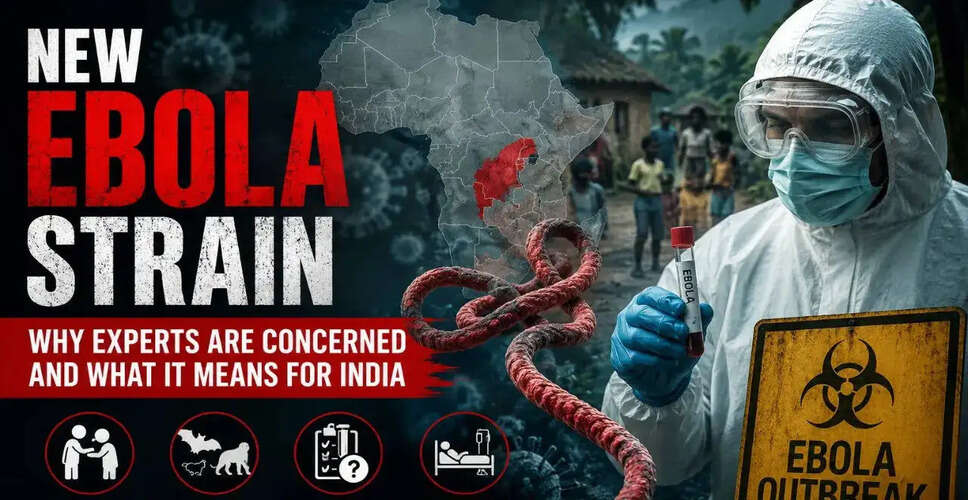

Overview of the Ebola Outbreak
The world is once again facing an Ebola outbreak, a viral infection known for its high fatality rate. While such outbreaks have been documented since the 1970s, the current situation has raised alarms among health officials due to the strain involved, which is less understood and more challenging to monitor. To gain insights into this situation, we consulted Dr. Rajeev Jayadevan, a prominent figure in the medical community, who highlighted the unique concerns surrounding this outbreak, which is now the third-largest recorded.
Dr. Jayadevan reassured that India has not reported any indigenous cases of Ebola, despite numerous outbreaks in Africa over the years. He emphasized that unlike COVID-19, which spread rapidly across the globe, Ebola has a different transmission pattern. The current outbreak is particularly concerning because it involves the Bundibugyo strain, a variant that has historically caused fewer outbreaks and is less studied than the more prevalent Zaire strain.
While vaccines and treatments exist for the Zaire strain, the Bundibugyo strain lacks established medical interventions. Consequently, medical professionals can only provide supportive care, focusing on symptom management and organ support as the body attempts to combat the virus independently.
Challenges in Diagnosis and Spread
Another significant issue is the diagnosis of the Bundibugyo strain. Dr. Jayadevan explained that standard PCR tests for Ebola are primarily designed to detect the Zaire strain, which often leads to misdiagnosis. The Bundibugyo strain can evade these tests due to a lack of specialized kits, causing confusion among healthcare providers. Symptoms of Ebola can mimic those of other common illnesses in Africa, such as malaria or dengue, complicating the diagnosis further.
Dr. Jayadevan illustrated this by describing a scenario where a patient presents with fever and body aches, and the standard Ebola test returns negative. In such cases, doctors may treat for malaria or other infections, allowing the virus to spread unnoticed among family members and healthcare workers, which hinders containment efforts.
Transmission Dynamics
How Does Ebola Spread?
Dr. Jayadevan referred to Ebola as 'the disease of compassion' due to its transmission through close contact with the bodily fluids of infected individuals, often during caregiving. Family members or healthcare workers caring for infected patients are at high risk of contracting the virus.
Most Ebola outbreaks occur in impoverished regions with inadequate healthcare systems. In many remote areas, communities rely on hunting wild animals, known as bush meat, for sustenance. The virus is believed to jump from infected animals to humans during the handling of such meat, leading to new outbreaks.
Regarding global spread, Dr. Jayadevan noted that international travel poses a risk, as an infected individual could board a flight before showing symptoms. However, he reassured that Ebola does not spread as easily as airborne viruses like COVID-19. He also mentioned that while Ebola is an RNA virus capable of mutation, it typically does not survive long enough in healthy individuals to evolve into significantly different forms.
Currently, the primary challenges include the under-studied Bundibugyo strain, limited testing capabilities, the absence of proven treatments, and delays in diagnosis, all of which complicate efforts to control the outbreak effectively.