
Understanding the Andes Virus: A Rare Hantavirus with Human Transmission Potential

Introduction to the Andes Virus
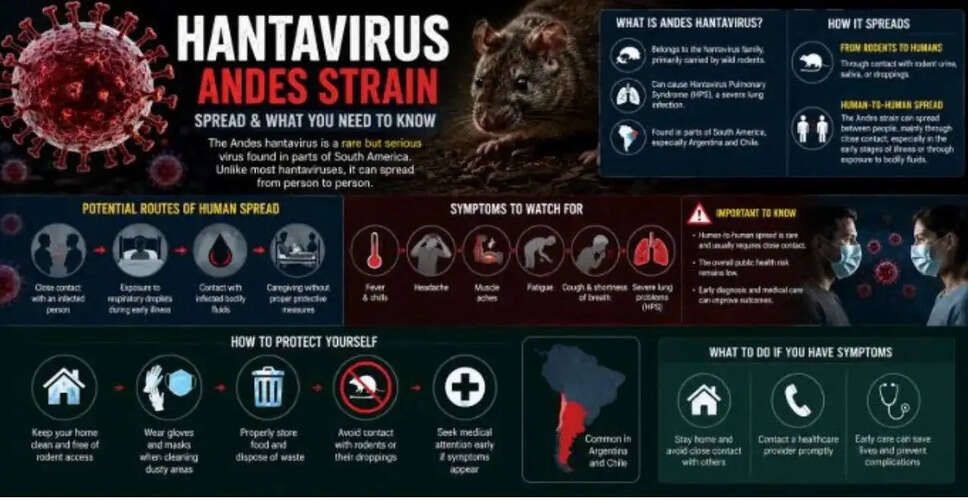
Recent investigations into hantavirus have highlighted the Andes virus, a rare variant that can transmit between humans. Unlike most hantaviruses, which primarily spread from rodents to humans, the Andes strain is notable for its limited human-to-human transmission capability. Experts indicate that while most hantavirus infections are considered dead-end, where humans do not pass the virus to others, the Andes strain poses a different risk. It has the potential to cause outbreaks, although the overall public health threat remains low. Understanding its transmission is crucial for awareness and prevention.
What is the Andes Strain?
What is the Andes strain of hantavirus?
The Andes virus is part of the hantavirus family, predominantly found in South America, especially in Argentina and Chile, where it is carried by wild rodents. Similar to other hantaviruses, it can lead to Hantavirus Pulmonary Syndrome (HPS), a serious respiratory condition. In 2018, an outbreak in the small village of Epuyen, Argentina, resulted in nearly thirty illnesses and eleven deaths, with many patients requiring intensive care due to severe pneumonia and breathing difficulties caused by the Andes strain.
Unique Characteristics of the Andes Strain
Why is the Andes strain different?
Most hantaviruses are transmitted through contact with infected rodent excretions, with humans typically becoming infected by inhaling contaminated particles in enclosed areas. However, the Andes strain is unique due to documented instances of person-to-person transmission. Research indicates that the virus may spread through close contact with infected individuals, particularly in the early stages of illness or via bodily fluids. Dr. Gustavo Palacios, a microbiologist, noted that there have been fewer than 300 recorded cases of human-to-human transmission of the Andes virus, with around 3,000 total cases. He also mentioned that the infectious period is brief, peaking on the day a person develops a fever.
Symptoms of the Andes Virus
What are the symptoms?
Initial symptoms of the Andes virus often mimic those of the flu, complicating early diagnosis. Common symptoms include:
- Fever and chills
- Fatigue
- Muscle aches
- Headaches
- Nausea or abdominal discomfort
As the illness progresses, patients may experience severe coughing, shortness of breath, fluid accumulation in the lungs, and respiratory failure, potentially requiring hospitalization and intensive care.
Severity of the Andes Virus
Is the Andes virus strain deadly?
The Andes virus can indeed be severe, with Hantavirus Pulmonary Syndrome associated with it having a high mortality rate, estimated between 30 to 40 percent in certain outbreaks. However, experts stress that infections are rare, and the likelihood of widespread outbreaks is low due to the limited human-to-human transmission, which requires close contact.
Public Health Perspective
Should people be worried?
Health organizations, including the World Health Organization, have indicated that there is no cause for widespread alarm. Unlike COVID-19, the Andes hantavirus does not easily spread through casual interactions. Public health experts emphasize that most infections still stem from rodent exposure, and the potential for a large-scale pandemic remains minimal. Nonetheless, caution is advised in regions where hantavirus cases have been reported.
Preventive Measures
How can you protect yourself?
Preventive strategies focus on minimizing rodent exposure:
- Maintain cleanliness in homes and storage areas
- Seal any openings where rodents might enter
- Use gloves and masks when cleaning dusty areas
- Avoid direct contact with rodent droppings or urine
If symptoms arise following potential exposure, it is crucial to seek medical attention promptly.