
Understanding Hantavirus: Insights from Experts Amid Cruise Ship Outbreak
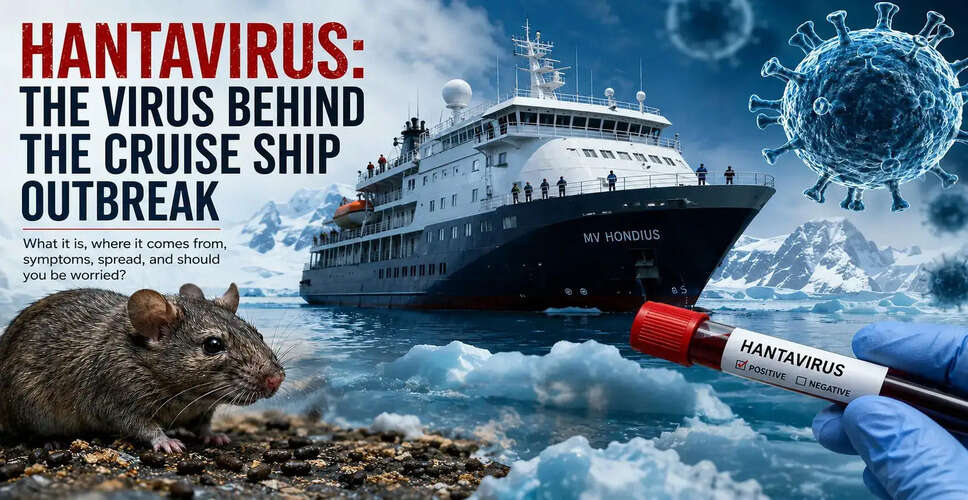

Concerns Surrounding the MV Hondius Outbreak
The recent outbreak on the MV Hondius cruise ship has sparked global alarm due to multiple suspected fatalities and ongoing investigations into cases. In light of the rising anxiety, health experts emphasize the need to clarify what hantavirus is and what it is not. To provide clarity, we consulted two prominent infectious disease specialists: Dr. Rajeev Jayadevan, a Senior Consultant Gastroenterologist and former President of the Indian Medical Association in Cochin, and Dr. Ishwar Gilada, an infectious disease expert based in Mumbai. They discussed the seriousness of this virus strain, its transmission speed, and whether the so-called 'Antarctic virus' represents a contained incident or a potential pandemic.
What You Should Know About Hantavirus
Dr. Rajeev Jayadevan notes, "Hantavirus is not a new entity; it is well-known in the medical field." Dr. Gilada concurs, stating, "This virus has been around for a long time, causing zoonotic infections—those that transfer from animals to humans. This poses a significant risk, especially in the context of the current outbreak. The virus, also known as Hantaan virus (HTNV), belongs to the hantavirus family, which includes various subspecies. One such subspecies, the Andes virus, is believed to be present on the ship according to preliminary assessments from health authorities."
Characteristics of Hantavirus
Dr. Jayadevan elaborates, "Hantavirus is classified as an RNA virus with an envelope, which gives it a lipid coating similar to a soap bubble. This characteristic makes it fragile and easily destroyed by soap. In contrast, non-enveloped viruses, like norovirus, are much tougher and can spread rapidly in environments like schools. Enveloped viruses, including hantavirus, can be effectively eliminated through proper handwashing, which was emphasized during the COVID-19 pandemic."
Hantavirus encompasses various species, each exhibiting different behaviors. For instance, the strains found in the Western hemisphere differ from those in Asia, indicating a diversity within the hantavirus family.
Origins of Hantavirus
As a zoonotic infection, hantavirus primarily resides in rodents. Dr. Jayadevan explains, "Rodents, such as rats, typically do not suffer from the virus. However, when it transmits to humans, it can lead to serious health issues." Dr. Gilada adds, "Transmission occurs through contact with rodent urine, saliva, or feces. The virus may have entered the ship via cargo or food, or rodents may have boarded and multiplied onboard. The concern arises when the virus moves from its natural habitat to humans."
Human Transmission Potential
The current outbreak raises questions about human-to-human transmission. Dr. Gilada states, "Most hantaviruses do not spread between humans, but certain types, like the Andes virus, can. This is where our concerns lie." Dr. Jayadevan warns, "Humans are generally considered 'dead-end hosts' for the virus, meaning it does not typically circulate among people. However, the presence of multiple cases in this outbreak necessitates further investigation into transmission patterns."
Transmission Dynamics on Cruise Ships
Dr. Jayadevan highlights the unique environment of a cruise ship, stating, "These vessels operate as closed systems with shared ventilation and confined spaces, which significantly alters infection dynamics. Close contact among passengers increases the likelihood of transmission through contaminated surfaces or direct contact. Unlike land-based scenarios where individuals can isolate themselves, cruise ships present a unique challenge for infection control."
Symptoms of Hantavirus Infection
Symptoms can start mild but may escalate quickly. Dr. Gilada notes, "Initial signs include fever, headache, and body aches, similar to other viral infections. In severe cases, it can lead to acute respiratory distress, which can be fatal. Some strains may also cause hemorrhagic fever, resulting in bleeding or kidney failure. There is no specific antiviral treatment; care is primarily supportive, focusing on symptom management. The fatality rate can reach up to 40% in severe cases."
Comparing Hantavirus to COVID-19
Both experts clarify that hantavirus is not comparable to COVID-19. Dr. Jayadevan asserts, "This is not a virus that causes a pandemic. While outbreaks can occur, they do not typically lead to widespread transmission. Dr. Gilada adds, "Every pandemic begins small, but without efficient human-to-human transmission, there is no reason for alarm. Containment is crucial at this stage, with the ship acting as an isolation unit. Passengers should remain isolated, and thorough sanitization is essential to prevent further spread."
Should You Be Concerned?
Experts advise that there is no immediate cause for alarm. Dr. Gilada emphasizes, "This situation requires monitoring by scientists and public health officials." Dr. Jayadevan reminds us, "Not every outbreak escalates into a pandemic. It is vital to avoid jumping to conclusions, especially on social media. The primary transmission route remains from rodents to humans, with human transmission being rare. While the cruise ship outbreak is unusual, it does not necessarily indicate the onset of a larger crisis."