
The Role of AI in Transforming Healthcare: A Supportive Ally, Not a Replacement

AI's Integration into Healthcare
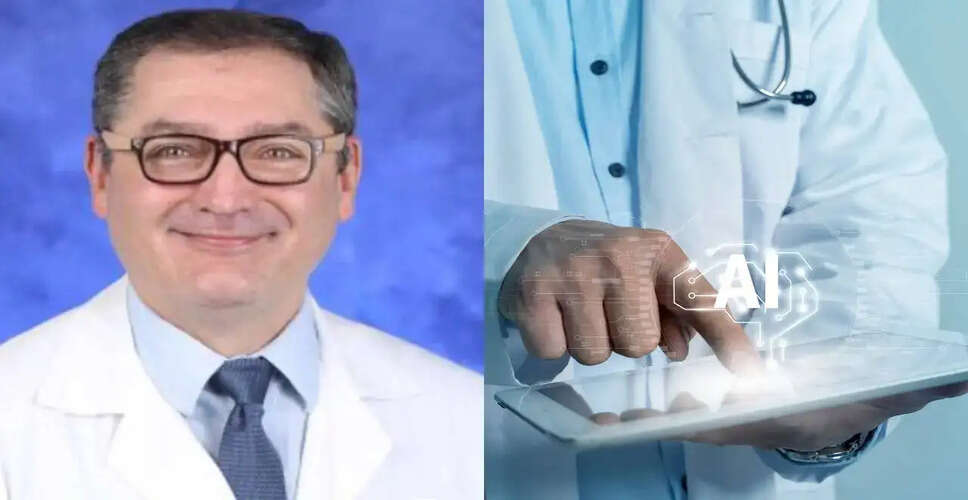
Artificial intelligence (AI) is increasingly becoming integral to contemporary healthcare, generating both enthusiasm and apprehension. While some experts argue that AI could revolutionize the medical field, others express concerns about its potential to replace healthcare professionals. Dr. Christopher DeFlitch, who serves as the Vice President and Chief Medical Information Officer at Penn State Health, believes such fears are unfounded. He asserts that AI should be regarded as a valuable tool that aids healthcare providers in making quicker and more informed decisions. "AI can significantly assist in patient care. If utilized wisely, it won't replace nurses or doctors," Dr. DeFlitch states. "Instead, it can gather hard-to-find information, enabling me to make prompt decisions alongside the patient."
AI's Data Processing Capabilities
AI Can Process Data Faster Than Any Human
One of the most notable advantages of AI is its ability to manage vast amounts of medical data. The healthcare sector generates extensive data, including electronic health records, lab results, imaging scans, and scientific research. For healthcare providers, manually reviewing this information while attending to patients is nearly impossible. Dr. DeFlitch explains that AI can swiftly pinpoint pertinent information within medical records and present it in a manner that aids clinical decision-making. "AI contextualizes data, bringing it to my attention so we can enhance patient care together," he remarks. "There’s a wealth of information in medical records; if I can’t access it, it’s of no use, but AI can extract that data effectively."
AI's Role in Medical Imaging
AI is also making strides in the field of medical imaging. Rather than independently diagnosing patients, it can prioritize urgent cases. For instance, AI tools can identify potential stroke indicators on CT scans or MRIs and promptly notify specialists. "It directs the information back to the radiologist, neurologist, and emergency physician, saying, 'Look at this case first.' This is how AI enhances care rather than replacing it," he elaborates.
Reducing Administrative Burdens
Beyond diagnostics, AI is addressing one of the most significant challenges in healthcare: administrative tasks. Technologies like ambient listening and generative AI can automatically generate clinical notes during patient visits, minimizing paperwork and allowing doctors to concentrate more on patient care. "Burnout in healthcare is a genuine issue," Dr. DeFlitch, an emergency physician with nearly 30 years of experience, states. "I prioritize patient care, and technology can assist in note generation, alleviating that administrative load."
The Limitations of AI
What AI Should Never Replace?
Despite its remarkable capabilities, Dr. DeFlitch emphasizes that AI has notable limitations. Medicine involves more than just data analysis; it requires empathy, judgment, and an understanding of each patient's unique situation. "Healthcare is fundamentally about people caring for people," he asserts. "If technology can support me in providing better patient care, that’s beneficial. It won’t replace our roles or decision-making processes." He also warns that AI's reliability hinges on the quality of the information it receives. Poor prompts or incomplete data can lead to inaccurate or misleading outputs. "If you input the wrong question or prompt, you’ll receive the wrong answer," he cautions. "We must retain the human element in this process."
Future Prospects of AI in Healthcare
Looking forward, Dr. DeFlitch envisions significant opportunities for AI in personalized medicine and drug discovery. By analyzing genetic data, medication responses, and extensive patient datasets, AI could facilitate the identification of the most suitable treatments for patients more efficiently than ever. However, he stresses that trust must remain a cornerstone of AI implementation. Healthcare institutions must ensure robust cybersecurity measures and responsible technology use to protect patient data. "It’s a trust but verify approach," he concludes. "You need the right questions, accurate data, and human oversight to incorporate the human aspect into AI."
Disclaimer: This article is for informational purposes only and is not a substitute for professional medical advice.