
The Role of AI in Revolutionizing Health and Longevity

AI's Potential to Address Health Challenges
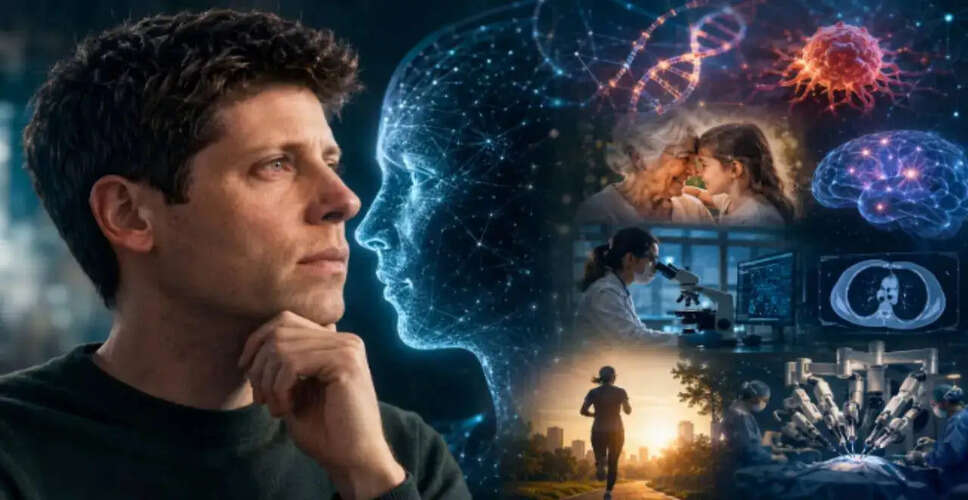
Recently, Sam Altman posed a thought-provoking question online: “What issue do you hope AI will tackle in the future?” The responses highlighted a deeply human concern. A significant number of replies, nearly half, centered on health and longevity rather than technological advancements like faster applications or smarter devices. People expressed a desire for AI to find cures for cancer, reverse aging, prevent dementia, repair damaged organs, and tackle chronic diseases. One particularly impactful response stated, “If AI can solve issues like cellular repair, cancer, and aging, it would be akin to creating an elixir for life.” This sparked a broader discussion about the intersection of artificial intelligence and healthcare innovation, raising questions about AI's potential to enhance human survival.
A Viral Chart Reflecting Humanity's Aspirations
A viral pie chart that has resonated globally
A pie chart by Micah Berkley, known as ‘The 50 Cent of AI’, gained traction for revealing an emotional truth about humanity's connection with AI. Rather than focusing on job replacement or entertainment, many people hope technology can alleviate suffering and cure diseases. The chart also highlights rising concerns about aging, chronic illnesses, and the increasing burden on healthcare systems worldwide. As populations age and diseases become more complex, many view AI as a vital tool for accelerating medical advancements.
AI's Transformative Impact on Healthcare
Why is AI becoming central to modern medicine?
Artificial intelligence is rapidly transforming healthcare in ways that many may not fully appreciate. AI technologies are now integral to early cancer detection, drug discovery, medical imaging, personalized treatment plans, and even predicting disease outbreaks. Experts believe that AI can significantly reduce the time required to develop life-saving medications. Traditionally, drug development spans over a decade and costs billions, but AI can analyze vast biological datasets in mere weeks, expediting the identification of promising compounds. For instance, during the COVID-19 pandemic, researchers at DeepMind created AlphaFold, an AI system that predicted protein structures much faster than conventional methods, aiding in the understanding of the coronavirus and accelerating global vaccine research. Another example is Insilico Medicine, which utilized AI to develop a potential drug for idiopathic pulmonary fibrosis in under 18 months, a process that typically takes decades.
Exploring AI's Role in Longevity
Can AI really slow ageing?
One intriguing area of AI research focuses on longevity and cellular aging. Scientists are increasingly employing machine learning to investigate DNA damage, cellular repair, organ regeneration, and age-related inflammation. Some researchers believe AI could uncover biological pathways linked to aging, potentially leading to therapies that extend healthy lifespans. While this doesn’t imply immortality, AI may help individuals live longer, healthier lives while mitigating age-related diseases such as dementia and heart disease. The rising interest in “AI for longevity” signifies a shift in public perception, viewing AI not merely as a technological tool but as a potential catalyst for medical breakthroughs.
AI's Potential in Mental Health Care
AI could transform mental health care
Today's society grapples with increasing concerns about emotional well-being, loneliness, and mental health disorders, particularly among younger demographics. AI-driven mental health tools are already being utilized for therapy chatbots, mood tracking, and personalized interventions. Advocates argue that AI could enhance mental healthcare accessibility in regions facing a shortage of mental health professionals. However, experts warn that AI should complement, not replace, the essential human emotional connection in mental health care.
The Risks Associated with AI
The dangerous, lesser-known side of AI
Despite the optimism surrounding AI, there are significant risks if it is developed irresponsibly. A primary concern is the spread of misinformation, with AI-generated fake news and manipulated content becoming increasingly realistic. In healthcare, potential dangers include diagnostic errors, biased algorithms, privacy breaches, and unequal access to advanced AI technologies. There are also fears that AI could exacerbate social inequalities if life-extending technologies are only accessible to affluent populations. Job displacement remains a pressing issue, as AI is expected to disrupt various industries. Cybersecurity experts caution that advanced AI systems could be exploited for malicious purposes if adequate safeguards are not established.
The Future of AI in Healthcare
The future of AI depends on how humans use it
Artificial intelligence is poised to become one of the most influential technologies ever developed. Whether it serves as humanity's greatest ally in medicine or leads to significant disruptions will largely depend on how it is regulated and developed by governments, scientists, and society. Experts emphasize the importance of ethical safeguards, transparency, and equitable access as AI becomes more integrated into healthcare and daily life. Ultimately, the responses to Altman’s question reveal a fundamental truth: amidst the excitement surrounding AI, people fundamentally desire longer, healthier, and safer lives for themselves and their loved ones.