
Suspected Ebola Case Triggers Health Protocols in Rajasthan

Health Authorities Respond to Suspected Ebola Case
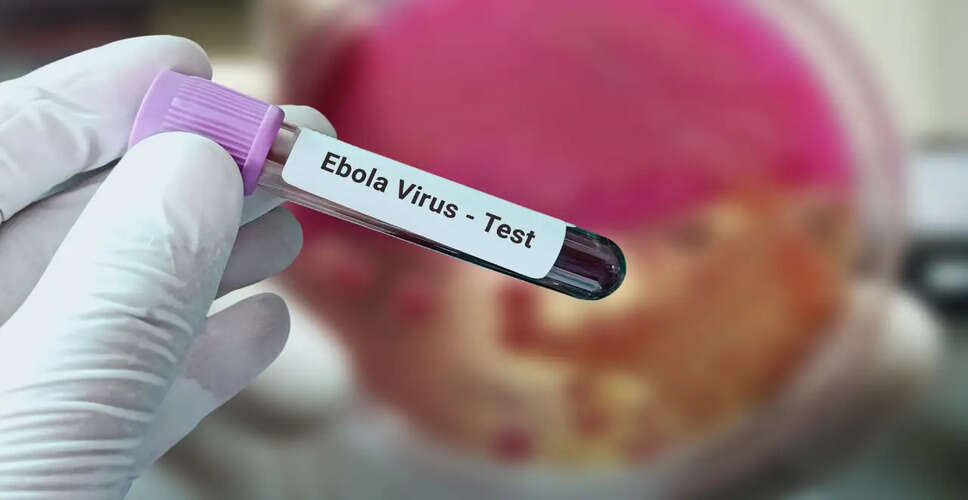
In Rajasthan, a suspected case of Ebola virus disease has emerged, leading health officials to implement precautionary measures while awaiting lab results. The individual in question is a woman from Uganda who arrived in Jaipur on an Air Arabia flight from Sharjah on Friday morning. During routine screening at the airport, she exhibited symptoms indicative of Ebola, prompting her immediate admission to RUHS Hospital in Jaipur, where she is currently in strict isolation.
Dr. Anil Gupta, the Superintendent of RUHS Hospital, stated that while the woman is displaying symptoms similar to those of Ebola, a conclusive diagnosis will only be possible following laboratory tests. Samples have been sent for analysis, and she is being closely monitored under established protocols for infectious diseases.
Current Ebola Situation in Africa
Ebola Case In Jaipur
This incident occurs amidst a significant Ebola outbreak involving the Bundibugyo strain in Central and East Africa, which has drawn the attention of global health organizations. The World Health Organization (WHO) classified the outbreak in the Democratic Republic of the Congo (DRC) and Uganda as a Public Health Emergency of International Concern back in May. Unlike other strains of the virus, there is no approved vaccine for the Bundibugyo strain, making early detection and surveillance crucial.
Recent reports from WHO and other sources indicate that hundreds of confirmed and suspected cases have been documented in the DRC, with Uganda also experiencing infections related to this outbreak. Health authorities are actively engaged in contact tracing and border surveillance to mitigate further transmission.
India's Preparedness Against Ebola
Ebola Cases In India
As of now, India has not confirmed any Ebola cases associated with the ongoing outbreak. In light of the situation in Africa, the Union Ministry of Health and Family Welfare has issued advisories for travelers arriving from or passing through Ebola-affected regions. The advisory emphasizes that passengers exhibiting symptoms such as fever, vomiting, unexplained bleeding, or severe weakness should promptly report to health authorities at the airport for medical evaluation.
The government has also recommended that citizens avoid non-essential travel to countries currently facing the outbreak, including the Democratic Republic of the Congo, Uganda, and South Sudan. Enhanced screening and surveillance measures have been established at international entry points as a precautionary step.
This is not the first alert regarding Ebola in India this year. In May, a Ugandan woman isolated in Bengaluru after showing symptoms ultimately tested negative for the virus, underscoring the importance of precautionary measures without inciting undue panic.
Ebola is a severe viral hemorrhagic fever transmitted through direct contact with the blood, bodily fluids, or tissues of infected individuals or contaminated materials. It is not classified as an airborne disease. Initial symptoms typically include fever, headache, muscle pain, fatigue, and sore throat, which can escalate to vomiting, diarrhea, rash, and, in severe cases, internal or external bleeding. Early supportive care significantly enhances survival rates.
For the time being, health officials emphasize that the case in Rajasthan is merely a suspected infection. Until laboratory results are available, experts advise that there is no cause for public concern. The focus remains on rapid testing, isolation, surveillance, and preparedness to ensure that even suspected cases are managed with utmost caution.