
Novo Nordisk Takes Legal Action Against Eli Lilly Over Misleading Advertising Claims
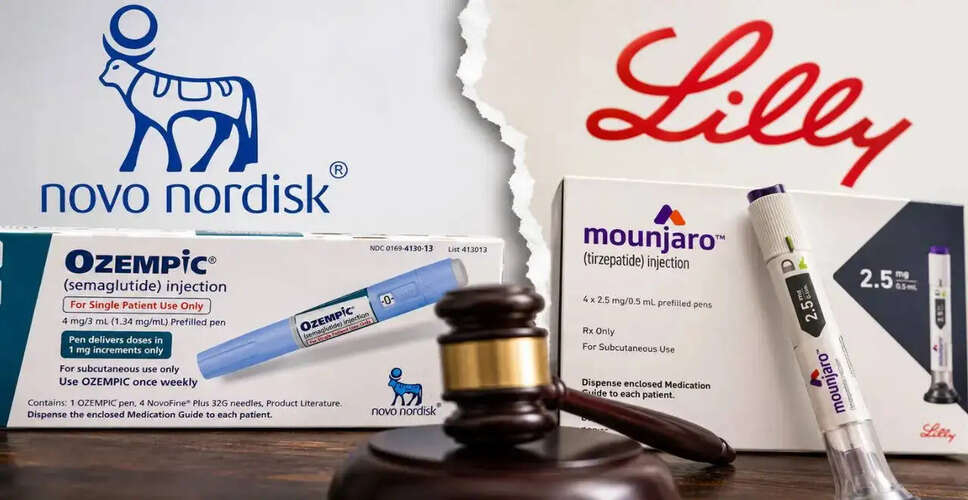

Novo Nordisk's Legal Challenge
On Tuesday, Novo Nordisk, the manufacturer of Ozempic, announced its decision to sue its main competitor in the US, Eli Lilly, alleging that the latter has been disseminating "false and materially misleading" advertisements regarding its weight-loss and diabetes medications. Novo Nordisk claims that Eli Lilly, which produces competing products Zepbound and Mounjaro, has deliberately used outdated studies that compare Lilly's highest dosages with lower dosages of Novo's offerings.
According to Novo, Eli Lilly's advertisements have:
- Compared the highest approved doses of Zepbound and Mounjaro with lower doses of Novo's Wegovy and Ozempic.
- Excluded information about the newer 7.2 mg dose of Wegovy, which Novo asserts leads to greater weight loss.
- Utilized older clinical trial data that does not accurately represent current approved dosages.
For context, Novo Nordisk has developed semaglutide, while Eli Lilly has created tirzepatide. Both companies are experiencing significant financial success from these competing drugs. John F Kuckelman, the general counsel for Novo Nordisk, stated, "As new and more effective treatment options emerge, individuals deserve accurate information that reflects the latest scientific evidence to make informed healthcare decisions." He emphasized that healthcare companies must ensure their public claims are accurate and up-to-date, noting that ineffective disclaimers do not rectify the misleading impressions created by large-scale advertising campaigns.
Eli Lilly's Response
What Did Eli Lilly Say?
In response to Novo's allegations, Eli Lilly issued a statement asserting that the trial supporting its advertising, known as Surmount-5, is "the only direct, head-to-head randomized clinical trial comparing tirzepatide and semaglutide in the context of weight management." A spokesperson for Eli Lilly added that "instead of competing based on the merits of its products, Novo is seeking a court order to prevent Lilly from sharing the results of this trial. We stand firmly behind our advertising campaign."
Market Context
More Context
This lawsuit arises at a time when Novo Nordisk and Eli Lilly are vying for leadership in the rapidly growing US obesity drug market, projected to surpass $100 billion by 2030. Both companies are key players in the GLP-1 medication sector:
- Novo Nordisk's products feature semaglutide.
- Eli Lilly's offerings include tirzepatide.
In addition to aiding weight loss, research indicates that GLP-1 medications can lower the risk of significant cardiovascular incidents, such as heart attacks and strokes, and may also reduce the risk of various cancers.