
Innovative Blood Test Could Revolutionize Lung Cancer Prevention
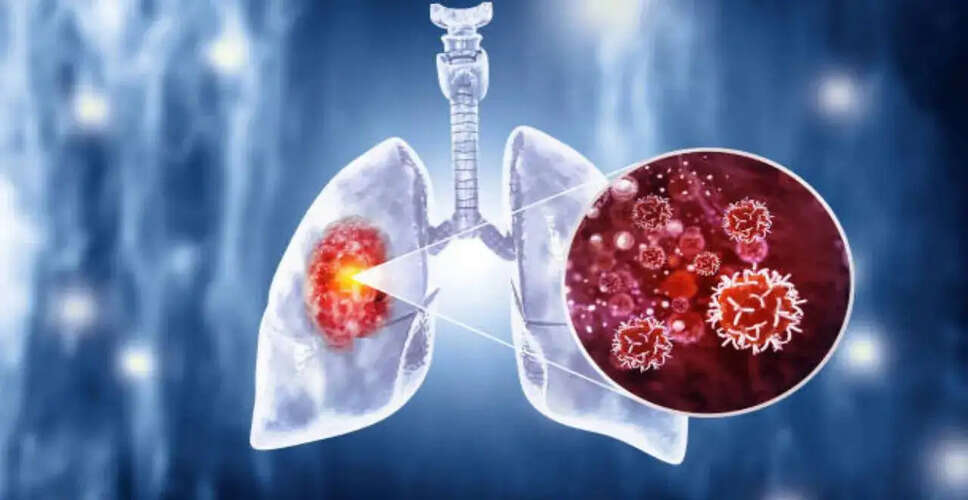

A New Era in Lung Cancer Prevention
Researchers are investigating a pioneering method that may change the landscape of lung cancer prevention—a blood test designed to detect individuals at elevated risk years before the disease manifests. Lung cancer remains one of the most lethal illnesses globally, accounting for around 1.8 million fatalities annually. While smoking is the primary risk factor, other contributors such as air pollution and workplace exposures also play a significant role in the disease's prevalence. A team of international scientists, led by Charles Swanton from the Francis Crick Institute, recently unveiled a significant finding in the journal Cell. They discovered a “14-protein signature” in blood plasma that could indicate the likelihood of developing lung cancer long before a formal diagnosis, paving the way for earlier interventions and potentially life-saving preventive measures.
Understanding the Blood Test's Predictive Power
How Can a Blood Test Predict Future Lung Cancer?
This groundbreaking research centers on blood plasma, the fluid part of blood that transports thousands of proteins released by various organs and tissues. These proteins collectively form the plasma proteome, which can yield critical insights into an individual's health status. The researchers liken plasma analysis to a form of “liquid biopsy,” as it captures biological changes occurring within the body. By contrasting protein profiles from healthy individuals with those who later developed lung cancer, the scientists aimed to pinpoint early indicators of the disease.
To accomplish this, the research team utilized data from the UK Biobank, an extensive health initiative monitoring around 500,000 volunteers. This database includes anonymized health records and biological samples that facilitate the study of disease progression over time. By analyzing plasma samples from nearly 48,000 participants, the researchers trained a machine-learning model to evaluate protein patterns alongside variables such as age, gender, smoking habits, and lung cancer history. The model successfully identified 14 proteins that are strongly linked to an increased risk of future lung cancer.
High Accuracy in Predictions
Remarkably Accurate Predictions
The research team subsequently tested their model on data from around 12,000 participants who were not part of the initial training set. This group included 75 individuals who later received a lung cancer diagnosis, with a median time of 5.1 years post-blood sampling. Notably, the model accurately identified over 75% of future lung cancer cases, showcasing impressive sensitivity. The 14-protein signature was also validated across eight additional datasets, including lifelong non-smokers, indicating its potential utility beyond traditional high-risk groups.
Inflammation's Role in Cancer Development
The Link Between Inflammation and Cancer
The study highlighted that the protein signature intensified when inflammatory pathways linked to smoking and air pollution were activated. Previous investigations by the same team indicated that air pollution could incite inflammation, awakening dormant mutated lung cells, which may eventually lead to cancer. These new findings bolster the theory that while smoking may induce genetic mutations, inflammation serves as a catalyst for cancer development. The signature was also more pronounced in individuals who later developed chronic obstructive pulmonary disease (COPD) and pulmonary fibrosis, both of which are associated with chronic lung inflammation.
Potential Preventive Treatments
Could Existing Drugs Prevent Lung Cancer?
The researchers also explored a possible preventive treatment. They analyzed data from the CANTOS trial, which investigated a drug named Canakinumab for reducing inflammation following heart attacks. A retrospective analysis revealed that participants exhibiting the 14-protein signature had a 50% reduction in lung cancer risk when treated with canakinumab. While these results are promising, experts warn that canakinumab has notable drawbacks, including severe side effects and high costs. Further research is essential to identify safer and more affordable alternatives that could yield similar outcomes.
Future Directions
What Happens Next?
Despite the excitement surrounding this discovery, researchers emphasize that the 14-protein signature requires further validation across diverse global populations. Additionally, scientists must create a practical diagnostic test capable of accurately and cost-effectively measuring all 14 proteins. If subsequent studies corroborate these findings, healthcare providers may eventually utilize a straightforward blood test to identify individuals at high risk for lung cancer years before symptoms arise. Coupled with targeted preventive treatments, this strategy could revolutionize cancer prevention and potentially save countless lives. For now, this research marks a significant advancement toward earlier detection, personalized risk assessment, and a future where lung cancer can be intercepted before it begins.