
Innovative 3D-Printed Jaw Implant Transforms Teen's Life After Tumor Diagnosis
A Teen's Battle with a Rare Jaw Tumor
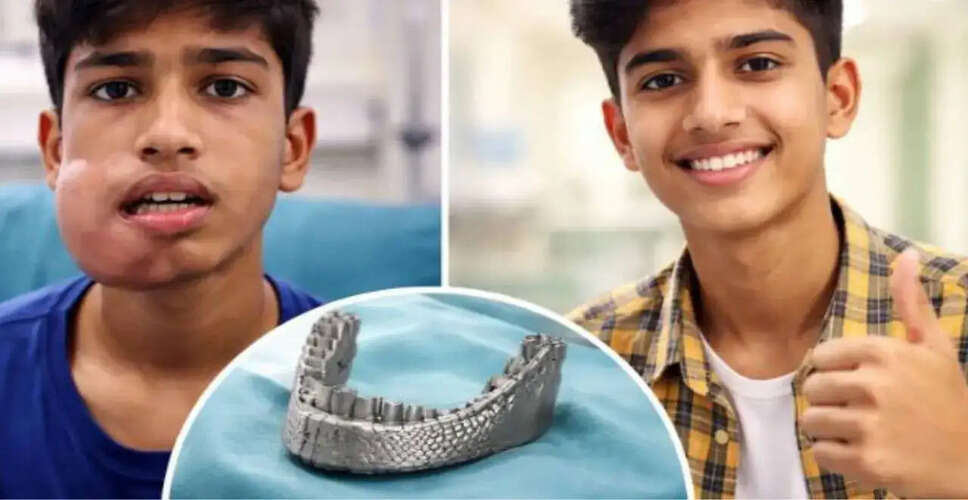
For many teenagers, life is filled with fun, friendships, and the excitement of discovering new interests. However, for a 15-year-old boy facing a rare jaw tumor, daily life became a significant challenge. Over a span of six months, a noticeable swelling emerged in his lower jaw, hindering his ability to speak clearly, chew food, and smile with confidence. What began as a concerning health issue escalated into a profound emotional and physical ordeal for him and his family. Medical professionals later identified the swelling as ameloblastoma, a rare yet aggressive benign tumor that can severely damage the jawbone if not treated promptly. Fortunately, with the help of a cutting-edge 3D-printed titanium jaw implant, surgeons successfully removed the tumor, restoring the boy's ability to eat, speak, and smile.
Misdiagnosis and Escalating Concerns
Initially assessed at a leading medical facility, the boy's condition was incorrectly diagnosed as an infected cyst through a needle biopsy. However, the swelling continued to grow, eroding his mandibular bone and leaving his teeth appearing 'floating' on CT scans. Dr. Rajashekhar Jaka, a Consultant in Surgical Oncology and Robotic Surgery at Manipal Hospital, noted, “A 13.8 cm expansile lesion indicated ameloblastoma, a rare but aggressive benign tumor. A guided biopsy at Manipal Hospital Whitefield confirmed the diagnosis, allowing for targeted treatment.” He emphasized the challenges of diagnosing such conditions in growing children, as their bones continue to develop until around age 21. “Precision is crucial to prevent recurrence, which can affect up to 15% of patients,” he added.
The Decision for a 3D-Printed Jaw Implant
Typically, reconstructing the jaw post-tumor removal involves using a segment of bone from the patient's leg, known as the fibula free flap procedure. However, the medical team deemed this approach potentially risky for the teenager, as it could interfere with his growth and complicate future treatments. Instead, they chose to create a custom 3D-printed titanium mandible tailored specifically for him using CT imaging. This implant was produced in just three days, enabling surgeons to excise the entire diseased section of the jaw while preserving facial symmetry, dental alignment, and jaw functionality. The use of the implant eliminated the need for bone harvesting from another body part, making the surgery less invasive and significantly quicker. Dr. Jaka explained, “The surgery was conducted through a concealed neck incision, ensuring a complication-free experience. The patient recovered quickly, regaining his ability to eat, speak, and smile without any visible scars. This method is cost-effective, at one-tenth the price of traditional techniques, making it suitable for his socio-economic situation while allowing for easy replacement if necessary.”
The Impact of 3D Printing on Tumor Treatment
Experts assert that this case exemplifies how 3D printing technology is transforming the treatment landscape for complex bone tumors, particularly in younger patients. Unlike conventional reconstruction methods, personalized titanium implants enable surgeons to restore both form and function without sacrificing bone from other areas of the body. Dr. Jaka elaborated, “This approach allows us to reconstruct the jaw while safeguarding other parts of the patient’s anatomy. If the tumor were to recur, the reconstruction could be adjusted.” The rare whole-arch mandibulectomy performed in this instance showcases how contemporary medical technologies are redefining the management of intricate tumors. More importantly, it underscores the significance of patient-centered innovation that harmonizes advanced treatment with long-term health outcomes.
(Inputs by: Dr. Rajashekhar Jaka, Consultant – Surgical Oncology and Robotic Surgery, Manipal Hospital)