
Gujarat Launches Innovative 'Health Passport' for Children

Introduction to the Health Passport Initiative
Prime Minister Narendra Modi has consistently emphasized that a robust foundation for a 'Healthy India' starts with nurturing a healthy childhood. In line with this vision and the ambition of a 'Viksit Bharat', the Gujarat government, led by Chief Minister Bhupendra Patel, has unveiled the 'Health Passport'. This pioneering initiative aims to enhance healthcare services for children and adolescents, making them more efficient, sustainable, and family-oriented. Under the School Health - Rashtriya Bal Swasthya Karyakram (SHRBSK), every child in Gujarat, from birth to 18 years, will be issued a 'Health Passport'. This document will serve as a comprehensive and authentic record of a child's health journey from infancy through adolescence. The initiative was officially launched on June 27, 2026, by Union Home Minister Amit Shah, alongside CM Patel.
Impact on 1.89 Crore Children
1.89 Crore Children to Receive 'Health Passports'
As part of the 'SH-RBSK', approximately 1.89 crore children in Gujarat will undergo annual health assessments conducted by 992 mobile health teams. Although these check-up records are currently stored on a digital platform, parents and children lack a tangible document for routine consultations, medical treatments, or follow-up visits. The introduction of the 'Health Passport' aims to fill this void by providing a systematic, comprehensive, and easily accessible health history for every child.
Streamlined Process for Obtaining Health Passports
Simple and Hassle-Free Process for Health Passport
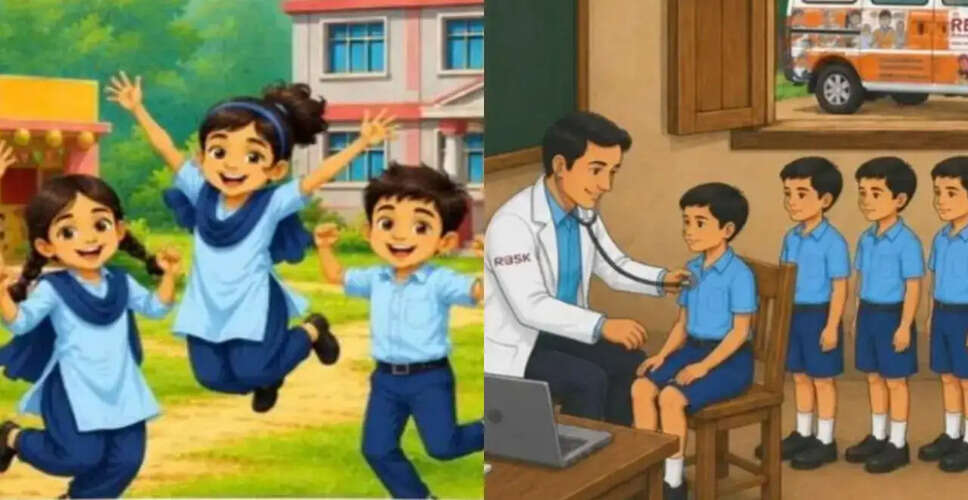
Acquiring a 'Health Passport' is designed to be straightforward and user-friendly. Parents are not required to submit any additional documents for their children's Health Passport. Health screenings will be carried out by SH-RBSK mobile health teams at various locations, including Anganwadis, schools, madrasas, gurukuls, and special schools. After the screening, once the child's information is entered into the digital system, the Health Passport will be issued on-site. Renewing the Health Passport is even simpler. For children under five and those not enrolled in school, the Medical Officer (MO) at the Primary Health Centre (PHC) will handle annual renewals, while school principals will manage renewals for school-going children.
Comprehensive Health Records for Every Child
Gujarat's 'Health Passport' to Create a Complete Health Record for Every Child
The Health Passport will serve as a master document containing each child's complete medical history. It will include essential details along with a thorough record of age-specific health check-ups from birth to 18 years. Additionally, it will monitor four key health categories (4Ds) under SH-RBSK: Defects at birth, Deficiencies, Childhood Diseases, and Developmental Delays and Disabilities. The passport will also document the child's physical and mental growth, nutritional status, referral services, health guidance, lifestyle advice, and emergency contact numbers. Essentially, the Health Passport will consolidate all vital aspects of a child's health, providing families with a single, comprehensive reference throughout childhood.
The initiative's greatest strength lies in its digital integration. While parents will retain the physical Health Passport, all data will be synchronized with the SH-RBSK digital portal, ensuring efficient record management. In case the physical Health Passport is lost or damaged, a replacement can be obtained from the mobile health team. The Gujarat government's Health Passport initiative transcends mere record-keeping; it aims to engage parents as active participants in managing their children's health, thereby strengthening the bond between children, families, and the healthcare system.