
FSSAI Warns Against Eating Fruits and Vegetables with Stickers
Important Food Safety Advisory
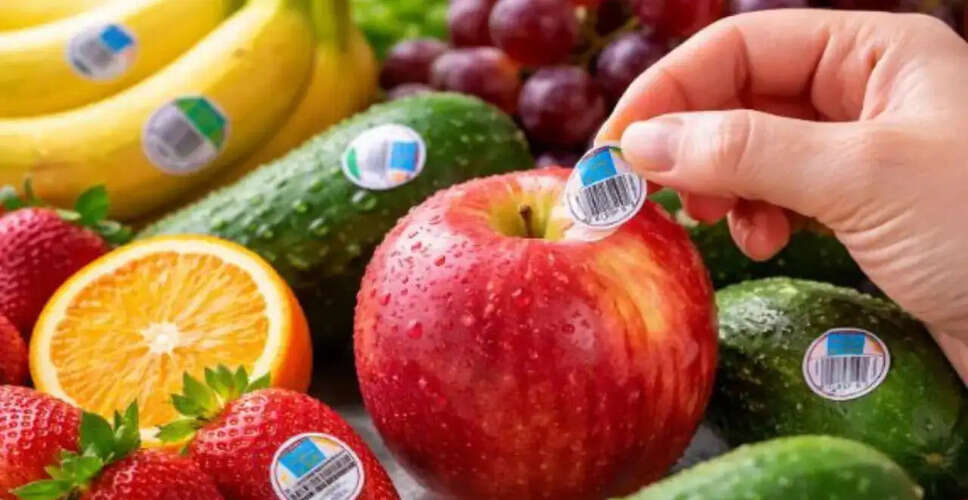
The Food Safety and Standards Authority of India (FSSAI) has released a new advisory urging consumers to avoid eating fruits and vegetables that have stickers. Although these labels may appear harmless, experts caution that the adhesive residue they leave can be harmful to health. The regulatory body, which operates under the Ministry of Health and Family Welfare, emphasized that the leftover adhesive is not safe for consumption. In a recent Instagram post, they advised, “Think twice before biting into a fruit sticker! While these stickers are common, the adhesives used can leave residues that are not intended for ingestion.” To promote better food safety, FSSAI recommends peeling any stickered fruits and vegetables before consumption.
Purpose of Stickers on Fruits
Why are Stickers Used on Fruits?
Stickers, often referred to as PLU (Price Look-Up) labels, are frequently found on fruits in supermarkets. They serve to identify the type of produce, indicate whether it is organic or conventionally grown, and assist with billing and inventory management. Experts note that while the stickers themselves are made from food-grade materials, the adhesives may not always be safe for ingestion, particularly if they come into contact with dirt, pesticides, or bacteria.
Health Risks Associated with Sticker Residue
Potential Health Risks
While accidentally consuming sticker residue may not lead to immediate health issues, repeated exposure can be concerning. This is especially true for children, who might unknowingly ingest stickers while eating fruits. Experts highlight several potential risks:
Chemical Ingestion
The adhesives used in stickers contain compounds that are not meant for consumption.
Contamination Risk
Stickers can trap dirt, bacteria, and pesticide residues.
Digestive Irritation
Individuals with sensitive digestive systems may experience mild stomach discomfort. It’s crucial to understand that even if the adhesive is labeled as food-grade, it does not imply that the sticker itself is safe to eat.
Safe Practices for Consuming Fruits and Vegetables
Safe Ways to Eat Fruits and Vegetables
In a country like India, where fresh produce is a dietary staple, even minor hygiene practices can significantly impact health. With increasing awareness about food contamination and chemical exposure, advisories like this are essential for public health. To minimize health risks and ensure proper hygiene, consider these simple guidelines:
- Always remove stickers before consumption.
- Thoroughly wash produce under running water for at least five minutes.
- Peel fruits and vegetables whenever possible.
- Avoid biting directly into areas with stickers.
- Use a clean brush for firm produce like apples or cucumbers.
- Do not apply disinfectants, cleaning wipes, or soap on fresh produce.
- Store fruits and vegetables that require refrigeration in the fridge.
- Avoid leaving food outside in cars or garages to prevent temperature abuse or pest exposure.
- Clean the sink and surfaces where food items have been washed.