
Chewing Gum and Beetroot Juice: A Surprising Link to Blood Pressure Management
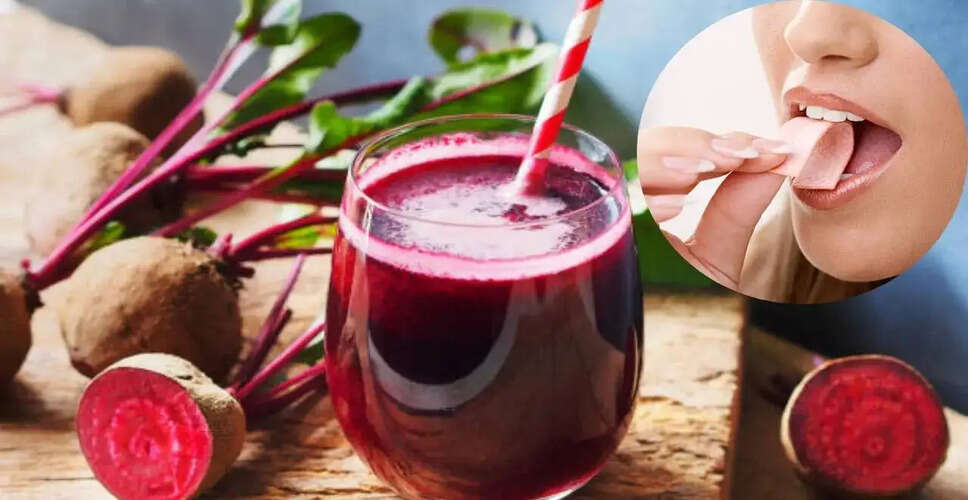

New Research on Beetroot Juice and Chewing Gum
A recent study conducted by researchers at King's College London reveals that a simple act of chewing sugary gum after consuming beetroot juice can temporarily boost the vegetable's inherent ability to lower blood pressure. While these findings are intriguing, experts warn that this should not be viewed as a treatment for hypertension, and individuals should avoid regularly consuming sugary gum for heart health.
This research sheds light on the unexpected role of oral bacteria and saliva in enhancing the cardiovascular advantages of nitrate-rich vegetables like beetroot, spinach, kale, and arugula.
Understanding Beetroot's Role in Blood Pressure Reduction
Beetroot is abundant in dietary nitrates, which are known to support cardiovascular health. However, these nitrates need to be converted into nitrite by beneficial bacteria in the mouth before they can be effective. Nitrite is then transformed into nitric oxide, a molecule that relaxes and dilates blood vessels, thereby improving blood flow and aiding in blood pressure reduction. Researchers aimed to explore whether increasing the acidity of saliva could enhance this conversion process. Dr. Andrew Webb, a Clinical Senior Lecturer at King's College London, stated, "The impact of saliva acidity on the conversion of inactive nitrate to active nitrite is crucial, as it influences significant functions like blood pressure regulation."
Key Findings from the Study
The study involved healthy participants who consumed a shot of beetroot juice and were then randomly assigned to chew either sugary or sugar-free gum for a duration of three to six hours. After a week, they repeated the process with the alternate type of gum. Throughout the experiment, researchers monitored blood pressure and analyzed saliva and blood samples. The results were notable:
- Chewing sugary gum increased saliva acidity, lowering pH by 1.4 points.
- Nitrite levels in the mouth rose by 45%.
- Nitrite levels in the bloodstream increased by 25%.
- Participants experienced an average decrease of nearly 3 mmHg in systolic blood pressure and 2 mmHg in diastolic blood pressure compared to those chewing sugar-free gum.
These findings indicate that enhancing saliva acidity may assist oral bacteria in converting more dietary nitrate into nitrite, thereby amplifying the short-term cardiovascular benefits of beetroot.
Why This Is Not a Solution for Hypertension
Despite the promising results, researchers caution against relying on sugary gum for hypertension management. The blood pressure-lowering effect was only temporary, lasting a few hours, and regular consumption of sugary products can lead to tooth decay, weight gain, and metabolic issues. The study highlights the significant influence of the oral microbiome on heart health and suggests that future research may focus on developing safer methods to enhance nitrate conversion without increasing sugar intake. Co-author Dr. Charlotte Mills from the University of Reading mentioned that upcoming studies will aim to create tooth-friendly and metabolically healthy alternatives that achieve similar effects.
Broader Implications for Health and Performance
The implications of these findings may extend to athletes as well. Beetroot juice and nitrate supplements are already popular for enhancing endurance and exercise performance by increasing nitric oxide production. Researchers believe that optimizing oral conditions could further improve the body's ability to convert dietary nitrate into beneficial compounds, potentially boosting both athletic performance and cardiovascular health. Plans for larger clinical studies are underway to explore whether modifying the oral environment can lead to more sustained improvements in blood pressure and overall heart health. While chewing sugary gum is not a definitive solution for hypertension, this study emphasizes the crucial role of maintaining a healthy oral microbiome in supporting cardiovascular health.