
Berlin's Innovative Approach to Combatting Heatwave with Water Cannons
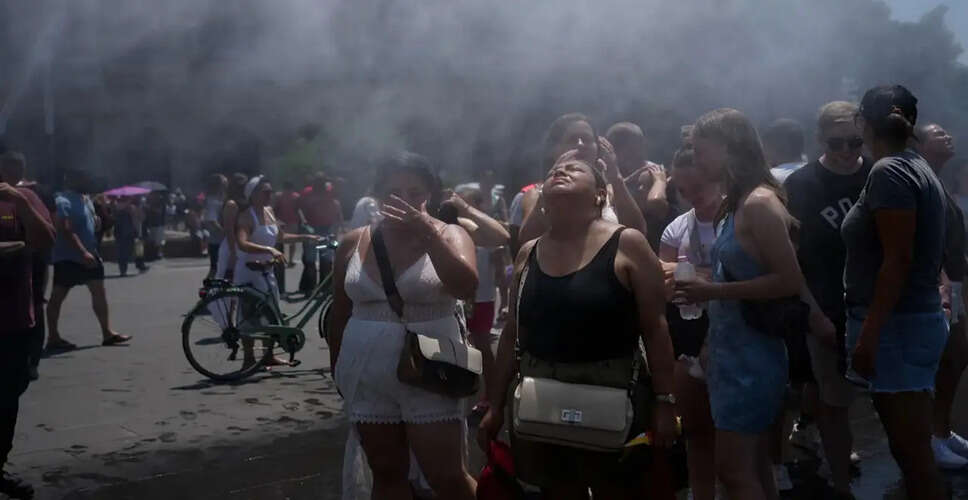

Berlin's Unique Cooling Strategy
As the heatwave sweeps across Europe, Berlin has adopted an unconventional method to help residents and tourists cope with the soaring temperatures: water cannons. Typically used for crowd control, the police in Berlin have repurposed two water cannon trucks to spray fine jets of water over people congregating at popular sites like the Brandenburg Gate, Potsdamer Platz, and the Reichstag. This initiative was prompted by temperatures in some areas of Germany exceeding 40°C, leading authorities to issue heat alerts and implement emergency cooling strategies. The images of this refreshing relief quickly gained traction on social media, showcasing tourists joyfully reaching out to catch the mist while others appreciated the respite from the relentless heat. However, this raises an important health question: Does being sprayed with water actually help protect against extreme heat?
Expert Insights on Cooling Techniques
What Doctors Have To Say
Medical professionals and heat researchers affirm that water spraying can indeed provide relief, albeit with some important considerations. Dr. Renee Salas, an emergency physician and climate health expert at Harvard T.H. Chan School of Public Health, explains that the human body primarily cools itself through sweating. When sweat evaporates from the skin, it removes heat from the body, a process known as evaporative cooling. However, when temperatures rise above normal body levels or when engaging in physical activities under the sun, this natural cooling mechanism can become overwhelmed. Applying water externally can mimic this cooling effect.
Europe is living one of the worse heatwaves ever.Germany has just reached a record of 41.7°C. Water cannons are being used to help cool people in Berlin as temperatures continue to soar. pic.twitter.com/ExZ8toFOra
— Massimo (@Rainmaker1973) June 28, 2026
Whether through misting stations, spray bottles, or water cannons like those in Berlin, water on the skin evaporates, helping to lower skin temperature and alleviate thermal stress. Dr. W. Larry Kenney, a physiology professor at Pennsylvania State University and a leading researcher on heat stress, emphasizes that cooling the skin can significantly lessen cardiovascular strain during extreme heat. In such conditions, the heart must work harder to circulate blood to the skin for heat dissipation. Effective cooling methods can ease this burden, which is particularly crucial for older adults who may sweat less efficiently and struggle with temperature regulation.
The Role of Evaporation in Cooling
Experts also highlight that the cooling effect is primarily due to evaporation rather than just getting wet. In dry climates, water evaporates quickly, providing immediate relief. Conversely, in humid conditions, evaporation is slower because the air is already saturated with moisture, which can leave individuals feeling hot even after being soaked. Germany's current heatwave is characterized by hot, relatively dry air, making misting and water sprays particularly effective.
Global Recommendations for Heat Safety
What WHO Recommends
Health organizations worldwide advocate for the use of water as a straightforward and effective method to prevent heat-related illnesses. Guidelines from the World Health Organization and the US Centers for Disease Control and Prevention suggest taking cool showers, wetting the skin with damp towels, using misting fans, and applying cool water to exposed skin during heatwaves. The principle remains consistent, whether the water is from a shower, a spray bottle, or a specially designed water cannon.
However, it is crucial to note that water alone cannot prevent heatstroke. Medical professionals warn that while water spraying can offer genuine relief, it should not replace proper heat protection measures. Heatstroke is a medical emergency characterized by a core body temperature exceeding 40°C, with symptoms including confusion, dizziness, rapid heartbeat, fainting, and altered consciousness. In such situations, immediate cooling, medical attention, and hydration are vital. Additionally, standing in direct sunlight after being sprayed may only provide temporary relief if the individual continues to lose fluids through sweating.
Cities Adopting Cooling Solutions
Why Cities Are Embracing "Cooling Infrastructure"
Berlin is not alone in its innovative cooling strategies. Various cities across Europe are implementing creative solutions such as misting stations, water curtains, splash zones, and temporary fountains as climate change leads to more frequent and severe heatwaves. Countries like Italy, France, Spain, and Poland have also enhanced public cooling infrastructure during recent heat emergencies. Urban health researchers increasingly view these initiatives as part of "heat adaptation"—small environmental changes that help reduce heat exposure for many people in public areas.
So, do Berlin's water cannons effectively work? Experts affirm that a gentle spray of water can lower skin temperature, enhance evaporative cooling, reduce cardiovascular strain, and provide immediate comfort during extreme heat. While it cannot replace hydration, shade, or medical care in severe heat-related illnesses, it is a scientifically supported method to help the body manage rising temperatures. As summers grow hotter globally, including in regions like India where temperatures often exceed 45°C, Berlin's unique use of water cannons may seem dramatic. However, the underlying science is quite straightforward: when the body's natural cooling system struggles, a little water can make a significant difference.