
Affordable Iron-Rich Diet Plan to Combat Fatigue

Understanding Iron Deficiency
The market is saturated with iron supplements that claim to alleviate the persistent fatigue and dizziness associated with low iron levels. While these supplements can be beneficial in addressing iron deficiency, they are not sufficient on their own for maintaining long-term iron levels and overall health. To provide guidance on managing iron deficiency within a budget of ₹1,000 per week, we consulted Dr. Nisha Mandal, a Dietary and Nutrition expert at Motherhood Hospital in Gurgaon.
Weekly Grocery List
Weekly Grocery List
1. Cereals and MilletsRagi - 500 gms
Jaggery - 500 gms
Whole wheat flour - 2 kgs
Roasted chickpeas or sattu - 500 gms
2. Pulses and Protein Sources
Black chickpeas - 500 gms
Kidney beans - 500 gms
Red lentils - 500 gms
Soy chunks - 250 gms
Eggs - 12
3. Green Leafy Vegetables
Spinach - 3 bunches
Fenugreek leaves - 2 bunches
Amaranth leaves - 2 bunches
4. Vegetables
Beetroot - 500 gms
Carrot - 500 gms
Tomato - 1 kg
Onion - 1 kg
Lemon - 8 to 10
5. Fruits (Vitamin C for iron absorption)
Guava - 1 kg
Orange - 1 kg
Amla (seasonal) - 250 gms
6. Nuts and Seeds
Sesame seeds - 200 gms
Peanuts - 500 gms
7. Non-Vegetarian Options
Chicken liver - small portion, once a week
Sardines - once a week
Essential Foods for Iron Intake
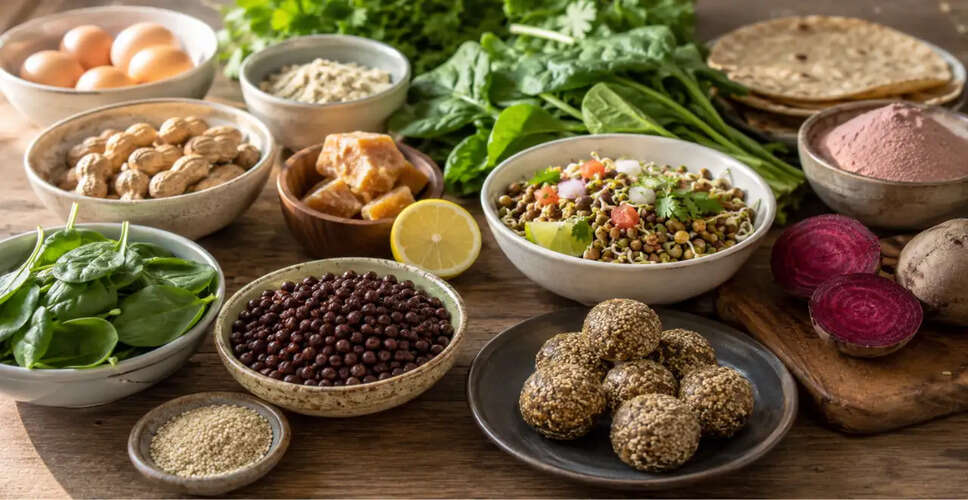
Dr. Nisha emphasizes the importance of including black chickpeas, ragi, spinach, jaggery, and sesame seeds in your diet. Black chickpeas are an economical source of iron and protein, versatile enough for curries, chaats, or as a roasted snack. Ragi serves as an excellent plant-based iron source, rich in calcium and fiber, and can be easily incorporated into porridge, roti, or dosa. Spinach is highly regarded for its versatility, and pairing it with lemon enhances iron absorption. Jaggery is a healthier alternative to white sugar, providing a small amount of iron and minerals, while sesame seeds are packed with iron and can be added to various dishes.
Meal Preparation Tips
Preparation Cues
For a nutritious breakfast, Dr. Nisha recommends a ragi porridge made with milk and water, sweetened with jaggery and topped with sesame seeds. Alternatively, a savory dish like palak besan cooked with onions and lemon offers a quick, iron-rich meal. A refreshing drink made from roasted chickpeas or sattu, mixed with lemon, cumin, and black salt, serves as a great midday refreshment. For lunch and dinner, simple options like kala chana curry with roti or a palak rajma bowl can be satisfying. A beetroot-peanut salad can be a filling side dish. For protein, a methi egg bhurji or soy chunk masala sabzi are excellent choices. Healthy snacks include a mix of roasted chickpeas and peanuts or a sprouted chickpea chaat with onions, tomatoes, and lemon. If you have a sweet craving, indulge in a til-gud laddoo for an iron-rich treat.
Monitoring Your Progress
Progress Check
According to Dr. Nisha, the benefits of a diet focused on iron deficiency will manifest in increased energy and stamina. You may notice reduced fatigue, improved workout performance, and a decrease in feelings of sluggishness. Other signs include less hair fall, stronger nails, healthier skin, and improved mood and concentration. If symptoms like severe fatigue, persistent hair loss, paleness, breathlessness, or coldness continue, it may be time to reassess your dietary approach.