
Addressing Misuse of Mental Health Claims Against Women in India

Highlighting the Twisha Sharma Case
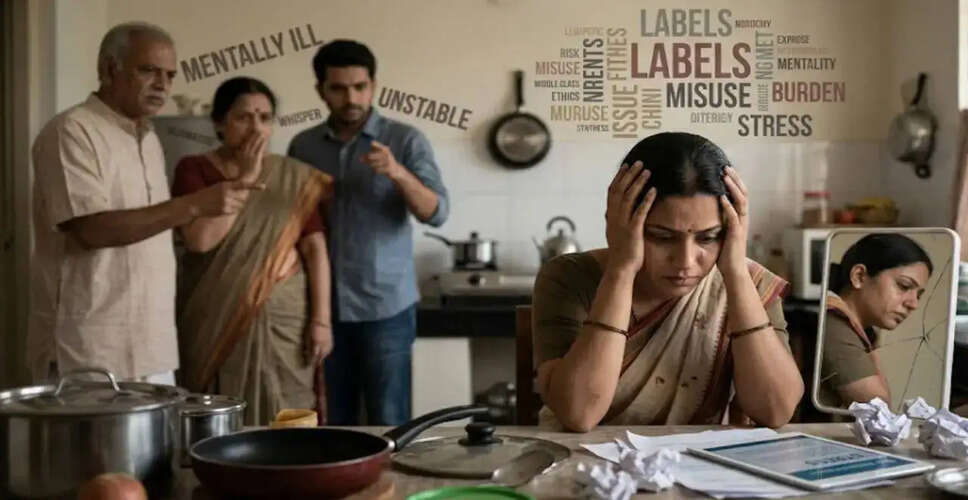
The ongoing discussions regarding the Twisha Sharma case have shed light on a troubling societal issue in India: the exploitation of mental health allegations to silence, control, or undermine women during familial disputes. Experts in mental health assert that while psychiatric disorders are legitimate and significant medical issues, there are cases where women are unjustly labeled as “mentally unstable” merely for asserting their autonomy, voicing concerns about abuse, or rejecting unreasonable domestic expectations.
Misinterpretation of Family Conflicts as Mental Illness
In an exclusive interview, Dr. Vrinda Kabra, a Resident Psychiatrist at the All India Institute of Medical Sciences (AIIMS), shared that such scenarios are not rare in psychiatric practice. She noted that some women are referred for psychiatric assessments not due to actual mental health symptoms, but rather due to conflicts within the family. “I have encountered numerous cases where in-laws bring daughters-in-law for evaluation due to dissatisfaction with their household responsibilities,” she explained.
Dr. Kabra recounted a specific instance where a husband was frustrated because his wife did not wake up at 4 a.m. every day to prepare meals for a large extended family, as his mother did. “That was the sole reason he brought her in,” she stated. In other situations, women who confronted their husbands about suspected infidelity were labeled as “delusional.” “She is delusional; I am not cheating on her,” Dr. Kabra quoted some husbands during consultations.
Importance of Accurate Mental Health Evaluations
Experts emphasize that psychiatric diagnoses should not be based solely on one-sided family narratives. Mental health conditions are intricate medical issues that necessitate thorough evaluation, direct patient interaction, and careful observation. Dr. Kabra highlighted the importance of not relying exclusively on information from in-laws or spouses. “It is crucial for doctors to avoid depending solely on in-laws for history or information, as it may be inaccurate, fabricated, or biased,” she remarked. However, she acknowledged that many families do provide honest information and genuinely seek assistance for loved ones facing mental health challenges. Mental health professionals stress that awareness is vital, as incorrect psychiatric labeling can severely impact a woman’s dignity, self-esteem, legal status, and relationships.
Recognizing Warning Signs in Families
Mental health specialists advise families to distinguish between emotional distress, personal choices, and actual psychiatric disorders. Dr. Kabra pointed out that many normal aspirations are wrongly interpreted as signs of “rebellion” or “mental instability” in certain households. “Desiring to work after marriage, opting for comfortable clothing at home, or postponing childbirth are not indicators of mental illness,” she stated. She emphasized that women deserve the same respect, autonomy, and fundamental human rights that are typically afforded to men. “If men are entitled to exist with respect, so should women,” Dr. Kabra asserted.
Compassion Over Control in Mental Health
The case of Twisha has reignited discussions about women’s mental health, emotional abuse, and societal stigma in India. Experts advocate that authentic psychiatric care should prioritize empathy, evidence-based diagnosis, and the dignity of patients rather than social control. Medical professionals also encourage families to support women experiencing emotional distress instead of hastily dismissing their feelings or labeling them as unstable. As awareness of mental health increases, psychiatrists believe society must also address how psychological labels can be weaponized against vulnerable individuals, particularly women facing challenging family dynamics.