A Journey from Space to Storytelling
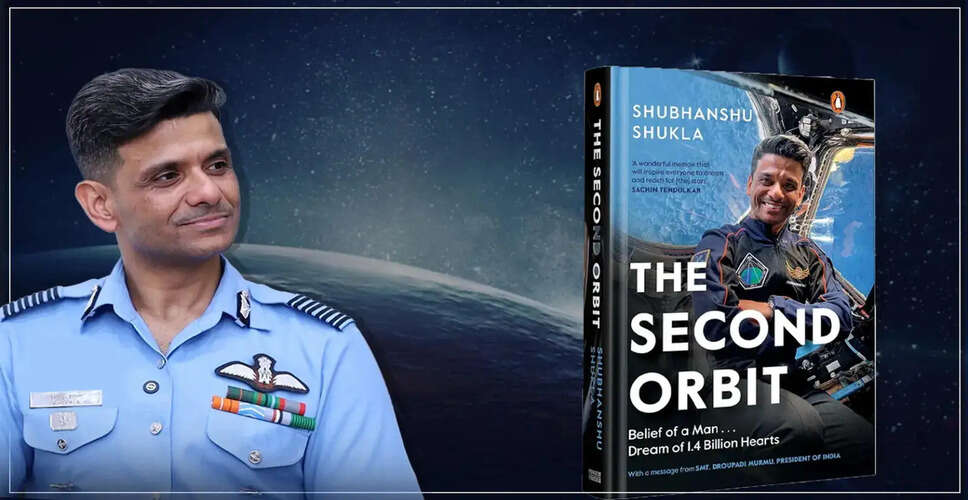
Nearly a year after his groundbreaking journey, Group Captain Shubhanshu Shukla addressed a captivated audience of students in Delhi. Instead of donning a spacesuit, he appeared in his Air Force uniform, sharing tales from his experience and celebrating the Axiom-4 mission while unveiling his memoir, The Second Orbit: Belief of a Man... Dreams of 1.4 Billion Hearts. As eager children lined up for autographs, it became evident that they were not just meeting an astronaut but a figure who had transformed a national aspiration into reality. In an exclusive conversation, Shukla reflected on the quieter moments behind the headlines, including the pivotal phone call that altered his life and the emotional journey to the launch pad, culminating in the song that played as he first saw the Falcon 9 rocket. His message resonated with the youth: dream big, as extraordinary journeys often start with simple dreams.
Reflections on Writing the Memoir
What inspired you to document your spaceflight experience?
Shubhanshu Shukla: Prior to my mission, many encouraged me to keep a journal of my experiences. Human space missions carry a unique allure, and they believed it was vital to document the journey. I had already begun this process. However, the real impetus to write the book came after my return to India. Within weeks, I was traveling nationwide, engaging with children who were brimming with excitement and curiosity about the mission. I realized I couldn't personally reach every child, so I decided that writing a book would be the best way to share my experiences, particularly with young readers who aspire to explore space.
The Moment of Selection
Where were you when you learned about your selection for the mission?
Shubhanshu Shukla: I was driving in Bengaluru to pick up my family from the airport when I received a call from an acquaintance. He casually informed me that I would be the main pilot for Axiom Mission 4. I pulled over, overwhelmed with joy. My wife often jokes about my stoic demeanor, but inside, I felt a profound sense of peace and happiness. Being selected for the program was a significant milestone, but this was a different level of reality. Within a year, I would be in space. I felt immense gratitude for this opportunity and shared the news with my family, whose excitement mirrored my own.
Emotional Farewell
What were your thoughts as you waved goodbye to your family before the launch?
Shubhanshu Shukla: I tend to focus on the tasks at hand during emotional moments, as dwelling on them can be overwhelming. When I waved goodbye, the reality of the situation hadn’t fully registered due to several schedule changes. However, as we drove towards the launch pad and I saw the Falcon 9 rocket lit up in the distance, it hit me. I chose to play 'Vande Mataram' from the film Fighter during the drive, and that was when the gravity of the moment truly sank in.
The Unique Experience of Space
How did your experience in space differ from being an Air Force pilot?
Shubhanshu Shukla: The experience was beyond anything I had envisioned. My preconceived notions were completely overturned, highlighting the limits of human imagination. The absence of gravity alters everything; you not only observe the world around you but also the changes within your own body. It was an extraordinary and captivating experience.
Cravings from Space
What did you miss the most after returning to Earth?
Shubhanshu Shukla: Interestingly, I’m not particularly focused on food, but nutrition is important to me. Astronauts choose their meals beforehand, as taste buds are dulled in microgravity. Unfortunately, due to scheduling issues, I had to settle for standard NASA food instead of my preferred choices. By the 12th day, I craved something salty. Before re-entry, I told my flight surgeon to bring me something salty, or I wouldn’t exit the capsule. He brought chips, and my Indian flight surgeon later surprised me with kachoris and banana chips, which were delightful.
Inspiring Future Generations
What advice would you give to children aspiring to be astronauts?
Shubhanshu Shukla: First and foremost, dream big. Children need to believe that such aspirations are achievable. If my book can inspire that belief, it has fulfilled a significant purpose. Secondly, it’s crucial to understand the demands of the profession, which include physical and medical fitness, strong academic foundations, and the ability to work with machines. Psychological resilience is equally vital, as you often have to make decisions with incomplete information. Accepting that mistakes will happen and learning from them is essential for growth.
Sharing the Journey with Family
How did you explain your journey to your son after returning?
Shubhanshu Shukla: My son, who was six during the mission, was more interested in playing than discussing space. However, after returning to India, I overheard him recounting the entire mission to a friend in great detail, which surprised me. He had absorbed everything, proving that he was indeed paying attention, just too excited to discuss it with me at the time.
Cherished Memories
Which part of the book is most meaningful to you?
Shubhanshu Shukla: The letters at the beginning and end of the book hold a special place in my heart. Additionally, a humorous incident from our NOLS expedition during team-building training stands out. My mission specialist and I were kayaking, both determined to paddle quickly, only to realize we were moving in opposite directions. It’s a funny story that also imparts valuable lessons about teamwork and coordination.