
Google's Upcoming Unified Calling Feature for Android: A Game Changer

Revolutionizing the Calling Experience
Google is reportedly gearing up for a significant enhancement for Android users that could transform how smartphone calls are handled. Recent reports indicate that Android devices may soon integrate internet-based calls from applications like WhatsApp, Telegram, and Signal directly into the default dialer app.
What to Expect from the New Unified Calling Feature
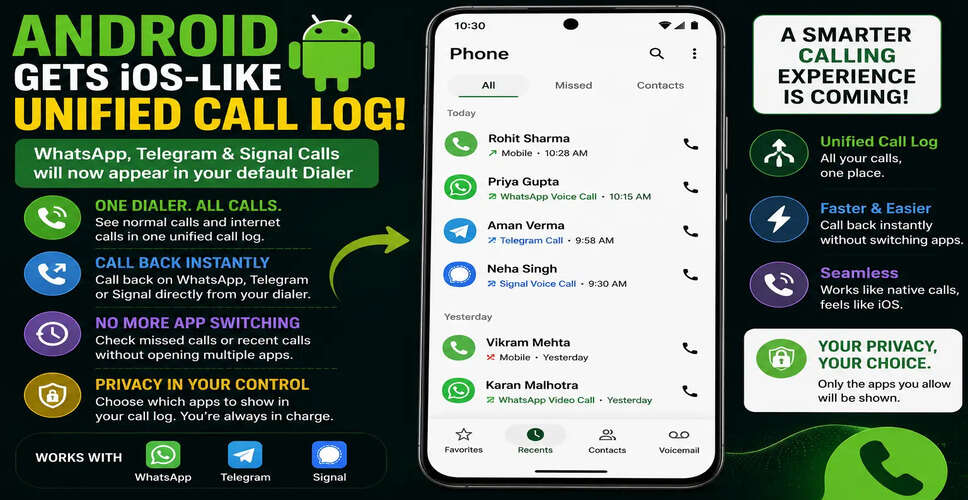
Currently, Android users manage two distinct types of calls: regular SIM-based calls through the Phone app and VoIP calls via apps like WhatsApp, Telegram, or Signal. This separation often requires users to switch between various applications to check missed calls or return calls. The forthcoming update aims to address this issue by merging internet calling data directly into the default dialer, allowing both traditional and app-based calls to be displayed in a single call log.
The Significance of This Update
In recent years, internet calling has gained popularity, often surpassing traditional mobile calls for many users. Communication for work, family, and even customer support frequently occurs through messaging apps. However, Android users face challenges as each app maintains its own call history. The new integration could simplify calling by consolidating all calls in one location, minimizing app switching, making missed calls easier to track, and enhancing overall convenience.
Unified Call Log: Enhancing User Experience
One of the most anticipated improvements is the unified call log system. With this feature, users may see normal cellular calls alongside calls from WhatsApp, Telegram, and Signal within a single recent calls list in the default Phone app. This would eliminate the need to repeatedly access separate apps to check communication history, allowing users to return internet calls directly from the dialer.
Bridging the Gap with iPhone Experience
This reported update draws comparisons to Apple’s CallKit system, where internet calls from supported apps function similarly to regular phone calls. Incoming VoIP calls seamlessly integrate into the native calling interface on iPhones, providing a smoother user experience. Android users have long sought a similar feature, and Google appears to be moving towards delivering this integrated experience.
User Privacy and Control
As this new feature involves third-party app integration, privacy and user control are expected to be paramount. Reports indicate that users will have full authority over which apps can connect to the dialer, whether internet calls appear in call history, and how permissions are managed. This means users who prefer to keep certain calls private can disable integration as needed.
Potential App Support
Initial reports suggest that major communication platforms like WhatsApp, Telegram, and Signal may support this feature. However, final compatibility will depend on app developers updating their platforms to align with Google’s new telecom framework. As the system evolves, more calling apps may join the unified calling ecosystem.
Time-Saving Benefits for Users
Experts believe this update could particularly benefit office workers, business users, remote teams, international callers, and anyone managing multiple apps daily. By reducing the friction between different calling platforms, Android smartphones could become significantly more efficient for users who rely heavily on communication.
Awaiting Official Release
Currently, Google has not provided an official release date for this feature. Reports indicate that development is ongoing and may be rolled out gradually through future Android updates. As with many Android features, availability may vary based on the Android version, smartphone manufacturer, app compatibility, and regional rollout schedules.
A Step Towards Smarter Communication
The upcoming unified calling feature underscores Google’s commitment to enhancing Android communication, making it more seamless and user-friendly. If successfully implemented, Android users could finally enjoy a smoother calling experience akin to that of iPhones, where all significant conversations—whether through SIM calls or internet apps—can be managed from a single interface.