
Gangaur Festival 2026: Significance, Rituals, and Dates
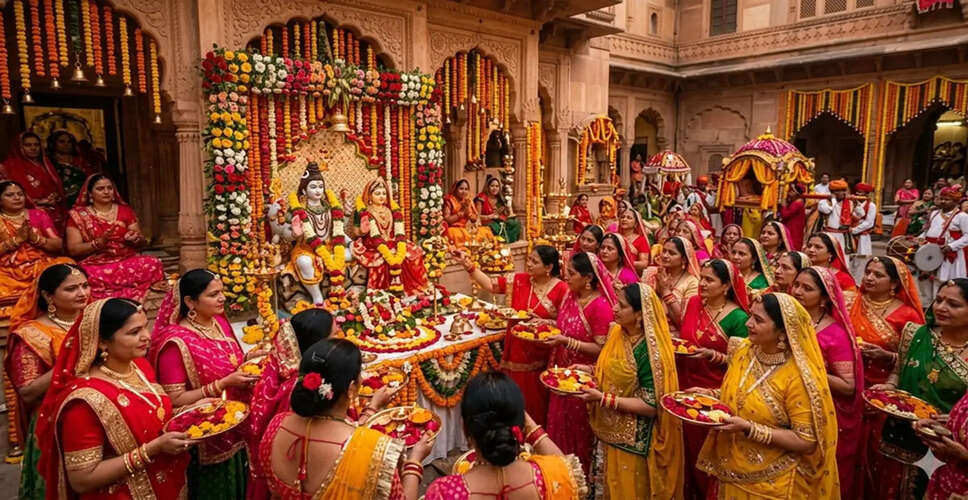
Gangaur Festival Overview
According to the Hindu calendar, the prominent festival of Gangaur (Gangaur Vrat 2026) is observed on the third day of the bright fortnight in the month of Chaitra. In the Gregorian calendar, this celebration will take place on Saturday, March 21, 2026.
Festival Duration and Key Dates
The 16-day fasting period commences the day after Holi (Dhulandi), but the day of Chaitra Shukla Tritiya holds special significance as it marks the conclusion of the festival with the immersion of the idol.
As per the Drik Panchang, the third day of Chaitra's bright fortnight will start at 2:30 AM on March 21, 2026, and conclude at 11:56 PM on the same day. Thus, the Gangaur fast will be observed on Saturday, March 21.
Auspicious Timing for Gangaur Puja 2026
Gangaur Puja 2026: Auspicious Time (Muhurat)
Sunrise: 6:24 AM
Brahma Muhurta: 4:49 AM to 5:36 AM (Ideal for puja preparation and meditation).
Abhijit Muhurta: 12:04 PM to 12:52 PM (Best time for starting any auspicious activity).
Sandhya Muhurta: 6:32 PM to 7:43 PM (Auspicious for evening aarti and concluding the puja).
Significance of Gangaur Puja
What is the significance of Gangaur Puja?
The term 'Gangaur' combines 'Gan', referring to Lord Shiva, and 'Gaur', denoting Goddess Parvati. This festival symbolizes the love and devotion shared between spouses.
Who Should Observe the Fast?
Who should observe this fast?
Married women: They observe this fast to pray for their husband's longevity and a blissful married life.
Unmarried girls: They worship Shiva and Gauri to seek a suitable and desirable life partner.
Worship Method and Traditions
Gangaur Worship Traditions:
Clay Isar-Gauri: Devotees create idols of Shiva and Parvati (Isar-Gangaur) using sacred clay, often sourced from a pond or well. These idols are then beautifully dressed and adorned with jewelry.
16-day ritual: Beginning the day after Holi, women rise early each morning, gather grass and flowers, and perform puja while singing traditional songs.
Sixteen adornments and folk songs: During the puja, women adorn themselves with sixteen traditional ornaments and sing folk songs like "Gor e Gangaur Mata..." (Gor e Gangaur Mata...), filling their homes with joy.
Immersion: On the final day, March 21, women respectfully immerse these idols in a river, pond, or lake.