
Exploring the Symbolism of Jatayu's Talon in Ramayana: Part 1
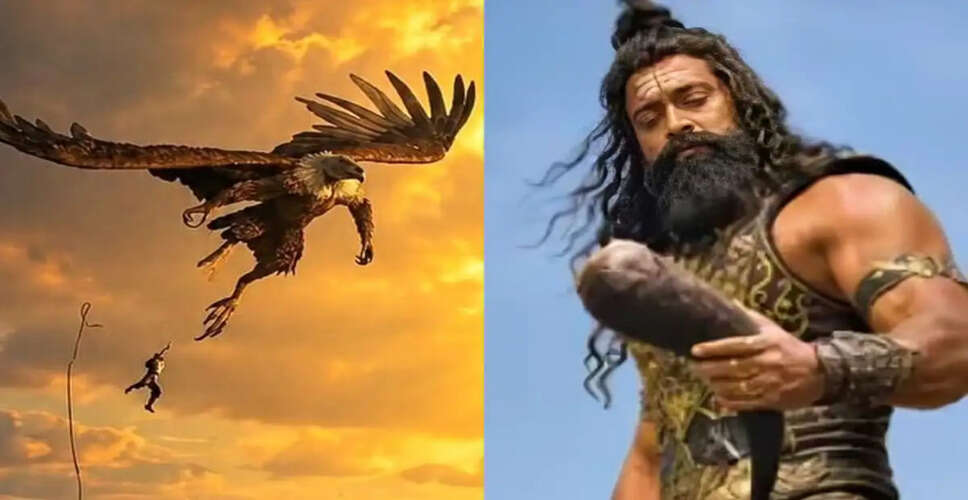

The Epic Confrontation: Ravana vs. Jatayu
The Epic Confrontation: Ravana vs. Jatayu In *Ramayana: Part 1*, a pivotal moment captivates viewers: the intense clash between Ravana, the Lord of Lanka, and Jatayu, the King of Birds. This sequence has garnered significant praise, yet it prompts an intriguing question: why does Ravana retain one of Jatayu’s talons? In this adaptation, 'Rocking Star' Yash takes on the role of Ravana, while Sai Pallavi portrays Mata Sita. As Ravana abducts Mata Sita aboard the *Pushpaka Vimana* (flying chariot), Jatayu bravely intervenes, engaging in a fierce battle. Despite his age and frailty, Jatayu summons all his strength to save Mata Sita, but ultimately, he is unsuccessful. Let's delve into the reasons behind Ravana's decision to keep Jatayu’s talon.
The Significance of Jatayu’s Talon
Why does Ravana keep Jatayu’s talon?
This moment underscores Ravana’s arrogance and cruelty. Jatayu was not just any bird; he was a divine being with extraordinary powers. Upon witnessing Mata Sita in peril, he disregarded his own safety to confront Ravana, the ruler of the three realms. During their battle, Jatayu fiercely attacked Ravana with his beak and talons, causing significant injuries. The film portrays Jatayu’s assault as so powerful that it results in the severing of one of Ravana’s heads, which, due to a boon, regenerates.
Nonetheless, this encounter severely wounds Ravana’s pride. As someone who boasts unmatched strength, he cannot accept that an elderly bird dared to challenge him. Thus, Ravana’s act of severing and keeping Jatayu’s talon symbolizes his mindset. For him, this talon becomes a trophy—a constant reminder of a confrontation and a humiliation he wishes to remember.
Ravana's Arrogance and Cruelty
This scene epitomizes Ravana’s arrogance and cruel nature.
Ravana viewed himself as the mightiest warrior, having defeated gods and powerful kings, and he despised the thought of submitting to anyone. Therefore, being challenged by an aged bird like Jatayu was a direct affront to his ego. By keeping Jatayu’s talon, Ravana reveals a mentality that seeks to claim a trophy from a defeated foe, even after total victory. The film illustrates that whenever Ravana triumphed in battle, he would take the crowns of fallen kings and add them to his own throne.
Ravana’s possession of Jatayu’s talon further highlights his hubris and twisted psychology. Instead of honoring Jatayu’s bravery, he retains a part of the bird as a war trophy. Ironically, the talon that Ravana cherishes as a symbol of his victory becomes a testament to his arrogance and unrighteousness (*adharma*). Although Jatayu may have lost the battle, his sacrifice in defense of righteousness (*dharma*) ensures his immortality.
Historical Accuracy of the Scene
Does the episode of Ravana keeping Jatayu’s talon appear in the Valmiki Ramayana?
The central question regarding this film scene is whether Ravana actually severed and kept Jatayu’s talon. The Valmiki Ramayana and Tulsidas’s Ramcharitmanas do not mention such an event. The *Aranyakanda* of the Valmiki Ramayana details the battle between Ravana and Jatayu. When Ravana abducted Mother Sita, Jatayu bravely intervened.
During their confrontation, Jatayu broke Ravana’s bow, destroyed his chariot, and defeated the *rakshasas* (demons) accompanying him. He struck Ravana multiple times with his talons and beak. Angered by Jatayu’s bravery, Ravana used his divine sword, *Chandrahasa*, to sever the bird’s wings, causing a wounded Jatayu to fall. However, the original Ramayana does not mention Ravana taking one of Jatayu’s talons as a trophy. Thus, this particular scene in the film appears to be a creative interpretation by director Nitesh Tiwari and his team.
Conclusion
PC Social Media