
Exploring the Sacred Wonders of Badrinath Dham

Fascinating Insights into Badrinath Dham
Significant Events at Badrinath Dham: On Thursday, April 23, the gates of Badrinath Dham were ceremoniously opened in celebration of Ganga Saptami, following age-old traditions. The opening was marked by the chanting of mantras and enthusiastic calls of "Jai" (victory) to Lord Badri Vishal. This day is particularly special as it coincides with five auspicious *Yogas* (celestial alignments): Sukarma Yoga, Dhriti Yoga, Sarvartha Siddhi Yoga, Guru Pushya Yoga, and Amrit Siddhi Yoga. Badrinath Dham is a crucial destination on the Char Dham pilgrimage route, and no journey through Char Dham is considered complete without a visit to this sacred site.
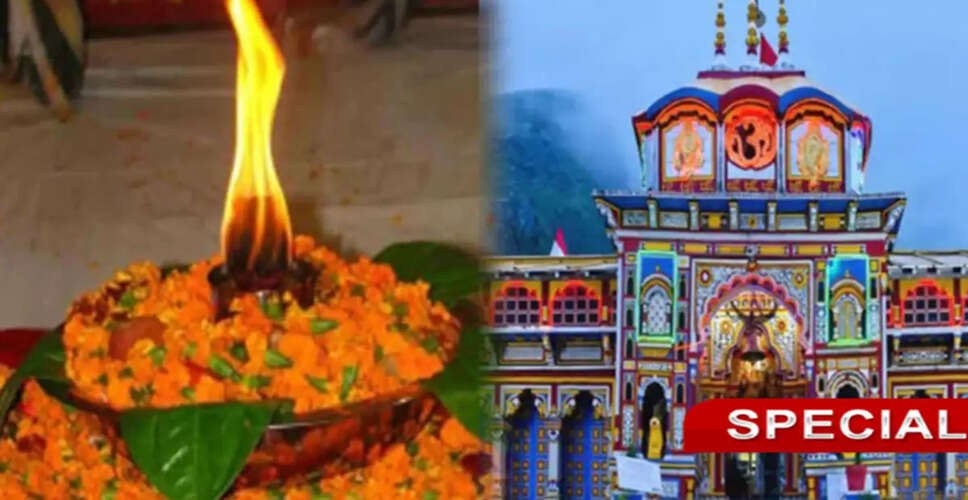
The Char Dham pilgrimage includes Gangotri, Yamunotri, Kedarnath, and Badrinath Dham, with Badrinath being the dwelling place of Lord Badri Vishal. The temple is accessible for six months of the year, while it remains closed for the other half. Interestingly, during the closure, a sacred lamp continues to burn inside the temple. Let’s delve into some captivating facts about Lord Badri Vishal and His holy abode.
Understanding Lord Badri Vishal:
At Badrinath Dham, Lord Vishnu manifests as Lord Badri Vishal, accompanied by Goddess Lakshmi in the *Garbha Griha* (sanctum sanctorum). The sanctum also houses Uddhav Ji and Kubera, the Lord of Wealth. The temple is often referred to as the Badri Narayan Temple.
Origin of the Name Badrinath:
According to legend, Goddess Lakshmi once left Vaikuntha due to displeasure with Lord Vishnu. In search of Him, she found Him in deep penance at what is now Badrinath Dham, surrounded by *Badri* trees. The term *Badri* refers to the fruit of the Jujube tree (*Ber*). It was here that Goddess Lakshmi named Him "Badrinath." The word *Dham* signifies a sacred abode, specifically where Lord Badrinath resides.
Another tale narrates that while Lord Vishnu meditated at Badrinath, Goddess Lakshmi transformed into a Jujube tree to shield Him from the cold. Grateful for her devotion, Lord Vishnu declared that this site would be known as Badrinath, where both would be worshipped together.
Badrinath Dham: Earthly Vaikuntha
Badrinath Dham is revered as *Bhu-Vaikuntha*, meaning the celestial abode on Earth. Located along the Alaknanda River, between the Nar and Narayan peaks, Lord Vishnu is depicted in a meditative *Yoga Mudra* (yogic posture), alongside Goddess Lakshmi.
Penance of Nar and Narayan at Badrinath
This sacred site is flanked by two towering mountains, Nar and Narayan. Here, Lord Vishnu, in His partial incarnations as Nar and Narayan, performed rigorous penance. Later, during the *Dwapar Yuga*, these divine forms manifested on Earth as Arjuna (Nar) and Lord Krishna (Narayan).
Continuous Flame at Badrinath Dham
During heavy snowfall, the temple doors close for six months, yet an *Akhand Deepak* (eternal flame) remains lit within the sanctum. When the temple reopens, the flame is still found burning brightly, believed to be tended by celestial beings who worship Lord Vishnu during this period.
The Legacy of Badrinath Dham in Proverb
A well-known saying about Badrinath Dham states: "Jo jaye Badri, wo na aaye Odri" (He who visits Badri shall never return to the womb). This proverb signifies that those who undertake a pilgrimage to Badrinath Dham achieve *Moksha*—liberation from the cycle of birth and death—thus avoiding the need to be reborn. This saying encapsulates the spiritual significance of Badrinath Dham; indeed, those who seek the *Darshan* (divine sight) of Lord Badri Vishal are promised ultimate salvation.
PC Social Media