
Exploring the Rich Tapestry of Bridal Jewelry Across India
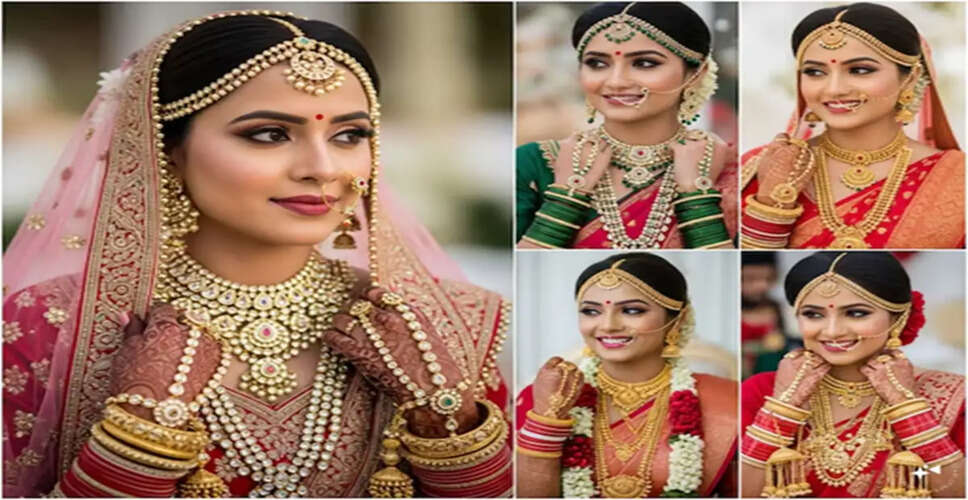
The Significance of Bridal Jewelry in Indian Weddings
Travel anywhere in India, and you'll witness weddings celebrated with extraordinary splendor. In this country, a wedding transcends mere rituals; it embodies a blend of tradition, culture, and beliefs. Each region showcases distinct bridal jewelry, with every ornament carrying its own religious, social, and emotional importance. Bridal jewelry symbolizes good fortune, prosperity, and marital happiness. Let's delve into the unique jewelry worn by brides from various states and uncover the significance of each piece.
North India (Uttar Pradesh, Rajasthan, Haryana)
In Northern India, brides typically wear elaborate Kundan and Polki jewelry. Essential pieces include the *Maang Tikka*, *Nath* (nose ring), bangles, bracelets, necklaces, and *Payal* (anklets). The *Nath* symbolizes good fortune, while bangles are believed to enhance marital bliss and the longevity of the husband.
Maharashtra
A bride from Maharashtra is easily identified by her unique *Nath* and her gold coin necklace (*Mohoranchi Mala* or *Kolhapuri Saaj*). The wearing of green bangles and *Bajuband* (armbands) is considered auspicious, with the *Nath* symbolizing femininity and marital status.
Gujarat
In Gujarat, brides adorn themselves with traditional Kundan, *Meenakari*, and gold necklaces. The *Kanthi* necklace and *Haathphool* (hand ornaments) are particularly significant, representing the blessings of Goddess Lakshmi and prosperity.
South India (Tamil Nadu, Kerala, Karnataka, Andhra Pradesh)
Southern Indian brides are known for their heavy gold jewelry. The *Mangalsutra* (locally called *Thali*) is the most important ornament, symbolizing the sacred bond of marriage. The *Kamarband* (waistband), known as *Oddiyanam*, signifies wealth, prosperity, and feminine strength.
Bengal
A Bengali bride typically wears lightweight yet traditional gold jewelry. The iron bangle (*Loha*) and gold bangles (*Polla* and *Shakha*) symbolize marital sanctity and happiness, representing the security of married life.
Punjab
In Punjab, a bride is incomplete without her *Chooda* and *Kaleere*. The *Chooda* signifies the start of a new life filled with joy, while the *Kaleere* embodies hopes for prosperity and well-being. The Punjabi *Chooda* is a beloved adornment cherished across India.
Northeast India
In Assam and Manipur, brides wear traditional gold and silver jewelry that reflects their deep connection to nature and culture. These ornaments hold significant meaning during the wedding ceremony.
In India, bridal jewelry is not just ornamental; it represents tradition, faith, good fortune, and cultural values passed down through generations. Each piece worn during the wedding ceremony adds profound cultural and symbolic meaning to the occasion.