
Exploring the Nine Divine Forms of Goddess Durga During Navratri
Introduction to Navratri and Goddess Durga
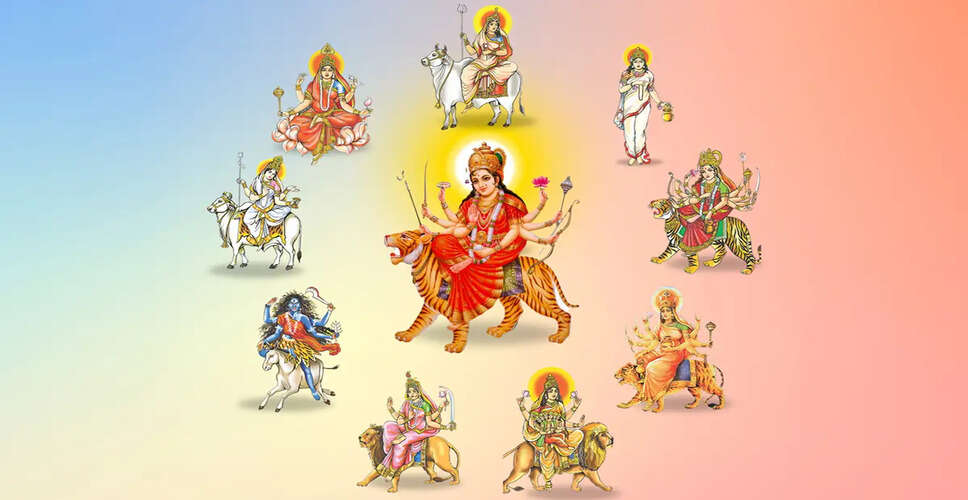
Navratri: A Celebration of the Divine Feminine In Hindu tradition, Navratri is a significant festival honoring the nine sacred forms of Mother Durga. This period is believed to be when the Goddess descends to Earth, showering her blessings on her followers. Devotees who observe the fast with genuine faith and dedication find relief from their struggles and sorrows. Over these nine days, worshippers engage in prayers and rituals to honor the various forms of the Goddess, seeking her divine grace. Let’s delve into the nine manifestations of Mother Durga.
Day 1: Maa Shailputri
The first day of Navratri is dedicated to Maa Shailputri, the initial form of Mother Durga. She is celebrated as the daughter of the Himalayas and embodies the essence of Goddess Parvati. Devotees who sincerely worship her are believed to receive spiritual strength and blessings.
Maa Shailputri is depicted in white attire, holding a trident and a lotus, and riding a bull named Nandi. Her favorite color is orange, and she is associated with the hibiscus flower. She represents a state of spiritual connection with the Divine.
Day 2: Maa Brahmacharini
The second day honors Maa Brahmacharini, the form of Goddess Parvati before her marriage to Lord Shiva. This manifestation signifies her years of penance to win Lord Shiva's love. She embodies true love, devotion, and renunciation.
Mother Brahmacharini is portrayed as an ascetic maiden, walking barefoot and holding a prayer rosary and a water pot. Her simple appearance reflects a life of meditation and inner strength. White is her favorite color, symbolizing peace, while the chrysanthemum is her preferred flower. A notable temple dedicated to her is located at Panchganga Ghat in Varanasi.
Day 3: Maa Chandraghanta
Maa Chandraghanta, the third form of Goddess Durga, is revered as the divine power of Lord Shiva. She represents inner strength, peace, and courage.
Dressed in red, she rides a tiger and wields various weapons, including a sword and a trident, to uphold righteousness. Known as Ranchandi, her third eye symbolizes her readiness to combat evil. Gold and yellow are her favorite colors, while marigolds and sunflowers are offered in worship.
Day 4: Maa Kushmanda
The fourth manifestation, Maa Kushmanda, is believed to have created the universe with her divine smile. She embodies life and spiritual energy, known as Prana Shakti.
Riding a lion and possessing eight arms, she holds various weapons and a pitcher of Amrit. Her favorite color is royal blue, symbolizing strength, and jasmine flowers are offered to her during Navratri.
Day 5: Maa Skandamata
Maa Skandamata, worshipped on the fifth day, represents motherhood and power. She nurtures her devotees like a mother cares for her children.
Riding a lion and holding her son Kartikeya, she has four arms and is associated with the color yellow, symbolizing maternal love. Devotees offer yellow roses to honor her.
Day 6: Mother Katyayani
The sixth day is dedicated to Mother Katyayani, representing the warrior aspect of Goddess Durga. She symbolizes self-realization and the understanding of one's true nature.
Her favorite color is green, representing balance and growth, and devotees offer marigold flowers to seek her blessings.
Day 7: Mother Kalaratri
Mother Kalaratri, worshipped on the seventh day, symbolizes the destruction of evil forces while remaining compassionate to her devotees.
Riding a donkey and wielding a sword and thunderbolt, she is known for her fierce appearance. Grey is her favorite color, symbolizing the power to eliminate negativity, and Passion flowers are offered to her.
Day 8: Goddess Mahagauri
The eighth day honors Goddess Mahagauri, believed to fulfill the wishes of her devotees and grant liberation from suffering.
She rides a bull and holds a trident and a drum, embodying purity and compassion. Purple is her favorite color, and Mogra flowers are offered in worship.
Day 9: Goddess Siddhidatri
The final day is dedicated to Goddess Siddhidatri, revered for bestowing supernatural powers and divine abilities upon her devotees.
Seated on a lotus or lion, she holds a lotus, discus, mace, and conch shell. Peacock-green is her favorite color, symbolizing enlightenment, and Champa flowers are offered to her.
Through sincere worship, the Mother grants her devotees the fruits of their efforts.
Conclusion
PC Social Media