
Exploring India's Temples: Unique Traditions Surrounding Prasad
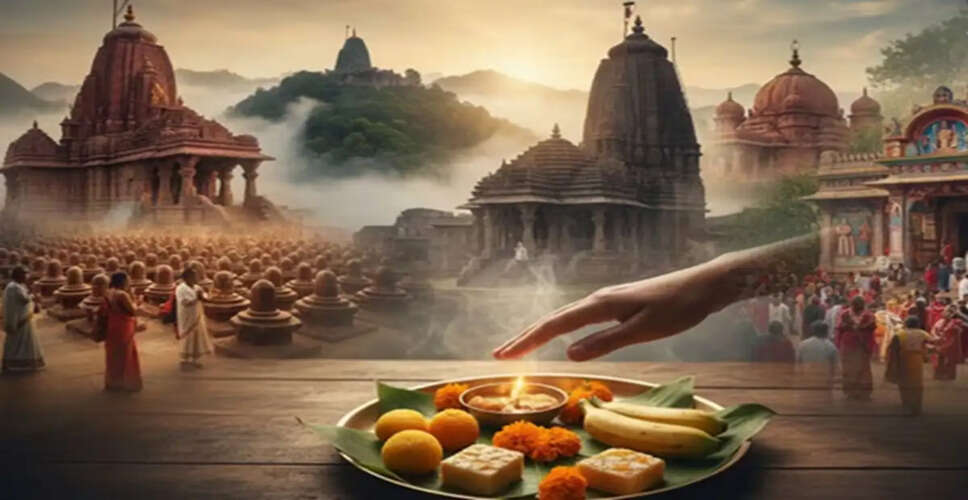

The Spiritual Essence of Indian Temples
In India, temples serve not only as places of worship but also as spiritual hubs. Each temple has its own rich history and narrative that contributes to its uniqueness.
While some temples restrict entry after certain hours, others have distinctive customs that differentiate them from others.
In various temples, the *prasad* (offering) is deemed highly sacred, yet there are specific places where taking it home is not allowed.
Typically, when visiting a temple or pilgrimage site, *prasad* is shared among visitors; however, what makes these particular temples unique in their customs regarding *prasad*? Let's delve into these fascinating traditions.
Mehandipur Balaji Temple, Rajasthan
Mehandipur Balaji Temple is known as one of the most enigmatic temples in India, attracting large crowds of devotees daily. It is believed that those suffering from negative energies visit this temple to seek liberation through the blessings of Balaji.
Dedicated to the 'Balaji' incarnation of Lord Hanuman, it is advised that visitors should not take the *prasad* home, as it may bring negative energies along. Instead, any *prasad* received should be consumed within the temple.
Kamakhya Temple, Assam
Kamakhya Temple is located on Nilachal Hill near Guwahati and is one of the most important *Shakti Peethas* in India. Known for its *Tantra* worship, this temple venerates the *Yoni* (divine womb) of the Goddess.
Visitors are expected to consume the *prasad* within the temple grounds, as it is considered extremely sacred and charged with special energy.
Kotilingeshwara Temple, Karnataka
Kotilingeshwara Temple is famous for its millions of *Shivlings*, making it a unique religious destination that attracts visitors from all over.
The *prasad* offered here is symbolically linked to Chandeshwar, a devotee of Lord Shiva, leading many to believe that it should not be taken home or consumed by the devotees.
Kaal Bhairav Temple, Madhya Pradesh
Situated in Ujjain, the Kaal Bhairav Temple is one of the most intriguing religious sites in India. Here, devotees offer liquor to the deity, and it is believed that this offering should not be treated like the traditional *prasad* found in other temples, thus discouraging taking it home.
Naina Devi Temple, Himachal Pradesh
At the Naina Devi Temple in Bilaspur, Himachal Pradesh, it is also considered inappropriate to take the *prasad* home. Nestled in the Shivalik mountain range, this temple is recognized as one of India's *Shaktipeeths*, and local customs dictate that offerings made here should remain within the temple.
Conclusion
These unique traditions surrounding *prasad* in various temples across India highlight the rich cultural and spiritual heritage of the country.