
Exploring India's Iconic Monuments: A Look at Visitor Trends
Insights into India's Cultural Heritage
Tourist statistics reveal essential information about the cultural and historical landmarks in India that draw millions of tourists each year. According to the latest Economic Survey of Delhi, the number of visitors not only highlights current tourism patterns but also emphasizes the lasting importance of monuments—structures influenced by Mughal architecture, temple artistry, and years of dedicated conservation efforts. Each landmark tells a story of India's rich heritage, where design and symbolism, along with ongoing preservation efforts, help maintain their existence amid increasing visitor numbers and environmental challenges.
Top Monuments and Their Visitor Statistics
Taj Mahal, Agra, Uttar Pradesh: The Taj Mahal, with 6.26 million visitors, is India's most cherished monument. Built by Shah Jahan in 1632 in memory of Mumtaz Mahal, this white Makrana marble structure appears to change hues with the light, creating a stunning view at dawn and dusk. Its domes, minarets, and *Charbagh* gardens exemplify perfect symmetry.
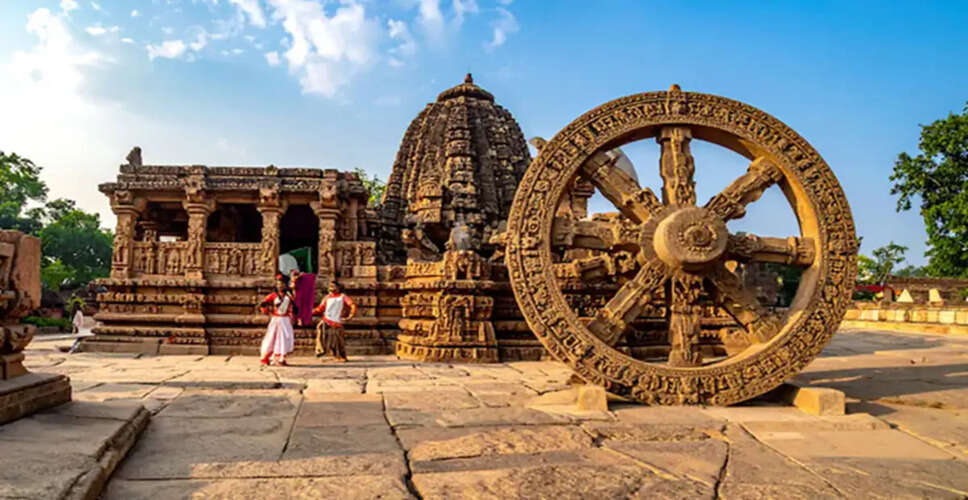
Konark Sun Temple, Odisha: The Konark Sun Temple, attracting 3.57 million visitors, is famous for its grand design. Constructed in the 13th century by King Narasimhadeva I, it resembles a massive stone chariot dedicated to the Sun God, featuring 12 intricately carved wheels and seven horses that seem to be in motion. Despite the wear of time, the remaining structure, made from Khondalite stone, continues to embody sacred myths and the vibrant history of the temple.
Qutub Minar, Delhi: With 3.2 million visitors, the Qutub Minar has been a prominent feature of the Delhi skyline since 1199. Initiated by Qutb-ud-Din Aibak and completed by his successors, this minaret is characterized by sandstone columns that taper upward, culminating in a stunning stone finial. The surrounding complex, which includes the Quwwat-ul-Islam Mosque and the Iron Pillar, encapsulates centuries of history.
Red Fort, Delhi: The Red Fort, drawing 2.88 million visitors, symbolizes modern India while also reflecting its rich Mughal heritage. Constructed in 1648 as Shah Jahan's imperial capital, this red sandstone fortress was once filled with palaces, assembly halls, and gardens, where royal ceremonies were held with great splendor. Today, the echoes of those past events can still be felt in areas like the Diwan-i-Aam and the Diwan-i-Khas.
Bibi Ka Maqbara, Maharashtra: Known as the "Taj of the Deccan," Bibi Ka Maqbara provides a tranquil alternative to Agra's famous monument for those in search of a distinctive experience. Commissioned in the late 17th century by Prince Azam Shah in honor of his mother, Dilras Banu Begum, it remains an intriguing site for both scholars and admirers. Unlike its more famous counterpart, this structure predominantly uses basalt stone, with marble being used sparingly, mainly at its base.